

Image

Opinion · Iko Knyphausen · June 15th, 2026
In Cervantes’ novel, Don Quixote de la Mancha rides out across the plains of Castile to right the wrongs of the world, lance aimed at giants that everyone else can plainly see are windmills. He is mocked, unseated, and bruised. He is also, in the end, the only one in the story paying attention to what actually matters. James Talarico, a Democratic state representative from Austin, a Presbyterian seminarian, a former middle school teacher, and now the Democratic nominee for the United States Senate from Texas, is riding a similar errand. His windmills are roughly the size of the White House.
But before we get to Don Talarico del Texas, we need to account for the landscape he is riding into.
The word “authoritarianism” carries academic weight that tends to soften its edges. Strip the syllables away, and what you are left with is simpler: the steady, deliberate replacement of institutions with a single person’s will. By that standard, the United States in 2026 is well into the process.
Consider what has happened to the media. In July 2025, CBS announced the cancellation of The Late Show with Stephen Colbert, the highest-rated late-night program on American television, days after Colbert had called Paramount’s $16 million settlement with President Trump over a disputed 60 Minutes interview a “big fat bribe.”1 The official explanation was financial. The timing made the explanation hard to credit. Trump left no room for ambiguity: he posted on Truth Social that he “absolutely loved” that Colbert “got fired,” then added, “I hear Jimmy Kimmel is next.” That sentence was not a prediction. It was a warning.
Kimmel followed. ABC suspended Jimmy Kimmel Live in September 2025. The Federal Communications Commission, led by Trump-appointed chairman Brendan Carr, had already accelerated a review of Disney’s eight ABC-owned broadcast station licenses, though those licenses were not scheduled for review until 2028. Democratic senators called the early review an “abuse of power.”2 Section 326 of the Communications Act explicitly prohibits the FCC from exercising censorship or interfering with broadcasters’ free expression. The prohibition has not slowed anyone down.
The President stated his position without ambiguity: if network newscasts and late-night shows are “almost 100 percent Negative to President Donald J. Trump, MAGA, and the Republican Party, shouldn’t their very valuable Broadcast Licenses be terminated? I say, YES!”3 That is not the rhetoric of a president irritated by bad press. That is the rhetoric of a caudillo announcing the terms of acceptable coverage.
Then there is the cult of the name. In December 2025, after firing 18 trustees appointed by his predecessor and replacing them with loyalists, including Fox News hosts and his own attorney general, Trump’s handpicked board voted unanimously to rename the John F. Kennedy Center for the Performing Arts the “Trump-Kennedy Center.”4 The Kennedy Center was established by Congress as a living memorial to an assassinated president. A federal judge has since ruled that Trump’s name must be removed, finding that only Congress has the authority to rename it.5 Courts have been the most consistent check on executive overreach throughout this period — but they operate after the fact, and the gesture had already been made.
The Palm Beach International Airport is now the President Donald J. Trump International Airport, signed into law by Governor DeSantis in March 2026.6 Legislation to rename Washington Dulles Airport after the president has been introduced in Congress. Penn Station in New York was reportedly offered as a bargaining chip: Trump would release federal infrastructure funds in exchange for Senator Schumer’s support for putting his name on the train station.7 His signature has been added to all newly printed American currency. The Treasury Department is actively preparing prototypes for a $250 bill featuring his portrait, working around the federal law that has, since 1866, prohibited living persons from appearing on American money.8 The bureau director who raised the legal objection was reassigned.
This is not vanity run amok. It is a systematic project. The sworn loyalty that once belonged to the flag, the republic, and the constitutional order is being displaced by personal fealty to a man, and the country's symbols are being rebranded to reinforce the substitution.
Some of what has been described above is symbolic. Symbols matter, and the deliberate accumulation of them is worth naming. But the reader should distinguish between symbolic acts — renamings, currency prototypes, signage — and structural ones. The Department of Justice has been converted into an instrument of personal protection and personal revenge. In May 2026, Acting Attorney General Todd Blanche signed a one-page order permanently barring the IRS from auditing any past tax returns of President Trump, his sons, or the Trump Organization, as settlement for the president’s own $10 billion lawsuit against the agency.9 The United States government settled a case by agreeing to permanently exempt the plaintiff from the tax law. Senate Finance Committee Ranking Member Ron Wyden called it “a heinously corrupt act.”10 The order stands.
The rise of Christian nationalism in American political life requires a distinction that its practitioners are eager to blur. There is Christianity, a faith tradition built around the teachings of a first-century Jewish carpenter who told his followers to love their enemies, sell their possessions, and render unto Caesar only what belongs to Caesar. And there is Christian nationalism, a political movement that wraps itself in Christian iconography while pursuing power, wealth, and dominion, and which has found in the current Republican coalition its most hospitable home in modern American history.
Christian nationalists view themselves as anointed. Their acts are righteous by definition because they are the instruments of divine will. This framing is the movement’s operating system. It explains why the storming of the Capitol on January 6th, 2021, was accompanied by prayers, crosses, and signs reading “Jesus Saves.” It explains why military action taken without congressional authorization is framed in terms of a national mission. It explains why the suffering of the poor, the immigrant, or the LGBTQ community registers not as a policy failure but as the correct ordering of a divinely sanctioned society.
The theological problem, for anyone paying attention to the actual text, is considerable. The Jesus of the Gospels said nothing about political dominion. His first public words, drawn from the prophet Isaiah, were a mission statement: good news for the poor, freedom for prisoners, liberation for the oppressed. The Hebrew prophetic tradition he inherited included Jubilee, in which every seventh year debts were forgiven, land was redistributed, and slaves were released. Economic justice is mentioned more than three thousand times in the Bible. The only miracle recorded in all four Gospels is the feeding of five thousand people, no questions asked.
“The only thing worse than a tyrant is a tyrant who thinks they’re on a mission from God.”
James Talarico — June 30, 2024
Christian nationalism has no interest in that Jesus. It has constructed a different one: in the words of someone we will meet shortly, a “gun-toting, gay-bashing, science-denying, money-loving, fear-mongering fascist.” That construction is traceable to Emperor Constantine, who in the fourth century made Christianity the official religion of the Roman Empire and began the long project of domesticating a radical, countercultural movement into an instrument of state power. A religion of sharing became a religion of greed. A religion of peace became a religion of violence. A religion of forgiveness became a religion of judgment.
What would Jesus do about a tax system that benefits the rich over the poor? About a healthcare system that forces the sick to start GoFundMe pages to afford life-saving surgery? About a justice system that incarcerates more people than any other country on earth? Christian nationalism prefers not to ask.
The postwar international order was not built on idealism alone. It was built on the hard lesson of two world wars in thirty years. NATO, the most successful military and security alliance in modern history, was the institutional answer. Its foundational Article 5 is frequently misrepresented. It is a mutual defense clause, not a blank check. It commits members to treat an attack on one as an attack on all and to take “such action as it deems necessary,” including armed force. It is a self-defense provision. It does not obligate any NATO member to participate in American pre-emptive military adventures. It never has. The confusion appears to be intentional.
The administration has repeatedly questioned American commitment to NATO, framing the alliance as a bad deal because its partners will not join wars of choice. Simultaneously, it has imposed tariffs on Canada, the European Union, and other longtime allies, disrupting supply chains, inflating consumer prices, and converting decades of goodwill into transactional resentment.
The territorial rhetoric has graduated from bluster to policy discussion. Greenland, an autonomous Danish territory whose population has expressed no interest in annexation, has been discussed as a target of American acquisition. Canada has been called a candidate for the 51st state. The Panama Canal, which returned to Panamanian sovereignty in 1999 under a treaty, has been raised as a potential target of American repossession. There is a word for the doctrine that a powerful state may absorb its neighbors by force of will and superior strength. Nineteenth-century European empires practiced it. The United States spent the better part of the twentieth century opposing it.
Against this backdrop rides James Talarico, 36 years old, former public school teacher, four-term Texas state representative, holder of a Master of Education in education policy from the Harvard Graduate School of Education and a Master of Divinity from Austin Presbyterian Theological Seminary, and as of this writing the Democratic nominee for the United States Senate from Texas, leading Ken Paxton in the most recent polling by three points.11
The Don Quixote parallel is not merely rhetorical. Talarico is, by the cold political arithmetic of a state that has not sent a Democrat to the Senate in over three decades, tilting at a very large windmill. But the parallel breaks down where it matters most. Quixote’s chivalric code was borrowed nostalgia. Talarico’s code is current, operational, and grounded in a faith he has examined seriously enough to know what it actually requires of him.
“On my first day in office,” he told a congregation at St. Andrew’s Presbyterian Church in Austin on June 30, 2024, “I put my hand on a Bible and swore an oath to the Constitution, not the other way around. I’m a Christian, but I know the most dangerous form of government is theocracy, because the only thing worse than a tyrant is a tyrant who thinks they’re on a mission from God.”12
To understand who James Talarico is, it helps to watch him work.
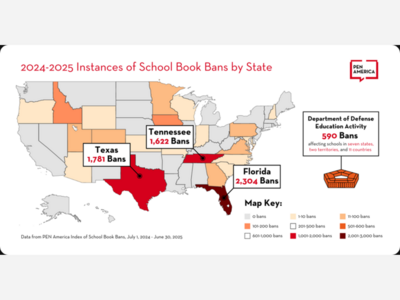
During the 2023 Texas legislative session, the Republican majority advanced a bill requiring every teacher in the state to post the Ten Commandments in their classroom. Talarico was recognized to question the bill’s author, Representative Noble. What followed was five minutes and forty-nine seconds of surgical Socratic demolition, delivered without a raised voice or a wasted word.13
He began with the Fourth Commandment. What does it say? Keep the Sabbath. What does keeping the Sabbath mean? A day of rest, Noble agreed. What day is the Jewish Sabbath? Saturday. What day is it today? Saturday. What day is the Christian Sabbath? Sunday. And on what day was the bill scheduled for its final vote? He asked whether Noble would be willing to postpone the bill to avoid breaking the commandments the bill was designed to honor. She declined.
He then named the Ninth Commandment, the prohibition on bearing false witness, and asked whether she was aware of any legislators who had lied about anything. He named the Seventh, the prohibition on adultery, and asked whether members of the legislature should focus more energy on following the commandments than on compelling others to display them. He then produced a quote from Noble’s own committee hearing, in which she had said that students should see the Ten Commandments and remember that “God is watching.” Noble said she did not recall. Talarico told her he had the committee, the questioner, and the time: 4:30 in the morning. “Obviously you do, though,” he said. Noble replied that they had all been sleep-deprived. The lady’s time expired.
Talarico never accused Noble of hypocrisy. He never needed to. He built the structure and let her occupy it.
The same precision animates his theological arguments. In his June 2024 sermon, he laid out the distinction between Christian activism and Christian nationalism with a sequence that deserves quoting at length: “Instead of posting the Ten Commandments in every classroom, why don’t they post ‘money is the root of all evil’ in every boardroom? Why don’t they post ‘do not judge’ in every courtroom? Why don’t they post ‘turn the other cheek’ in the halls of the Pentagon? Why don’t they post ‘it’s easier for a camel to pass through the eye of a needle than for a rich man to get into the kingdom of heaven’ on the floor of the New York Stock Exchange?”14
His conclusion is exact: “Christian nationalists are not interested in legislating Christian values. They are only interested in legislating Christian dominance.” And then, distilling the contradiction into three lines: “Christian nationalism is putting prayer in schools and taking free lunches out. Christian nationalism is teaching the Bible in schools but refusing to give teachers a pay raise. Christian nationalism is forcing schools to post the Ten Commandments while nominating a candidate for president who has violated almost all of them.”
His mantra is not a bumper sticker. “Love thy neighbor as thyself” extends, in his reading, to members of the LGBTQ community, to the unhoused, to immigrants, to people of other faiths and no faith at all. In the parable of the Good Samaritan, he notes, Jesus defined neighbor specifically as the other, the outcast, the enemy. That is who Jesus is calling us to love. Theologian Barbara Brown Taylor, whom Talarico cites in his sermon, put it plainly: “When my religion tries to come between my neighbor and me, I will choose my neighbor.”15
On January 6th, 2021, Christians carried crosses to the Capitol. Talarico does not let that image rest. “The sight of Christians carrying crosses on January 6th should haunt all of us,” he told the congregation. Not because it was violent, though it was. Because it was a precise inversion of what the cross means.
The Republican National Committee has called Talarico an “out-of-touch Harvard liberal.”16 He grew up in Round Rock, Texas, taught middle school in Texas, and has represented a Texas district for four consecutive terms. The Harvard reference is apparently the strongest available attack, which may explain why Paxton’s campaign keeps migrating to veganism and the theological status of biological sex instead. Ken Paxton, twice indicted, impeached by his own party’s state House supermajority, and confirmed in a civil settlement to have used his office to benefit a donor in exchange for personal favors, is running attack ads about his opponent’s diet.
The polling as of late May 2026 shows Talarico at 47 percent to Paxton’s 44, with nearly a third of Cornyn's primary voters saying they would cross over in the general.17 Texas has not elected a Democratic senator since 1988. That a Democratic candidate is polling ahead of a sitting attorney general who survived impeachment and two federal indictments is either a polling artifact or a structural shift in Texas politics. Talarico’s 1.2 million TikTok followers, his appearance on Joe Rogan’s podcast, and his consistent ability to reach voters well outside the Democratic base suggest the latter.18
Is James Talarico a hopeless idealist? The question is posed by people who believe that realism means accommodation with whatever is currently powerful. It is worth recalling that in 1960, John F. Kennedy was told the country would never elect a Catholic. In 1966, Robert Kennedy was told that speaking plainly about race and poverty in the American South was political suicide. They were told, by realists, that politics did not work.
Politics works differently when the person prosecuting it is authentic in a way that voters, after long exposure to the manufactured kind, can still recognize.
Talarico is that. His religious faith and his political program are not in tension because they derive from the same source. His intellectual formation is deep enough that he can defend that program in any venue, against any interlocutor, at 4:30 in the morning in a Texas legislative chamber, without notes and without flinching. Send him to the Senate in 2026, and in six years, when the country is exhausted and looking for something it recognizes as decent, there will be a man who spent half a decade governing from principle in the most hostile political environment in America, with a record to show for it, a theology to explain it, and a voice that can fill a room without shouting.
Don Quixote, in Cervantes’ telling, eventually sees the windmills for what they are. The tragedy is not the delusion. The tragedy is the moment he stops believing. James Talarico shows no sign of stopping.
It has been said before that when fascism comes to America, it will be wrapped in the flag and carrying the cross.19 Look around. The flag is everywhere. The cross is being carried. And in Texas, a seminarian is running for Senate on the argument that the cross belongs to something else entirely.
Texas has surprised the country before. It may be about to do it again.
The author can be reached at iko@uw.edu.
Opinion June 2026



Overcast, with a high of 63 and low of 48 degrees. Overcast in the morning, partly cloudy for the afternoon and evening, overcast overnight.