46° and Overcast



Image
Senior Director, Conservation America Campaign, Environment America
By: Steve Blackledge
Strategic planning, creative imaginations and rich emotional lives. If you think I’m talking about people, think again.
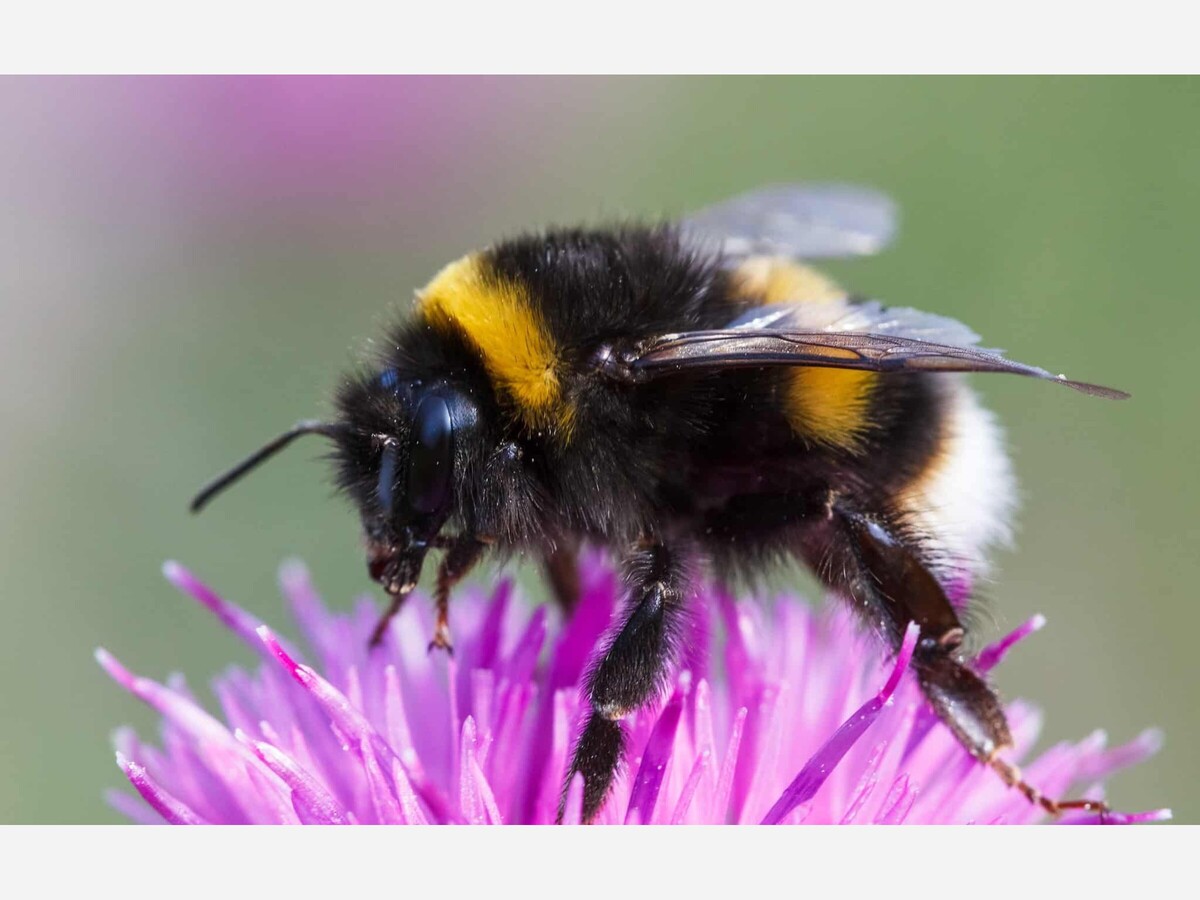
Their brains may be tiny, but researchers are discovering that bees are remarkably intelligent, in some ways as intelligent as humans.
While bees are buzzing around
pollinating the food we eat and the flowers that line our parks and
streets, they’re utilizing incredible cognitive skills.
Bees have been observed solving puzzles
that require impressive problem-solving. In one study, researchers
created a box with sugar inside that could be opened by rotating a
lid–but the bees had to rotate a blue lid for it to work, not the nearby
red one. After trial and error, the bees learned that only the blue lid
unlocked the box.
Bees can count and discriminate
between up to four objects at a time, understanding that each one is
separate. They can even look at two groups of objects, compare the two,
and identify which group has fewer in it. Even more impressive,
researchers think that bees might even understand the concept of zero, an idea that puzzled even mathematicians for many years.
Using tools is regarded as one of the
core signs of advanced species development, and it signals impressive
brain capacity. It turns out that some species of bees might be using
tools, at least at a basic level. For example, researchers have found
that some species of honey bees use feces as a deterrent to attacks from giant hornets by placing them near their colony.
When bees travel miles to faraway
fields and gardens, they use the position of the sun and Earth to return
home with impressive accuracy. They aren’t just led by instincts–bees
navigate by monitoring the position of the sun throughout their journey,
and using it as a compass to retrace their steps. Some researchers even think that bees use the earth’s magnetic field to help them navigate.
Researchers have found that bees can make a mental image
of objects they encounter and recall the image to identify the object
later. For example, a bee can pollinate a flower and think of the plant
later that day, remembering what it looked like. And, some researchers
think bees might even dream while they sleep.
Bees don’t just learn from their own
trials and errors, but they’ve also been found to exhibit the remarkable
social trait of learning from other bees’ behaviors. For example, when
one bee figured out how to solve a puzzle in an experiment, other bees
observed the behavior and followed suit. This behavior helps bees work
productively in their hives.
Some bees ‘talk’ with each other through movements called waggle dances,
which involves walking in specific patterns repeatedly. These moves
have meaning: bees use them to express needs, divide up work to be more
productive, share information and help each other find food sources.
Colonies have distinct “dialects,” with different moves. In each colony,
young bees watch more experienced bees’ movements and learn how to
dance.
Bees can see a human face, remember what it looks like, and pick it out of a group of faces. Researchers discovered this
by printing out images of multiple peoples’ faces, aiming to see if
bees could identify the same person repeatedly. The bees picked out the
same target face over and over again with 90% accuracy, and they even
remembered the correct face days after the initial experiment.
Bees haven’t been found playing soccer in the wild–yet–but scientists have trained bees
to manipulate a small ball into a goal-like structure on a field for a
reward of sugar. Even more impressively, the bees watched each other
doing the task and learned it, and got better at it.
From hope to disappointment, complex
emotion is often seen as a uniquely human experience, or at least one
shared by few other species. But researchers have found that bees
experience a range of emotions. Bees’ tiny brains release dopamine and serotonin when they eat sugar, signaling happiness. And, bees feel PTSD-like symptoms after traumatic events and
feel more optimistic about foraging after they’ve found a good food
source. We might not be able to see it, but there’s a lot more to bees
than meets the eye.
Right now, many bees’ populations are
plummeting. One cause of their decline is development, such as roads
and buildings, which are stripping pollinators of the habitat they need.
Another reason for their decline is the use of pesticides on lawns and
farms. In fact, in the U.S., we use about one billion pounds of
pesticides every year.
These pesticides, including neonicotinoids, or neonics, attack bees brains, paralyze them, weaken their immune systems, and kill them.
If bees’ incredible intelligence
wasn’t reason enough to fight for them, these pollinators are also
crucial to sustaining our agriculture and for maintaining healthy
ecosystems.
That’s why we are calling on retail
giant Amazon to stop selling neonic pesticides to the general public. We
already helped convince [X] states to restrict the retail sale of these
pesticides on store shelves. We need online retailers to follow their
lead, and stop the sale of these bee-killing pesticides to the general
public.
Join us in calling Amazon to stop selling bee-killing pesticides, add your name today.
Senior Director, Conservation America Campaign, Environment America
Steve directs Environment America’s efforts to protect our
public lands and waters and the species that depend on them. He led our
successful campaign to win full and permanent funding for our nation’s
best conservation and recreation program, the Land and Water
Conservation Fund. He previously oversaw U.S. PIRG’s public health
campaigns. Steve lives in Sacramento, California, with his family, where
he enjoys biking and exploring Northern California.



Sunny, with a high of 62 and low of 39 degrees. Sunny for the morning, overcast during the afternoon and evening, clear overnight.