70° and Cloudy



Image
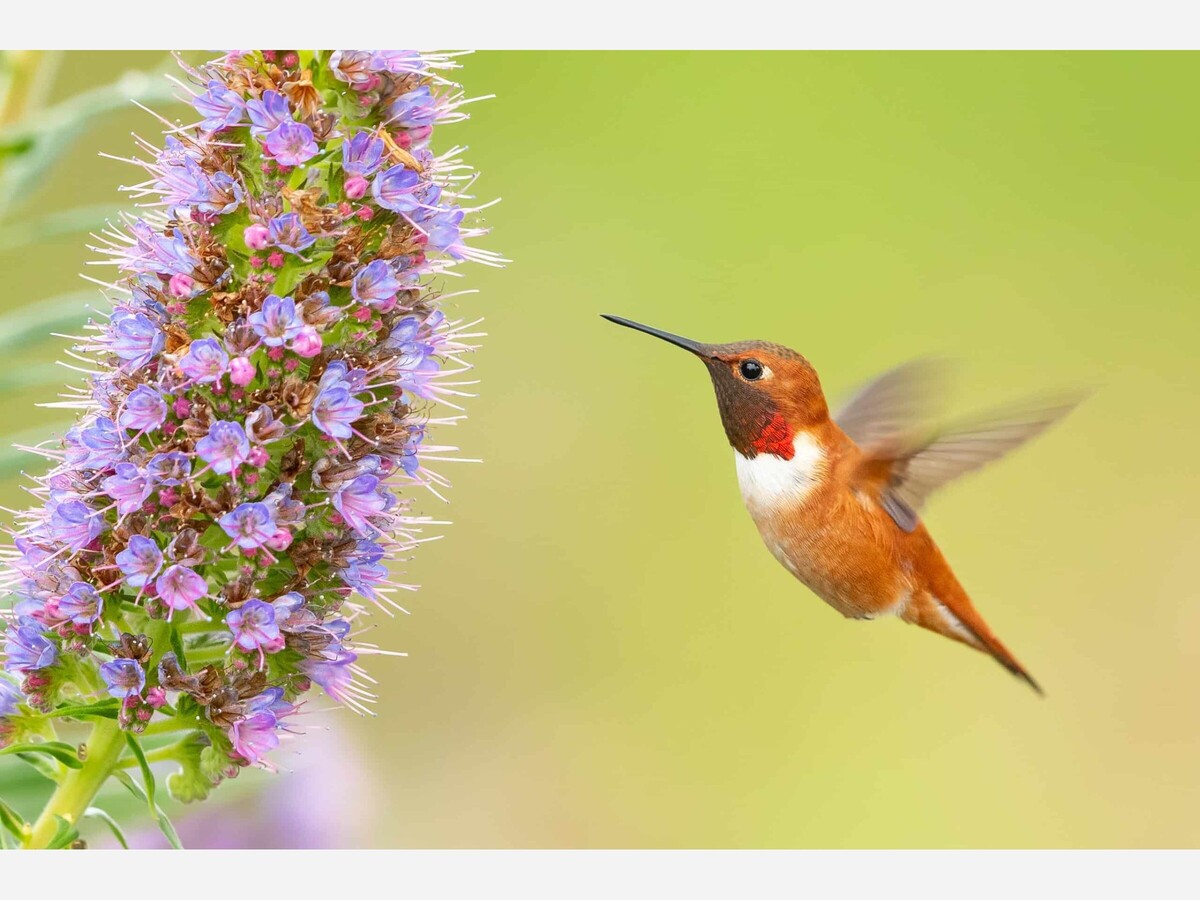
Hummingbirds go straight for the glucose, says LeBaron. They can eat more than twice their body weight each day, visiting 100 or more flowers to do so. Because of their large body size and high metabolism, these excellent pollinators can't store fat like warblers and other small birds.
Natural nectar is clear, so it's not a necessary ingredient, and there's some debate over whether food coloring could harm birds. To refill your bird feeder, LeBaron says to make your own sugar water by boiling 4 parts water with 1 part refined white sugar. DIYing instead of buying ensures no added colors or chemicals. Other sweeteners like honey and brown sugar go rancid faster and can make hummingbirds sick.
However, it's a myth that hummingbirds will only feed on red flowers.
Yes, there is some upkeep involved. Bird feeders should be cleaned thoroughly every week with a vinegar-water solution, a task that can become quite time-consuming.
Because of their quickness and the shape of their beaks — which act like "spring-loaded sets of chopsticks" — hummingbirds can snatch insects right out of the air.
If you want to attract hummingbirds to your yard, plant different types of blooms that flower during the entire period when hummingbirds may appear. Landscaping with native species serves both the birds and the ecosystem. You can find out about planting in your region here.
And they consume five to eight doses of nectar per hour!
Natural nectar is the key to a healthy diet for these birds — so they'll always prioritize a good flower over a feeder.
A hummingbird's brain makes up around 4.2% of its body weight. This is the most in the entire wild bird group.
Hummers don't produce musical sound. It's more of a chatter, experts say. Some species even make these sounds with their tail feathers.
Hummingbirds have an evolutionary adaptation that benefits them during cold nights, according to LeBaron. Torpor is a deep sleep similar to hibernation, in which the metabolic rate can drop by as much as 95%. This lowers the body temperature so much that a torpid hummingbird maintains a hypothermic threshold that nears death. It takes them 20 minutes to an hour to wake up from this state.
People mistakenly worry about the cold when it comes to hummingbirds, but it actually poses little risk. Some hummingbirds breed in the Andes, where temperatures drop well below freezing. Come fall or winter, the food supply is the limiting factor, not the temperature.
Averaging about 50 times per second, hummers redefine the laws of flight. They hover over their food instead of landing. In fact, 25 to 30% of a hummingbird’s weight is in its pectoral muscles. Their near-invisible wings can propel them forward, backward, and upside down, says LeBaron.
That may sound like a lot, but it's actually the smallest amount out of any other bird species in the world. They don't need heavy feathers weighing them down — this helps them fly not only more easily but also faster.
They can, however, use their feet — which evolved to become lighter over time — to slide sideways while perched on a branch. They also use them for bathing and itching.
Relative to body size, this is, again, the most in nature. LeBaron says a hummer must remain in a nearly constant state of motion to survive.
They take about 150 breaths per minute!
This helps them lap up nectar easier — almost like a cat.
It's a total myth that hummers sip nectar through a straw-like tongue. They actually flick their tongue 18 times per second, collecting the nectar and pulling it into their mouths. The hair-like extensions help make the process easier.
Keep a close eye out for hummingbird nests, because they won't be easy to spot. The average size is about the same as a half-dollar coin.
Hummers produce the smallest eggs in the world. They each weigh less than 1/50 of an ounce and are often compared to the size of a jelly bean.
Hummers use spiderwebs to help bind their nests together. The rest of the structure is mostly made from lichen and moss.
The vivid hues on their throats are caused by many factors, including lighting levels, moisture, viewing angle, and wear and tear.
Since their pectoral muscles are so critical for flying, they make up about 25 to 30% of the bird's total weight.
Hummers see in ultraviolet light — and can see much further than humans.
Contrary to popular belief, hummers can smell the environment around them just a little bit. They mainly use it to detect danger or predators lurking near flowers they're hoping to collect nectar from.
Other factors, such as species, habitat conditions, and predators, can also play a role. There have been instances of a hummer living much longer than five years as well.
The male hummingbird isn't involved at all in the nesting or egg-incubation process and will continue to mate with others at the same time.
They are often called "flying jewels." This nickname dates back to when Spanish explorers first visited the Americas and were wowed by the birds' vibrant colors.
They may also be referred to as a bouquet, shimmer, or glittering. The perfect names for such small and unique birds!
Hummingbirds at Home, Audubon’s citizen-science program, aims to document natural nectar sources over the seasons. The 10- to 15-year project is recruiting people to identify what they eat and how often they feed (as long as it's from nature, not a feeder).
If you're looking for an easy way to ID your garden visitors, the Audubon Bird Guide is a free digital field guide app inclusive of over 800 species of birds (both male and female) in North America.
While digital access is great, there's nothing like a bound field guide. For hummingbirds, LeBaron recommends two specialized texts. Peterson Field Guide: Hummingbirds of North America by Sheri Williamson provides a descriptive overview that covers both biology and conservation, and Steve N. G. Howell’s Hummingbirds of North America: The Photographic Guide is more succinct with stunning images.


Mist, with a high of 70 and low of 47 degrees. Sunny during the morning, cloudy for the afternoon, mist overnight.