

Image
As a new federal pre-crime system begins identifying Americans for what they might do — before any law is broken — the Trump regime is making a list and expanding its network of concentration camps. There is no federal crime of “domestic terrorism.” But the memo seems designed to allow First Amendment-protected speech to serve as the basis for initiating law enforcement investigations that could lead to other criminal charges, and to chill free speech and association. In other words, NSPM-7 could open the door to criminalizing viewpoints the Trump administration doesn’t like.
The FBI now runs a dedicated “NSPM-7 Joint Mission Center”; with personnel from 10 federal agencies, it is busy “proactively” identifying domestic terrorists motivated by any of the following beliefs:
In other words, if your political views are practically anything other than MAGA, you’re on notice, courtesy of the FBI.
We shouldn’t be surprised, as horrific as this is. When wannabe dictators are elected to lead countries and seek to end democracy and impose absolute rule, they typically follow a simple series of steps, often referred to as “The Dictator’s Playbook.” They:
— Purge government institutions of professionals and replace them with yes-men and groveling toadies.
— Strip their political party of anybody who’d even consider challenging them.
— Help friendly oligarchs buy up the nation’s primary media and turn it into a mouthpiece for the new regime, while directing billions in government contracts as recompense to those same men.
— Pack the courts so they and their buddies can crime without consequence while they drain the government of wealth.
— Build a separate, parallel police force loyal first and foremost to Dear Leader they can use to terrify the population and “keep order.” (Schutstaffel, Brownshirts, Blackshirts, Tonton Macoute, Central Nacional de Informaciones, Brigada Político-Social, KGB/FSB, ICE, etc.)

As the federal government rolls out a new system aimed at identifying potential threats before crimes occur, critics warn it represents a major expansion of domestic surveillance and political targeting.
Reporting indicates that federal agencies have already begun compiling lists of individuals based on such criteria, including reviews of social media activity going back several years.
The new FBI-led “Threat Screening Center” replaces a post-9/11 program and brings together multiple federal agencies to proactively identify potential domestic threats. The administration’s budget includes a significant increase in counterterrorism funding to support this initiative, citing concerns about political violence and online radicalization.
Supporters argue the expanded approach is necessary to address evolving security risks. However, critics say it risks blurring the line between preventing violence and monitoring lawful political expression, raising concerns about free speech and civil liberties. They also warn that the scope of enforcement could extend beyond violent actors to include advocacy groups, donors, and individuals expressing controversial opinions.
The program reflects a broader shift in federal law enforcement priorities toward domestic threats, with officials reporting a sharp rise in related investigations and an expanding watchlist. At the same time, some observers note that these developments have received limited public attention.
At its core, the debate centers on whether increased security measures can be balanced with constitutional protections — or whether the expansion of government power risks undermining the very freedoms it is intended to protect.
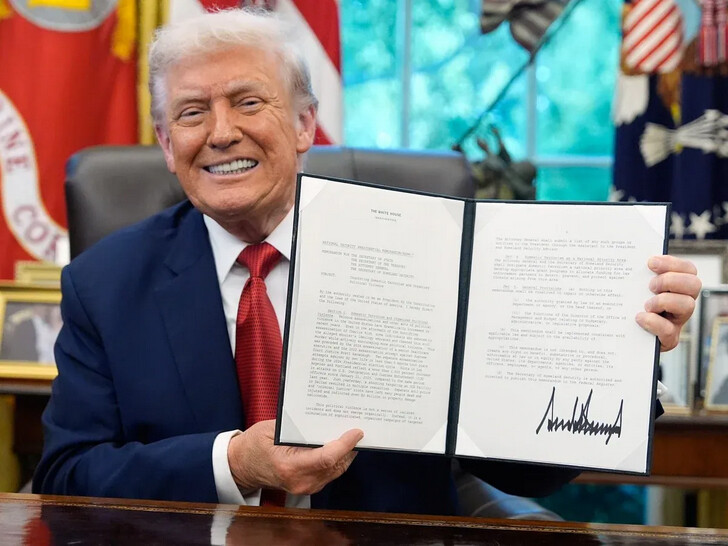 Trump displays National Security Presidential Memorandum-7


Sunny, with a high of 57 and low of 41 degrees. Partly Cloudy during the morning, sunny for the afternoon, clear in the evening, mist overnight.