70° and Cloudy



Image
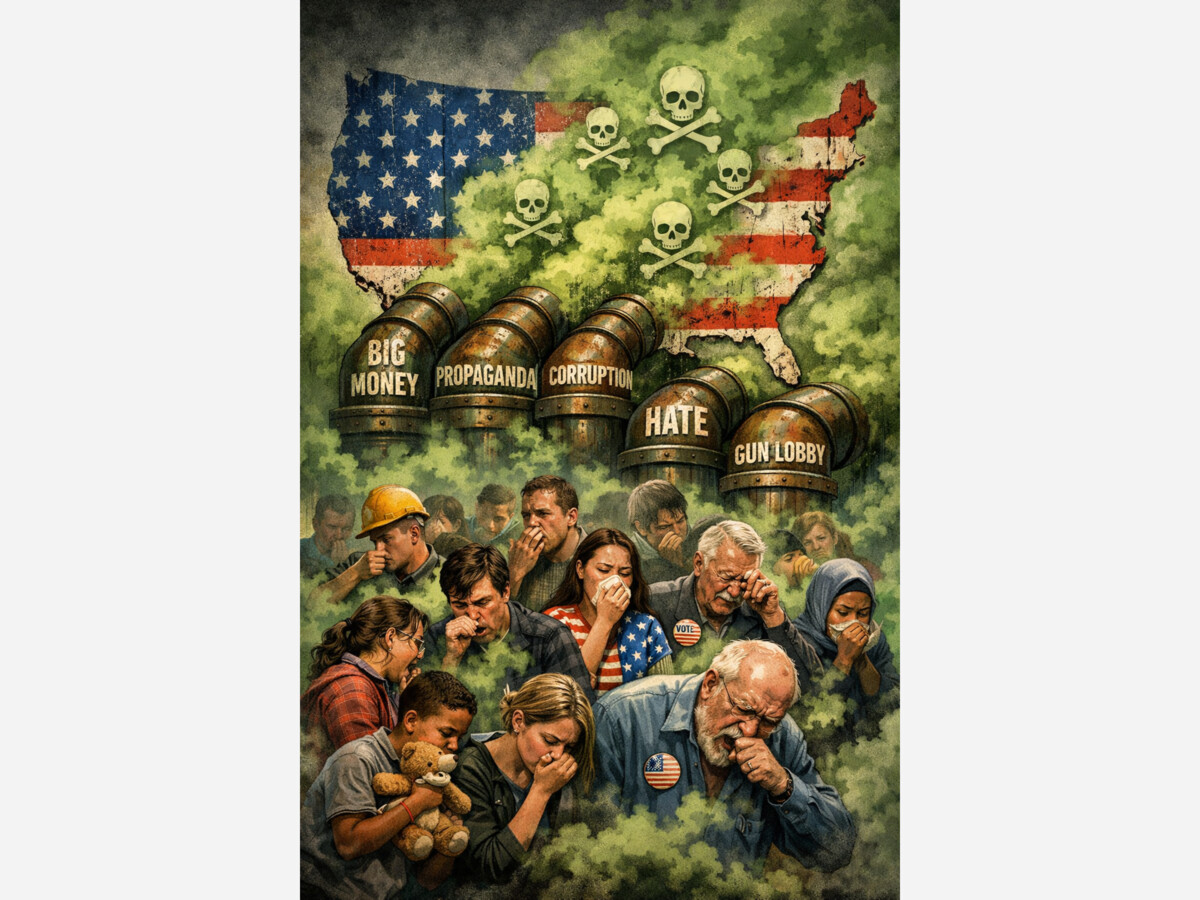
Donald Trump did not create the forces now straining American democracy—he is their most visible product.
For decades, political, economic, and cultural shifts have reshaped the country in ways that critics argue undermine democratic institutions, weaken public trust, and concentrate power. What feels like a moment of crisis today is, in many ways, the culmination of a much longer trajectory.
Money and Politics
A key turning point came in the early 1970s. In 1971, future Supreme Court Justice Lewis Powell warned the business community that the free enterprise system was under threat from consumer advocates and regulatory movements. His memo urged corporations to become more politically active.
Within a decade, legal decisions—including First National Bank of Boston v. Bellotti—expanded the role of money in politics by framing political spending as protected speech. Later rulings, most notably Citizens United v. FEC, accelerated that trend.
The result has been a dramatic increase in political spending by corporations and wealthy individuals. Critics argue this has given donors outsized influence over policy, while supporters maintain it reflects free expression in a democratic system.
Labor and the Middle Class
At the same time, union membership declined sharply. Political messaging, economic restructuring, and legislation—such as right-to-work laws—reduced organized labor’s influence.
Union representation in the private sector fell from roughly one-third of workers in the mid-20th century to about 10 percent today. As unions weakened, so did one of the traditional pillars of the American middle class, contributing to widening income inequality and reduced economic mobility.
Race and Political Strategy
Race has also remained a central—and divisive—force in American politics. Beginning with strategies like Richard Nixon’s “Southern Strategy,” political appeals increasingly targeted racial and cultural anxieties.
Subsequent campaigns and media ecosystems amplified these divisions, often framing political debates around identity, immigration, and national belonging. Critics argue this has deepened polarization and eroded social cohesion.
Religion and Politics
The relationship between religion and politics also shifted. Beginning in the late 20th century, evangelical leaders and political operatives forged closer alliances, bringing religious identity into partisan politics in new ways.
This alignment reshaped debates over social policy and the role of religion in public life, with lasting effects on elections and governance.
Guns and Public Safety
Gun policy represents another area of sharp division. Court rulings such as District of Columbia v. Heller affirmed an individual right to bear arms, while gun ownership expanded significantly in the United States.
Today, the U.S. has far higher rates of gun ownership than other developed nations. Gun violence—particularly among young people—has become a leading public health concern, intensifying debates over regulation and rights.
Institutions Under Strain
Concerns about democratic institutions have also grown. Changes to voting laws, disputes over election administration, and declining trust in media and government have all contributed to a sense of instability.
Meanwhile, the rise of partisan media and online disinformation has transformed how Americans consume information, often reinforcing existing beliefs rather than fostering shared understanding.
Global Context
These challenges are not unique to the United States. Around the world, democratic systems face pressure from authoritarian models, disinformation campaigns, and internal polarization.
American politics now exists within that broader global struggle over the future of democracy.
A Moment of Decision
Moments of crisis in American history have often led to reform. From the Civil War to the New Deal era, periods of upheaval have produced efforts to expand rights, rebuild institutions, and restore public confidence.
Today’s challenges raise similar questions: how to balance free expression with fair representation, how to rebuild trust in institutions, and how to ensure economic opportunity is widely shared.
Whatever the answers, one constant remains—participation. Voting, civic engagement, and public accountability continue to shape the direction of the country.
The current moment may feel unprecedented, but it is also part of a longer story—one that is still being written.

Mist, with a high of 70 and low of 47 degrees. Sunny during the morning, cloudy for the afternoon, mist overnight.