46° and Fog
Image
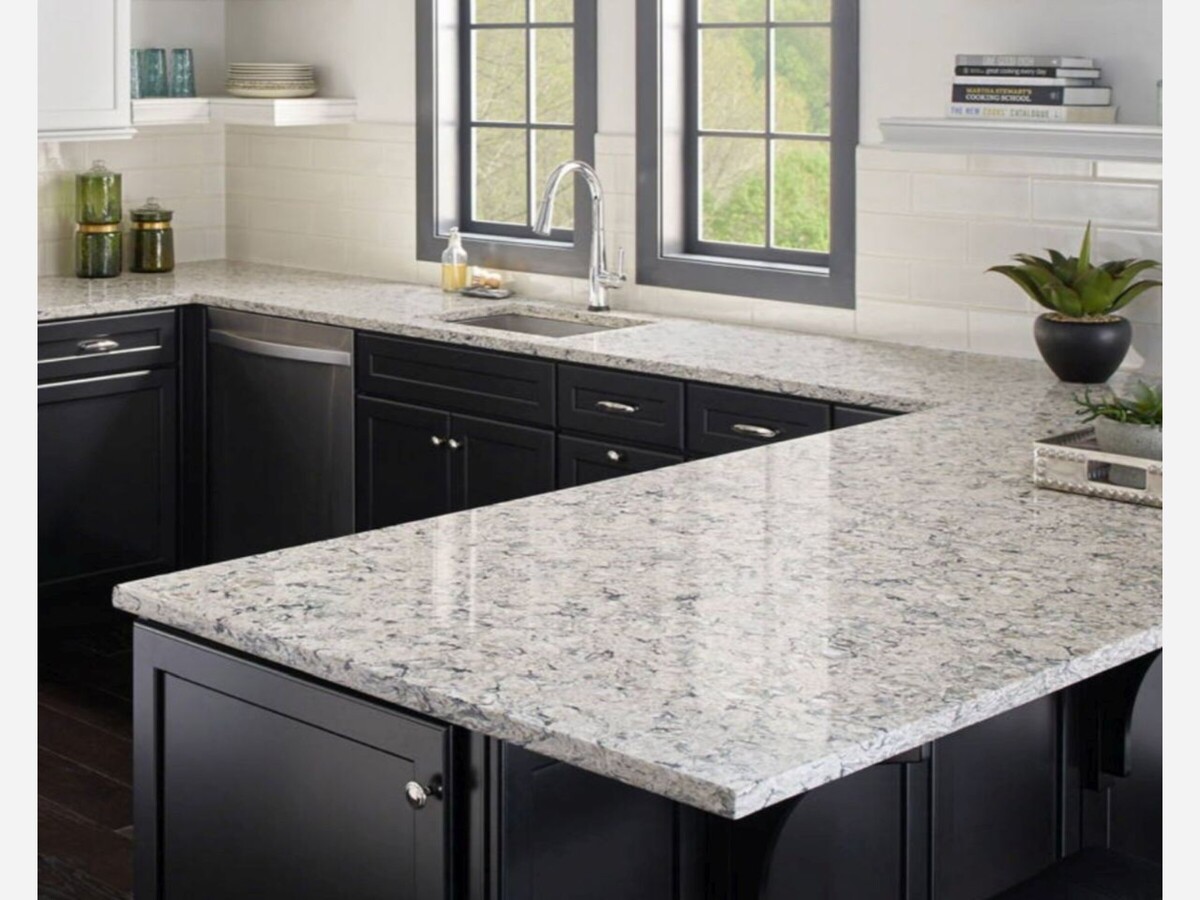



Engineered quartz countertops have become one of the most popular choices for kitchens and bathrooms, prized for their durability, appearance, and relatively low maintenance. But the material faces growing scrutiny over a serious occupational health hazard: the enormous amounts of respirable crystalline silica dust released when engineered stone is cut, ground, drilled, or polished.
The danger is primarily to workers who fabricate and install the countertops—not to homeowners simply living with a completed countertop. When engineered quartz is cut or ground, microscopic silica particles can become airborne and penetrate deep into the lungs. Repeated exposure can cause silicosis, an incurable and potentially fatal lung disease, as well as lung cancer, chronic obstructive pulmonary disease, and kidney disease.
The issue has become particularly serious in California, where health officials have documented hundreds of cases of silicosis among workers exposed to engineered stone. Public health organizations told Congress in January that California had confirmed 481 cases among workers exposed to engineered stone, with at least 27 deaths and 52 lung transplants reported as of Jan. 8, 2026.
One company at the center of the debate is Minnesota-based Cambria, one of the largest U.S. manufacturers of engineered quartz.
Cambria maintains that the problem is not the stone itself but unsafe fabrication practices. At a January 2026 congressional hearing, Cambria Chief Legal Officer Rebecca Shult testified that the company was defending approximately 400 silicosis lawsuits, most of them filed in California.
Cambria argues that it can fabricate its products safely when it follows OSHA requirements and appropriate dust-control measures. The company says its own fabrication facilities have successfully controlled worker exposures below OSHA's action level.
Public-health experts and attorneys representing sick workers dispute that characterization. They point to the unusually high silica content of engineered stone and the difficulty of controlling the extremely fine dust generated during fabrication. The Association of Occupational and Environmental Clinics told Congress that engineered stone can contain more than 90% crystalline silica and argued that conventional workplace controls have not prevented serious disease among workers.
While Cambria is defending hundreds of lawsuits, the company has also advocated for federal legislation that would significantly restrict workers' ability to sue stone-slab manufacturers.
H.R. 5437, introduced by Rep. Tom McClintock (R-Calif.), is called the Protection of Lawful Commerce in Stone Slab Products Act. The bill would bar civil lawsuits against manufacturers and sellers of stone slabs for injuries resulting from downstream fabricators altering those products. The legislation would also apply to pending lawsuits.
Cambria's chief legal officer testified before the House Judiciary Subcommittee in January in support of the legislation. Cambria argues that manufacturers should not be held responsible when independent fabrication businesses violate workplace safety requirements.
"Companies like Cambria need relief from the ... lawsuits," Shult wrote in testimony submitted to Congress, arguing that the underlying problem is unsafe fabrication workplaces, not the existence of the stone slabs themselves.
Cambria has also spent significant sums lobbying Congress. According to lobbying records cited by KQED, the company spent approximately $250,000 on lobbying in 2025 and another $50,000 during the first quarter of 2026. Its lobbying firm, Brownstein Hyatt Farber Schreck, reported work involving manufacturing and labor/workplace issues, including H.R. 5437.
The proposed legislation has drawn strong opposition from organized labor and public-health organizations. The AFL-CIO told Congress that H.R. 5437 would shield manufacturers and sellers from federal and state civil litigation when workers are injured or become ill from their products, including protection in pending cases.
Supporters of the legislation argue that it is fundamentally a question of liability: if a manufacturer sells a legal raw material and an independent fabricator subsequently alters it while violating workplace-safety requirements, the manufacturer should not automatically be responsible for the resulting injuries.
Opponents argue that engineered stone differs from ordinary building materials because its exceptionally high silica content creates a severe hazard during the very process for which the slabs are designed—cutting, grinding, and polishing them into countertops.
That distinction is at the heart of the debate.
Cambria and other manufacturers contend that properly controlled fabrication is possible. At the same time, California regulators and public-health officials have documented continuing cases of severe silicosis among countertop workers despite efforts to improve workplace controls.
The issue has also prompted governments outside the United States to take a different approach. Australia prohibited the manufacture, supply, and use of engineered-stone benchtops, panels, and slabs in 2024 because of the occupational health risks associated with silica exposure.
California has also considered additional restrictions, including measures aimed at limiting or eliminating the use of high-silica engineered stone.
For homeowners, the distinction matters: owning an installed quartz countertop is not the same as being exposed to silica dust. The principal hazard occurs when the material is fabricated, modified, or demolished in a way that releases respirable silica into the air.
The larger policy question now before Congress is whether responsibility for that hazard should rest primarily with the fabrication businesses that generate the dust, or whether manufacturers that produce and sell high-silica engineered stone should also remain subject to civil liability when workers become seriously ill.
That question is increasingly being fought not only in courtrooms, but on Capitol Hill.



Light rain shower, with a high of 55 and low of 45 degrees. Light rain shower during the morning, patchy rain nearby in the afternoon and evening, light drizzle overnight.