46° and Mist
Image
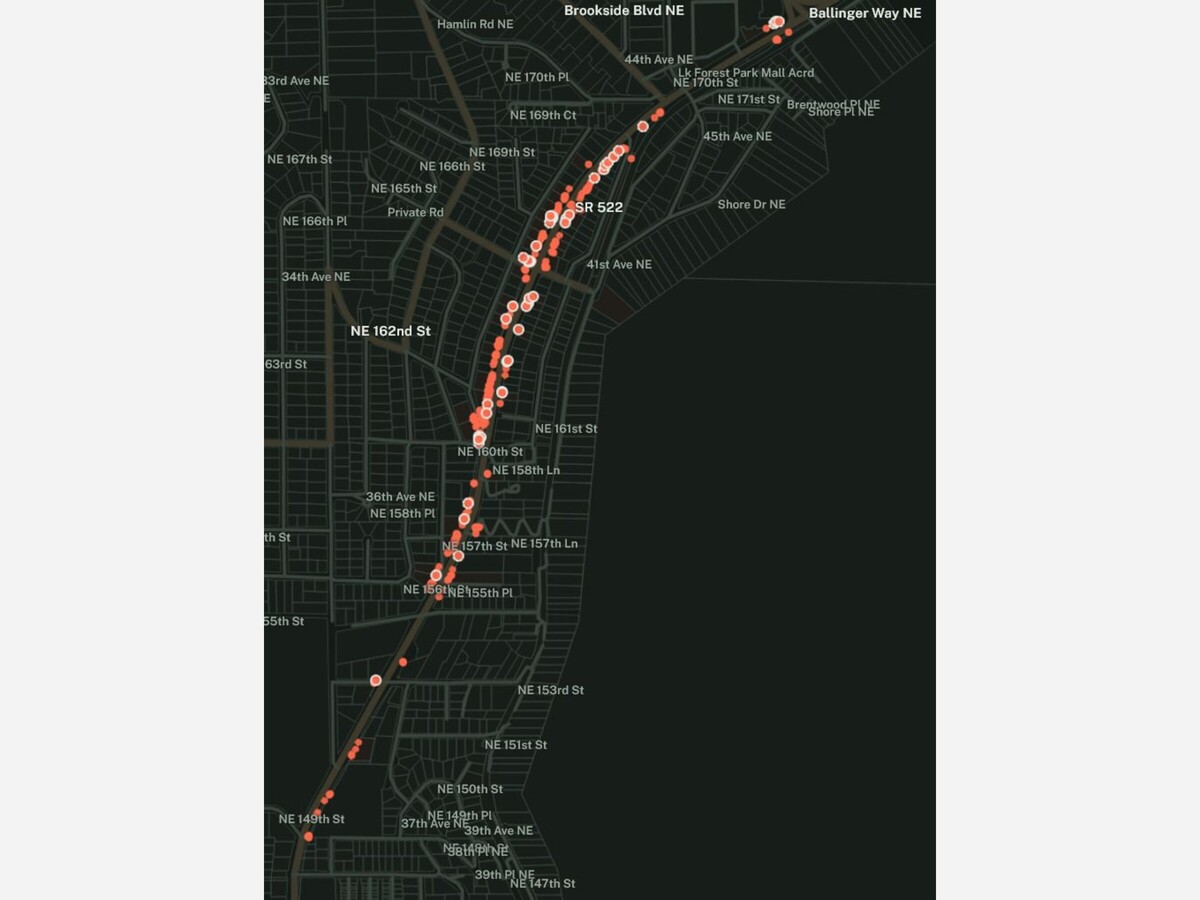
LFP resident Elliot Fisher has mapped every tree in Sound Transit's corridor tree permit, which can be searched by address



From CORE
Interactive map of trees proposed for removal in Lake Forest Park, created by LFP resident Elliot Fisher.
Here’s how to reach City staff and elected officials to ask questions or express your concerns or ideas:
City Administrator Phil Hill - phill@cityoflfp.gov
Public Works Department Nova Heaton - nheaton@cityoflfp.gov
Planning Department Mark Hofman - mhofman@cityoflfp.gov
City Council members - citycouncil@ci.lake-forest-park.wa.us
Despite limited benefits and enormous cost, Sound Transit’s Bus Rapid Transit project on SR 522/Bothell Way is moving forward in our community. Yesterday marked the start of a 30-day comment period for five critical-area permits Sound Transit submitted for the upcoming Bus Rapid Transit construction on SR 522/Bothell Way. This is the first set of what may be over 100 permits Sound Transit will file with the city. CORE encourages Lake Forest Park residents to review the permit application materials on the LFP website and submit comments to the city by the end of October.
On September 28, the LFP Stewardship Foundation sent constituents an excellent email, attached below. In addition to the questions it raises, consider the following:
How will LFP inform residents about the substance and progress of these permits?
Has disturbance to Bsche’tla Creek soil stability been adequately addressed?
Do the 2021 and 2024 SEPA reviews adequately encompass the project as proposed in 2026? Is additional SEPA review warranted?
Will the five critical area permits be reviewed in the context of their combined impact?
What mitigation is planned for acknowledged soil liquefaction risks at the pedestrian improvements near 41st Avenue NE/Burke-Gilman Trail?
Why are critical area permits relying upon documents labeled “DRAFT”?
Are downstream residents adequately protected from stormwater impacts?
What lower tree impact alternatives did Sound Transit study, and why were they not pursued?
LFP resident Elliot Fisher has also mapped every tree in Sound Transit's corridor tree permit, which can be searched by address.
Sept 28, 2026 Email from LFP Stewardship Foundation:
Bus Rapid Transit construction is coming to Lake Forest Park --
What residents should know
Bus Rapid Transit (BRT) construction on SR 522/Bothell Way will be the largest and most impactful project that Lake Forest Park (LFP) has experienced in decades. Sound Transit (ST) has begun applying for permits, and construction is expected to begin next summer. It is critical that our community be informed about permanent changes and major impacts that the BRT will bring to LFP neighborhoods and what lies ahead.
What do we know so far? According to city staff and available documentation:
Construction is expected to start in summer 2027 and will last about 20 months. This will coincide with construction of the SR 104 roundabout, which is expected to be completed in October or November 2027.
The BRT corridor will run on SR 522/Bothell Way NE for about 1.5 miles starting at SR 323/NE 145th Street. An estimated 95,000 tons of dirt and debris will be excavated, and at least 109 tax parcels are affected, either by permanent or temporary takings.
The project will require significant onsite space for its base of operations, storage and maintenance of large equipment, materials and vehicles, and facilities (including parking) for its workforce, among other functions.
Tree Removal Overview
Approximately 347 trees are proposed for removal, including 47 landmark trees and 300 significant trees. These trees represent an estimated canopy of 139,828 square feet and are predominantly native species, including Douglas fir, western red cedar, western hemlock, and bigleaf maple.
Tree Inventory Basis and Site Impacts. The tree category designations are based on tree inventories conducted between 2020 and 2023. As a result, some trees may have grown and now exceed their assigned category. Of the trees proposed for removal, 177 are located within erosion hazard or steep slope areas, and 17 occur within stream or wetland buffers.
Tree Replanting and Ecological Implications. Sound Transit proposes planting 223 small replacement trees in the corridor right-of-way, restoring an estimated 80,996 square feet of canopy. Because these species are generally non-native, smaller-canopied, shallower-rooted, and shorter-lived than the trees removed, they are unlikely to provide equivalent ecological or monetary value. Native replanting appears limited to Animal Acres to address the loss of 17 buffer trees. The City’s 2023 Urban Forest Ecosystem Services and Values Report used i-Tree Eco to quantify benefits such as pollution reduction, cooling, stormwater control, wildlife habitat, carbon sequestration and storage, noise buffering, economic value, and public health. It remains unclear whether Sound Transit’s mitigation fully compensates the community for these lost ecosystem services.
Remaining Mitigation Requirement. After proposed ROW replanting, a deficit of 120 trees and 58,832 square feet of canopy would remain. Sound Transit proposes to mitigate this remaining loss through an off-site planting program, or planting in LFP-designated ROW corridor replanting areas. Any remaining deficits would be mitigated by paying replanting fees to the City's tree fund.
The project will cross or interact with principal sensitive areas in our city, including Bsche’tla Creek and the NE 153rd ravine; McAleer and Lyon Creeks; and a portion of the Burke-Gilman trail. It directly intersects multiple sensitive natural systems in Lake Forest Park, including Lake Washington drainage routes; steep-slope and landslide-hazard zones; liquefaction-prone soils; shallow groundwater; and locations requiring retaining walls, structural foundations, drainage modifications, and other geotechnically complex work.
Information about ST3 BRT is available on the City’s website. The site includes thousands of pages of technical documents, plans, and permit materials that can be challenging and time-consuming for residents to interpret. To date, no public meetings have been scheduled regarding the project.
How can you help?
We will continue seeking information about this major project, but we are an all-volunteer nonprofit with limited time and resources. Please support our community by contacting our elected officials and city staff with questions and concerns, sharing updates with neighbors, and encouraging transparent public communication throughout the process.
Below are some suggestions for key questions regarding the BRT:
How will the City inform and update the public throughout construction?
Will tree replanting mitigation be required within Lake Forest Park to preserve local canopy function, or will tree banking be allowed outside of city limits?
Will the City account for the ecosystem services lost by removing mature native trees when determining replanting requirements or calculating fee-in-lieu payments? If not, how will the City ensure that mitigation adequately compensates for the loss of benefits such as carbon storage, stormwater management, cooling, air-quality improvement, sound buffering, and wildlife habitat? Will the City consult an environmental economist to evaluate the effectiveness of proposed mitigation?
When will tree removals begin, and how will they be sited and conducted?
What is the City’s role throughout the project? Will it have input and ongoing consultations with ST?
Where will the contractors’ bases of operations be located? On which days and during what hours will construction occur?
What is the City’s traffic plan for these bases and construction areas? Will BRT construction and rerouting coincide with other major construction in the area, including the waterfront park, roundabout on 40th Place NE and various culvert improvements? Has a comprehensive plan for coordination of overlapping projects been established?

Overcast, with a high of 59 and low of 43 degrees. Mist in the morning, overcast in the afternoon, clear for the evening, overcast overnight.

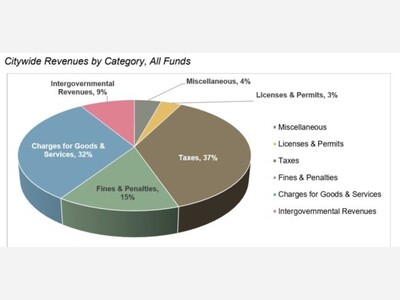

This is really well done and should be read by everyone who will vote on the property tax levy lid increase in our upcoming election. I hope every LFP council member has already read it and understands it.
I'm impressed with the analysis but I didn't see any attribution so am curious to know whether this was written by a human or generated by AI.
Both.