54° and Partly Cloudy
Image
LFP Stewardship Foundation



LAKE FOREST PARK, Wash. — A growing wave of
environmental awareness is sweeping through Lake Forest Park, prompting
hundreds of residents to mobilize in defense of the city's unique—and
fragile—natural landscape.
Long celebrated for its distinctive "urban forest" character, the
city is experiencing what organizers call an unprecedented surge in
grassroots conservation. Local citizens are increasingly committing both
their time and financial resources to restore and protect the network
of streams, wetlands, and wooded bluffs that define the community.
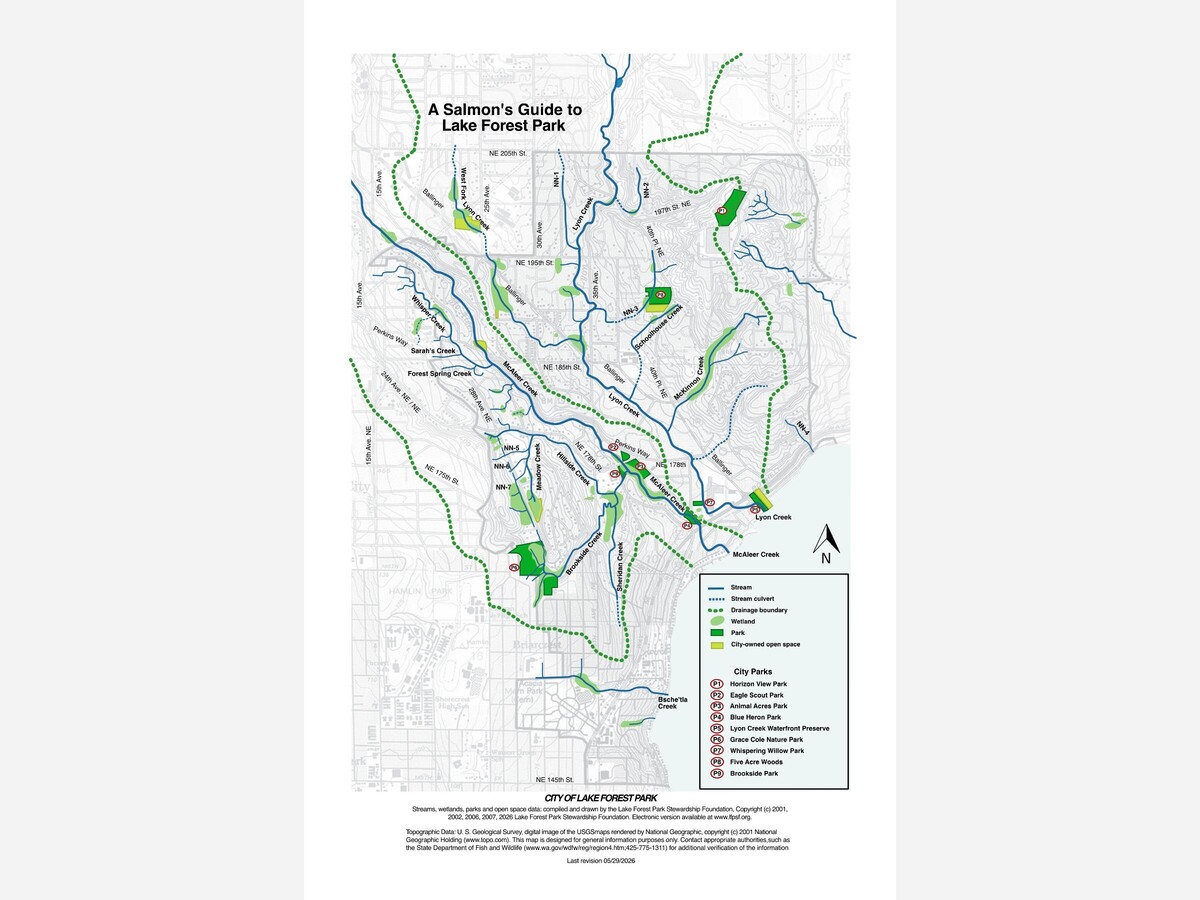
Lake Forest Park's geography is uniquely defined by the clear streams
that cut through the city, providing critical habitats for local
wildlife. While these waterways and wetlands still teem with songbirds,
their historical residents—native salmon and trout—have faced severe
challenges.
Local advocates point out that while some creeks still support active
fish populations, decades of suburban development and changing land-use
patterns have degraded many of these historic habitats.
"Time, and our ways of using land, have not been kind to
them," per the LFP Stewardship Foundation's webiste, framing the urgency
behind the current conservation push.
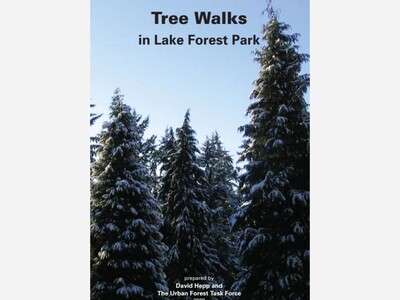
To channel this rising community energy, a new educational resource
has been published to serve as a roadmap for local preservation efforts.
Described as a brief geography and history of the city's open spaces,
the handbook compiles detailed maps and ecological data on Lake Forest
Park’s most vulnerable areas.
The new publication focuses on identifying and protecting:
Project organizers hope the guide will give the growing environmental
movement a significant boost, equipping residents with the precise
geographic and historical knowledge needed to protect the fragile
natural treasures right in their own backyards.


Overcast, with a high of 68 and low of 49 degrees. Overcast for the morning, sunny during the afternoon, partly cloudy during the evening, overcast overnight.