69° and Cloudy


Image

On June 4th, 2026, the city held a Ballinger Way roundabout project update meeting. If you missed it, you can view the following summary:
The City of Lake Forest Park is spearheading a major
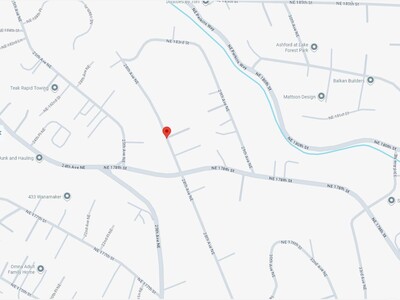
infrastructure upgrade at the intersection of 40th Place Northeast and State Route 104, introducing a roundabout to improve traffic efficiency and
safety. Senior Project Manager Mike Reid, along with other city officials, recently held a detailed community meeting to update residents on the project's progress, timeline, construction plans, and anticipated traffic impacts.
This post summarizes key insights from that update,
including project history, design rationale, construction phases, detour
plans, pedestrian considerations, and community concerns. The aim is to
provide a thorough overview of how this multi-phase project will unfold
over the coming months while keeping you informed about traffic
adaptations and neighborhood impacts.
The idea for an intersection improvement at this location dates back to 2003, when the city proposed installing a traffic signal, but it did not meet the required warrants. In 2018, a shift in
strategy led to the adoption of a roundabout proposal, which gained initial
funding support. Since then, extensive public outreach, design efforts,
and environmental reviews have been conducted.
Additionally, Lake Forest Park secured several grants
from Washington State and WSDOT, ultimately enabling completion of the project design by early 2025. The contract was awarded in the fall of 2025
to the lowest responsible bidder.
Roundabouts offer multiple benefits over traditional signalized intersections:
Traffic engineers have consistently found that
roundabouts significantly improve safety compared to stop-controlled or
signalized intersections, creating safer environments for all users.
The intersection poses unique challenges due to the presence of critical utilities, including water mains, power lines, gas
lines, and drainage infrastructure. Key design elements include:
Originally scheduled for earlier completion, work
experienced delays due to necessary design revisions related to utility
conflicts and pole locations. Active contractor coordination ensured that the design incorporates steel soldier piles for retaining walls that require deep foundations up to 35 feet below grade.
The current goal is to begin construction by late July
to early August 2025, with an overall project duration of approximately
18 months.
Phase 1 – Southeast Quadrant Work:
Begins with retaining wall construction, waterline lowering, utility
relocations, and grading. This part includes the establishment of a temporary
road to maintain residential access to 184th Street.
Subsequent Quadrants – Northeast and Northwest:
Construction proceeds in a generally counterclockwise sequence,
systematically replacing infrastructure while maintaining phased access
and safety.
Final Phase – Partial Intersection Closure:
Approximately 30 to 40 days will be required for a partial closure of the intersection to complete key elements such as concrete splitter islands,
center island planting, and final paving with channelization.
Overnight Full Closure:
The last few days will involve overnight full closures for final paving
and striping activities, with carefully planned detours to minimize
daytime disruption.
The city worked diligently to minimize the impacts of the closure, opting against a full closure of the corridor during peak
hours. Instead, SR 104 will maintain two lanes most of the time, down from three, which will squeeze traffic but preserve flow.
Traffic counts show:
City officials coordinate closely with Kenmore,
Shoreline, and the Washington State Department of Transportation to manage
and optimize detour routes, including capturing traffic upstream to
reduce congestion within the project area.
Alongside vehicular improvements, the project will
introduce multiple marked crosswalks equipped with pedestrian-activated
flashing beacon infrastructure—though the infrastructure may initially
be installed for future activation.
Pedestrian facilities will feature:
The design includes in-lane bike accommodations,
reflecting modern best practices. Cyclists will remain on the roadway,
treated as vehicles, simplifying navigation through the roundabout.
During construction, biking through the corridor is discouraged due to safety risks.
Two types of walls support intersection geometry adjustments:
The final wall appearances will be determined through contractor samples and finalized during early construction.
Residents raised concerns about potential bottlenecks
and questioned why larger multi-lane roundabouts are not being
considered. Project engineers confirmed:
Dead-end streets pose concerns if trucks get stuck.
The city plans to install additional signage prohibiting large trucks from entering
dead-end segments, though enforcement remains a challenge.
Temporary speed humps and possible local-access-only
barricades are planned to reduce speeding and cut-through traffic on side streets such as 40th Avenue NE and 35th Avenue NE.
Requests for crosswalk improvements near schools and
churches are acknowledged, with potential inclusion of Rectangular Rapid
Flashing Beacons (RRFB) at crosswalks. Community members are encouraged
to submit formal requests via the city portal to ensure prioritization.
While no specific budget exists for enforcement in this project, the police department actively monitors problem areas and deploys speed-enforcement patrols as needed. Public Works and
Police Departments coordinate responses to changes in traffic patterns during construction.
The city is pursuing future funding to upgrade SR 104 from the roundabout southward to Highway 522, aiming to create a complete street with:
This expansive project requires multi-year design and
funding efforts, with potential applications for partial state funding in
the near future.
The Lake Forest Park 40th Place NE roundabout project
is a comprehensive effort to address safety, traffic flow, and
pedestrian accessibility at a critical intersection. With careful
planning, phased construction, and inter-agency coordination, the city
aims to minimize disruption while delivering long-term community
benefits.
Key takeaways include:
Residents are encouraged to stay informed through
city updates and participate in feedback channels as the project
progresses toward completion.
Q: When will construction start?
A: Expected by late July to early August 2025.
Q: How long will construction last?
A: Approximately 18 months.
Q: Will 40th Place NE be closed completely?
A: No, it will be limited primarily to northbound traffic; southbound will be detoured.
Q: How will pedestrians cross safely?
A: New crosswalks with pedestrian-activated flashing signals will be installed; lighting is also upgraded.
Q: Are bicycles accommodated?
A: Yes, in-lane bike travel is designed for the roundabout.
Q: What about truck traffic on dead-end streets?
A: Additional signage will be installed to restrict truck access.
Q: Will there be speed enforcement?
A: Police are actively monitoring and will deploy speed patrols as needed.
Stay tuned for ongoing project updates from the City
of Lake Forest Park to ensure a smooth transition through the
construction phases and a safer intersection for years to come.

Overcast, with a high of 72 and low of 49 degrees. Mist for the morning, overcast for the afternoon, mist overnight.



This is really well done and should be read by everyone who will vote on the property tax levy lid increase in our upcoming election. I hope every LFP council member has already read it and understands it.
I'm impressed with the analysis but I didn't see any attribution so am curious to know whether this was written by a human or generated by AI.

Both.