54° and Light drizzle
Image



After two weeks of all-day sessions with a Hearing Examiner, City
officials, the park consultants, and an attorney representing some Beach Drive residents, the Hearing Examiner found that there are three main problems that need to be addressed before the City can move forward:
The City proposed 22 parking spots at the park, including 6 load/unload spots, 3 ADA spots, and 1 City vehicle spot. 12 spots at
City Hall were proposed.
It’s unclear whether the City understands the scope of the parking
issues at Waterfront Park. When asked, Deputy Mayor Tracy Furitani said:
“The hearing examiner's decision is being considered by FACET, the City's consultant on the park, and the Council is expecting an update at one of the next two Council meetings.
The City will, of course, consider what the consultant suggests, and
Council will base any decision about access, parking, and features of
the park on resident comments and cost constraints, and shares the same concerns on this topic as you and other residents.”
Another question is whether FACET (the park consultant) fully
understands the parking challenges. The author noted that one of the consultants mentioned public bus service near the Waterfront Park during a meeting with the Hearing Examiner, implying that it was a viable means of park access.
The only problem with that is that the only bus stops in LFP are
along Bothell Way and Ballinger Way, so that just means you’d need to
lug your cooler, kids, and paddleboard to the nearest bus stop, get to
the correct side of the state highway with very few crosswalks, and
hopefully arrive at the park before midnight. Ditto for your return
trip.
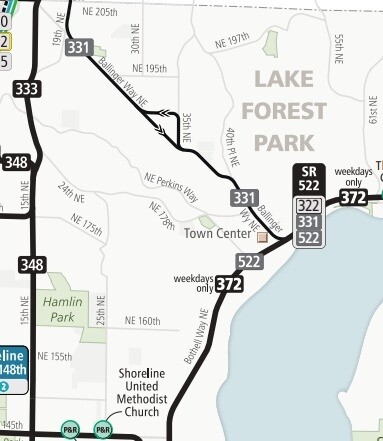 Bus stop locations.
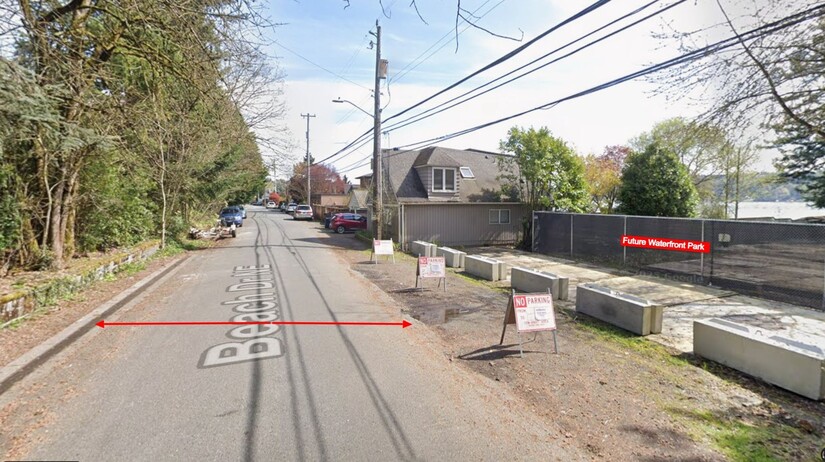 Beach Drive width.
Another logistical problem is the width of Beach Drive. It’s really
only about a single lane width, and there’s no turnaround at the end of
it.
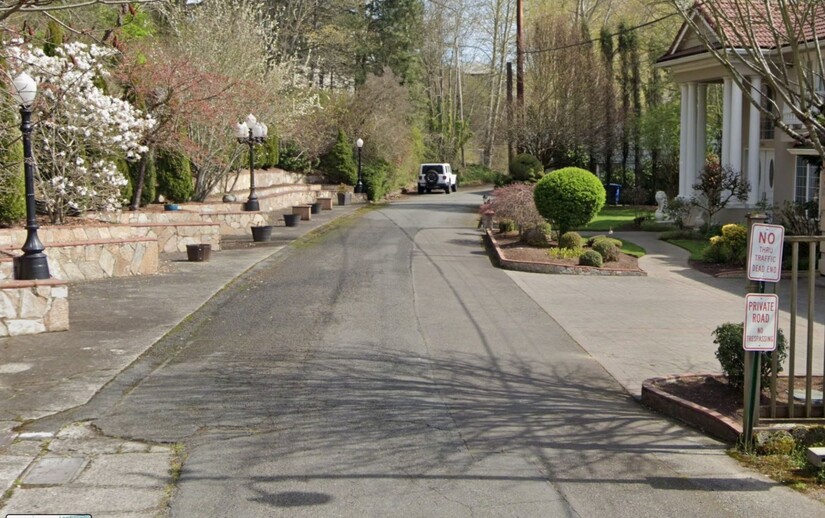 No turn around at end of Beach Drive.
The LFP Civic Club is similar in size to the proposed Waterfront
Park, and its 40 parking stalls and 13 boat-trailer spaces fill up on
nice summer days and weekends. It’s unknown if anyone from the City or the consulting firm inquired with the LFP Civic Club about parking issues. Non-LFP Civic Club members can’t park at the Civic Club, so they tend to park in front of City Hall. The same place that Waterfront Park visitors would be seeking parking. On Sunday Farmer Market days, parking for both parks would be even more challenging.
The park plan also includes an event space and an annex, which would require additional parking if utilized while simultaneously
accommodating beechgoers.
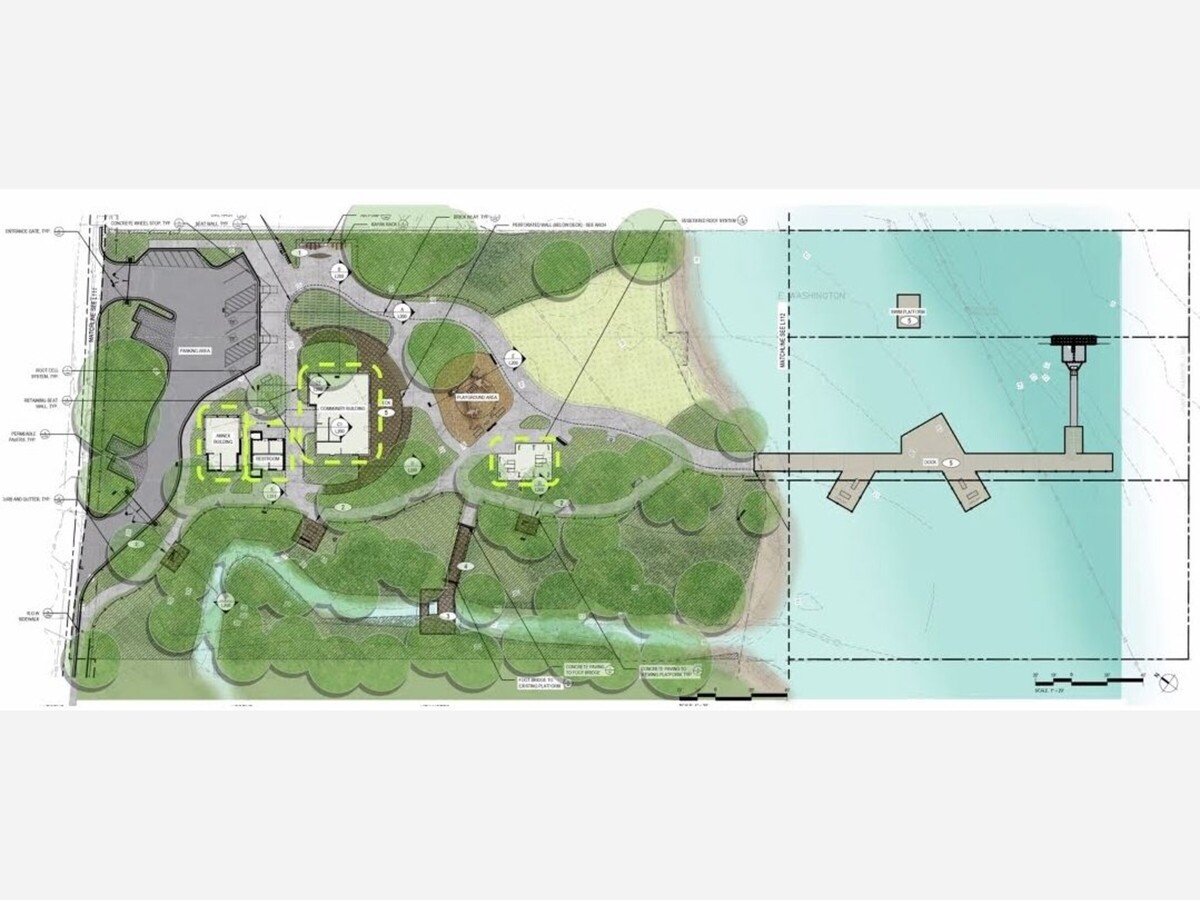
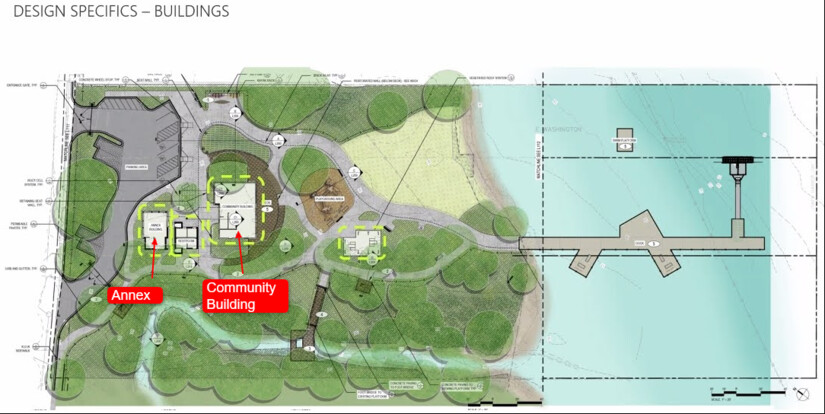 Park plan.
THE SOLUTION?
Since the initial concept of the Waterfront Park, several local
residents have wondered how parking would work. Thankfully, the City didn’t have to pay us 100k in consulting fees to come up with a plan that frankly shouldn’t be a surprise to anyone who has been to most National Parks or flown on an airline. Shuttle service:
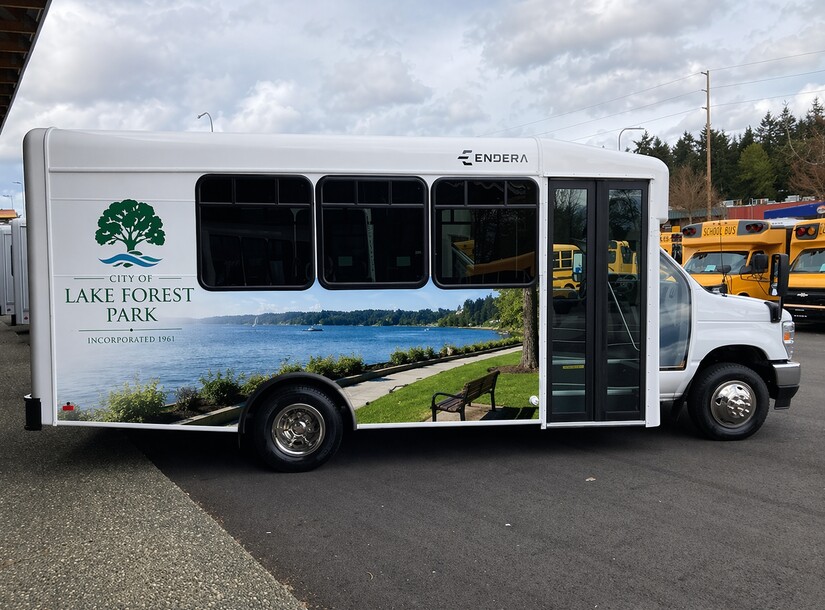 Example of 14 passender shuttle.
The benefits include:
Shuttle stops would be determined as part of the process and could include Brookside and LFP Elementary when school isn’t in session, possibly the old Kellogg site, the old Cedarbrook site, Animal Acres, the
Town Center, and others to be determined.
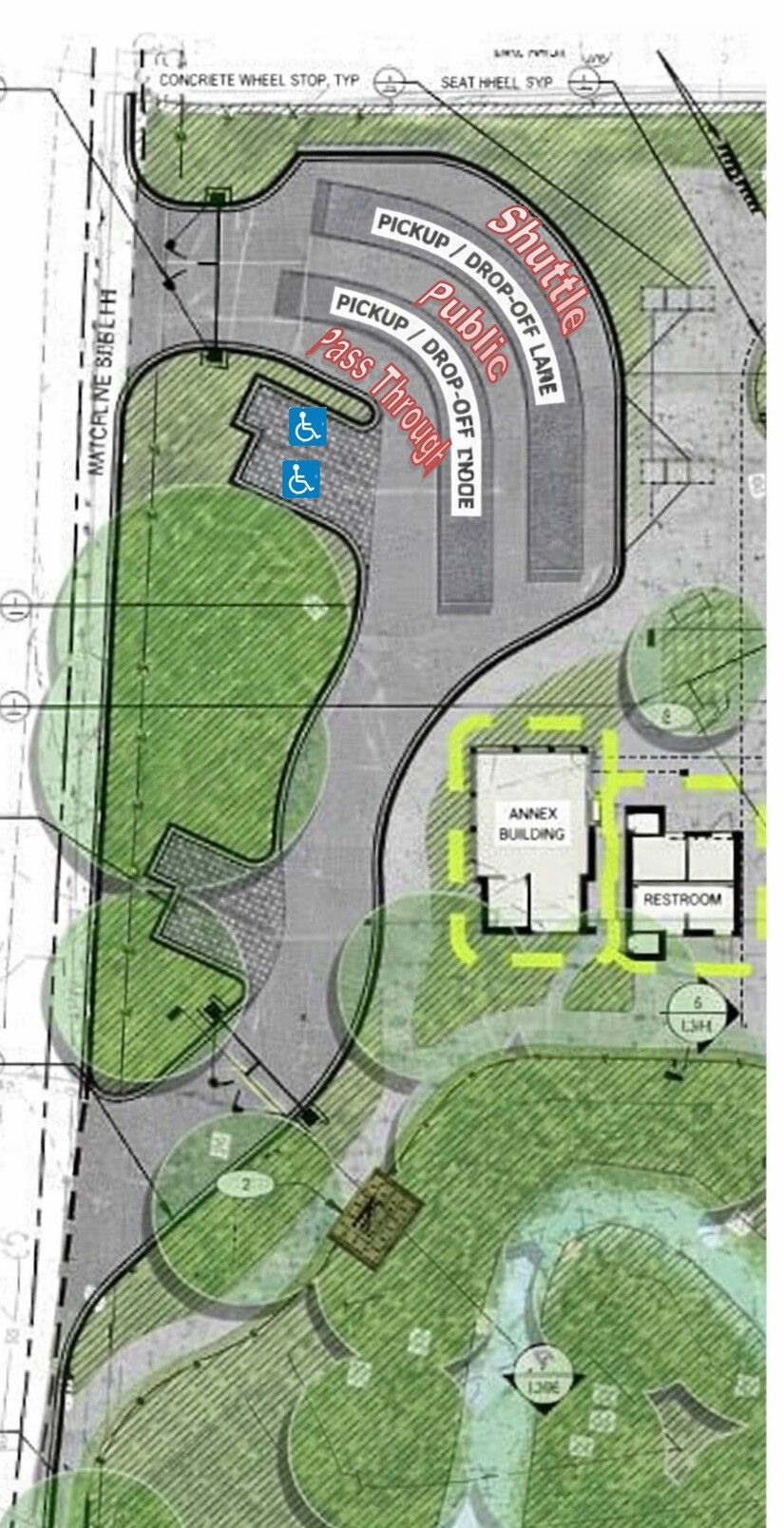 A park plan with pull-through lanes would be a potential solution.
Reached for comment, City council member Paula Good had this to say:
Waterfront Park, Community Vision, and Fiscal Responsibility
The Lake Forest Park Waterfront Park project represents a vision that many residents in our community are excited about, and I share that enthusiasm. The Park was already in process when I came on Council, so I was not part of the beginning concepts. At the same time, I believe strongly that our role as Councilmembers is to ensure that this vision is shaped directly by our residents—and grounded in practical realities.
In my view, before moving forward with additional concepts—such as a shuttle service, a new idea to expand neighborhood business allowances, or an event space at the park—we need to ask a fundamental question: What do our residents want, and are they willing to financially support it?
Recent developments underscore why this matters. The Hearing Examiner identified three key issues that must be resolved before the project can proceed:
Of these, parking is perhaps the most immediate and complex concern. The current proposal includes a limited number of on-site and nearby spaces, yet real-world conditions suggest demand could far exceed supply—especially when considering peak summer use, overlap with the Lake Forest Park Civic Club, and existing pressures at City Hall and Town Center parking. Neighbors directly adjacent are also concerned about indiscriminate parking on their dead end as well as enforcement of any parking violations.
The novel idea of a shuttle system has been raised as a potential solution. It is creative and, in theory, could help alleviate congestion and improve access. However, it also raises significant long-term considerations. Operating a shuttle system would require ongoing funding, staffing, maintenance, and insurance—effectively placing the City in the position of running a transportation service that would include liability for any mishaps. These are not one-time costs; they are permanent obligations that must be weighed carefully against other City priorities.
Similarly, proposals for an event space within the park introduce additional operational, maintenance and parking demands. While preliminary maintenance estimates have been provided by Facet, they remain early-stage and do not yet fully capture long-term financial impacts or staffing requirements.
All of this is unfolding as the City evaluates the need for another levy ballot to address existing revenue gaps—before adding new programs, services, or facilities. It is also unclear whether proposed changes, such as relaxing codes to allow for expanding neighborhood business allowances, would generate sufficient revenue to meaningfully offset these costs.
For these reasons, I believe our next step should be broad, intentional community outreach. We need to engage residents across all neighborhoods to understand their vision for the City, their priorities, and their willingness to fund them. Outreach on these topics is still in its early stages, and we should not get ahead of the public we serve.
This is not about slowing progress, it is about getting it right. If our community supports these ideas and is willing to invest in them, then we can move forward with confidence. But that direction and financial commitment must come from our residents, not assumptions.
Our responsibility is to ensure that any path we take is both community-driven and financially sustainable.

This is really well done and should be read by everyone who will vote on the property tax levy lid increase in our upcoming election. I hope every LFP council member has already read it and understands it.
I'm impressed with the analysis but I didn't see any attribution so am curious to know whether this was written by a human or generated by AI.
Both.

Overcast, with a high of 60 and low of 45 degrees. Patchy rain nearby in the morning, overcast in the afternoon, clear in the evening, overcast overnight.