48° and Clear
Image
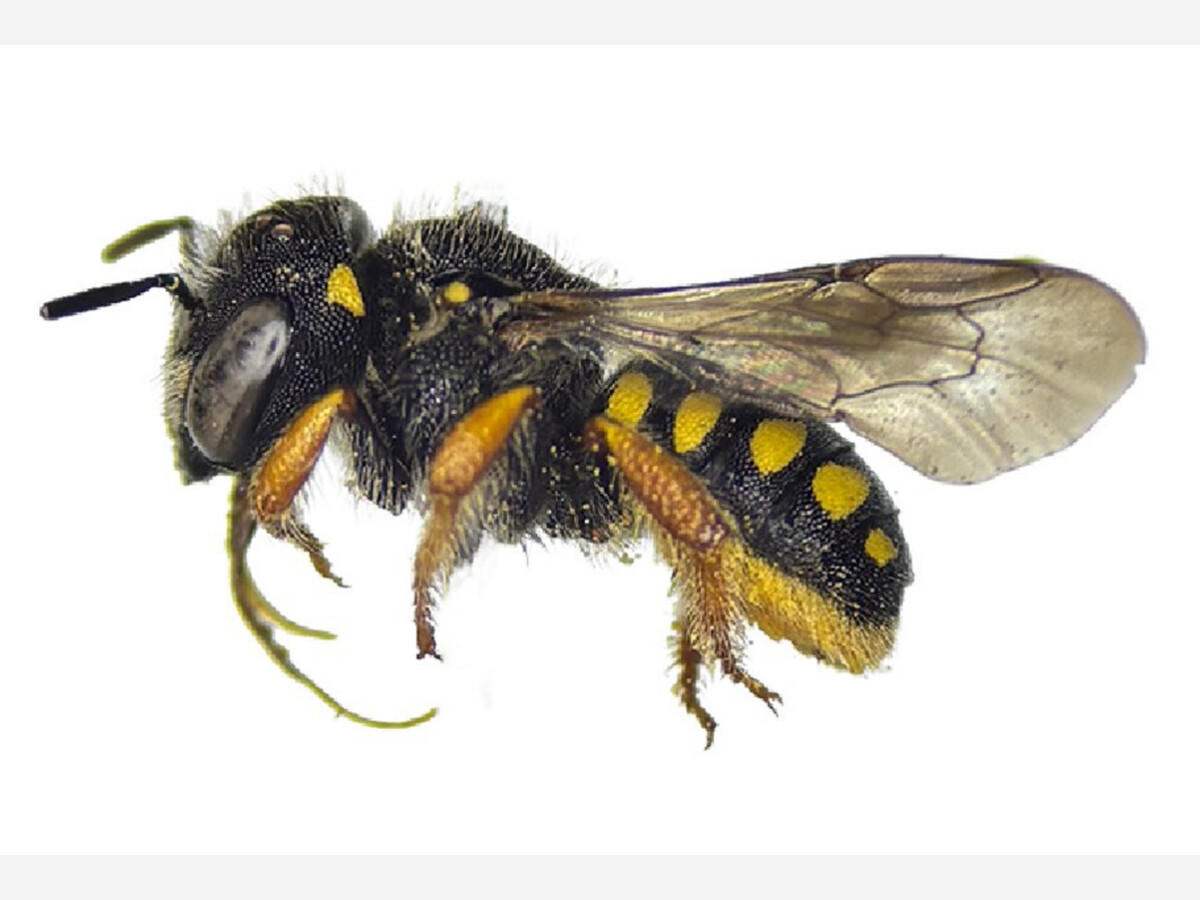
New to WA. Common name: European small woolcarder



OLYMPIA, WA – After wrapping up its second full year, the Washington State Department of Agriculture’s (WSDA) Washington Bee Atlas
(WABA) has collected and identified records of nearly 30 new or rare
bee species in the state. Seventeen species were new state records* —
meaning they are the first known records of finding the bee in
Washington. WABA also found 12 species which had not been recorded in
the state for at least 50 years, one of which was most recently recorded
in the state in 1882.
WABA volunteers collected the new and rare bee species from 2023–2025.
Volunteers submit their bees to WSDA’s Pollinator Program for
identification at the end of each season, but the identification process
can take months to years, depending on how rare the bee is and how
difficult it is to identify.
Understanding which native bee species are in Washington and how they
are faring over time is important not only for scientific research and
conservation, but also for the region’s food security.
Reliance on honey bees alone puts food supplies in a precarious position
as honey bees face increasing challenges. Additionally, honey bees will
not pollinate certain crops, such as legumes, and crops receive better
pollination and show improved fruit set when native pollinators are
present. Supporting native bees helps ensure that crops will be
pollinated even if honey bee populations decline.
WABA’s effort to document the state’s native bees and their host plants
will provide data necessary to conserve and help these essential
pollinators thrive. The data collected will also inform plans to develop
ecoregion-specific plant lists and seed mix recommendations.
WABA collected the following state record bees, which had never been
recorded in Washington before. Some species were discovered in multiple
counties. (Photos at end of press release.)
WABA collected the following rare bees, which had last been recorded in Washington before 1970. (Photos at end of press release.)
The discovery of the new and rare bees was revealed at the annual Master
Melittologist Conference in Corvallis, OR on March 14. The announcement
comes just months after WABA announced 24 new and rare bee species last July.
The Washington Bee Atlas is discovering large numbers of new and rare
bees because it is the first statewide effort to sample for them since
the early 1900s, and most areas of the state are significantly
undersampled.
Still in its infancy after having started in 2023 and only completing
its first full field season in 2024, the Washington Bee Atlas has
experienced dramatic expansion and success thanks to state funding for
the program, close partnerships with Oregon State University (OSU) and
Washington State University (WSU), and due to the program’s rapidly
growing number of enthusiastic and dedicated volunteers.
“Oregon State University built the framework for what a Bee Atlas can
look like. Their training and data systems allowed us to get off the
ground running here in Washington,” Karen Wright, WSDA’s pollinator
taxonomist, said.
At the conference, WABA awarded Washington State University’s M.T. James Entomological Collection
its Partner Recognition Award. “WSU’s collection and the entomology
staff have been critical for the Washington Bee Atlas. The specimens
they maintain for the community provide not only a historic record of
bees and other insects, but we couldn’t identify many of the bees we are
finding today without the collection and world-class taxonomists at
WSU,” Wright said.
The public has also shown extensive support for the project. So far,
over 150 volunteers have completed the WABA training, collected, and
submitted bees for identification.
WABA volunteers may only collect on property where the landowner has
given the program permission to do so. Numerous public and private
landowners have granted volunteers this permission. The new and rare
bees announced this month were found on land owned by the following
entities:
“Without access to land, we wouldn’t be able to complete our mission of
documenting Washington’s bees. We are grateful to everyone who has
granted us the ability to collect on their land,” Wright said.
State, county and city landowners who would like to permit WABA
volunteers to survey for native bees on their property can email pollinators@agr.wa.gov for more information.
The Washington Bee Atlas is seeking volunteers to continue to grow the
program and document Washington’s native bees and their host plants.
“These discoveries are really just the tip of the iceberg,” Wright said.
“Washington is a large state, and it is going to take many people and
lots of time to really sample the entire state throughout the seasons.
This will establish a baseline for how native bees are doing in our
state. If you care about pollinators and pollination, this is an
exciting time to join the program, as bees are understudied in
Washington. There are lots of opportunities to discover or rediscover
bees.”
Volunteers undergo training through OSU’s Master Melittologist Program.
The program is similar to the Master Gardener Program, but the focus is
on native bees. Because most bees cannot be identified to species from
photos, volunteers learn to capture, preserve, and pin museum-quality
specimens and document their host plants. They receive all the training
and supplies they need to collect and pin the bees.
Those who do not want to collect bees but who are interested in learning more about and supporting native bees can visit WSDA’s native bees webpage and the Washington Native Bee Society.
* The new and rare bee records are determined by reviewing
scientifically-verified and databased collection records at the time
that WABA identified the specimens.
Some specimens were collected under a cooperative agreement between
Oregon State University and the U.S. Fish and Wildlife Service for
inventory and monitoring of bees on National Wildlife Refuges in the
Pacific Northwest.

This is really well done and should be read by everyone who will vote on the property tax levy lid increase in our upcoming election. I hope every LFP council member has already read it and understands it.
I'm impressed with the analysis but I didn't see any attribution so am curious to know whether this was written by a human or generated by AI.
Both.

Overcast, with a high of 60 and low of 45 degrees. Light drizzle for the morning, overcast in the afternoon, clear in the evening, overcast overnight.