49° and Clear
Image
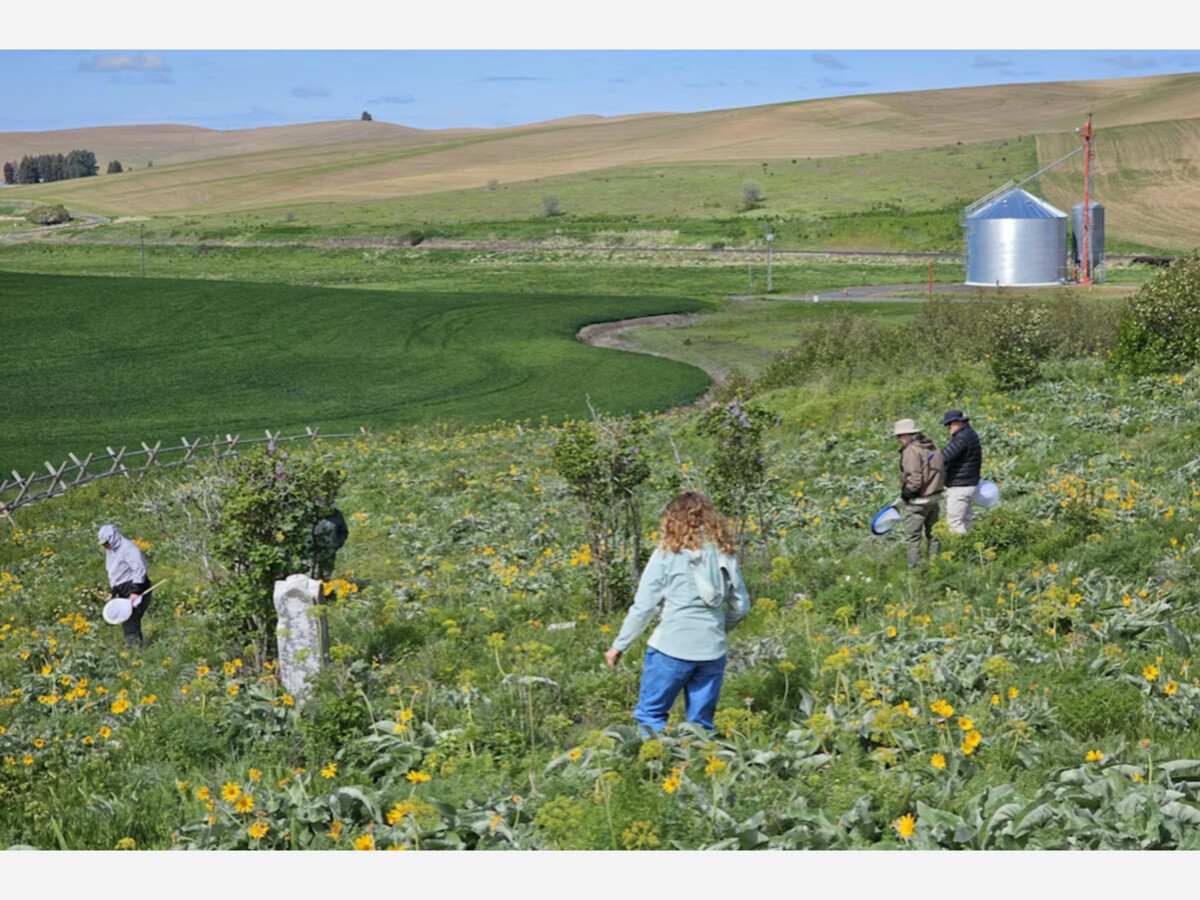
Washington Bee Atlas volunteers look for native bees at a Whitman County farm in May 2024.



Washington’s first statewide survey of bees has found dozens of species new to the state.
Several long-lost species, turned up by citizen-scientists with nets and specimen jars, had not been seen in Washington for a century or more.
The state is home to at least 600 native species of bees, important pollinators for crops like beans, blueberries, squash, and tomatoes as well as wild plants.
Little is known about most of the region’s bee species, including where their populations can be found.
“Surveying the whole state over all of the seasons is a monumental task,” said Karla Salp of Port Angeles, one of 150 volunteers who spent “many, many hours” driving around the state, netting and documenting rare bees for the Washington Department of Agriculture’s Washington Bee Atlas.
“Some are extremely tiny. I'm talking about three or four millimeters maybe,” said Salp, whose day job is serving as spokesperson for the agriculture department. “People might see these things flying around and think that they're gnats, and they're actually bees that are out there pollinating.”
Washington State Department of Agriculture
Taxonomists are still working through the 50,000 specimens that volunteers turned in. So far, they have identified 30 new-to-Washington species and 14 species that had not been reported in the state in half a century or more.
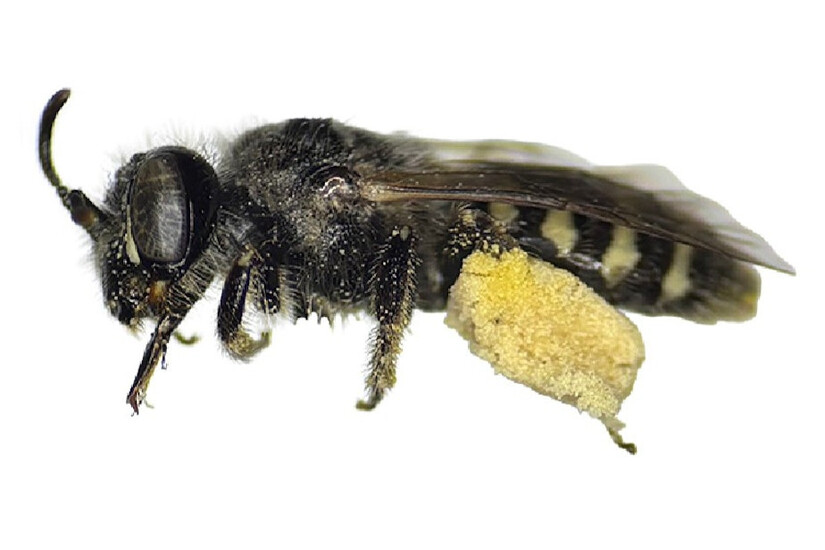
One small species called the white-banded sweat bee (Lasioglossum leucozonium) had not been documented in Washington since 1906—until a volunteer near Ephrata turned it up.
A species of wool-carder bee (a group of bee species that build their tiny nests with plant hairs) was last documented in the state in 1882. Volunteers in three Central Washington counties netted specimens of it for the bee atlas. The species, Anthidium formosum, is rare enough that it has no common name.
According to agriculture officials, the state’s food security depends on its native bees.
“Reliance on honeybees alone puts food supplies in a precarious position,” a department press release says.
RELATED: An invasive hornet that hunts honeybees is spotted in the U.S. for the first time
Honeybees are not native to North America.
Washington Department of Agriculture
While domesticated honeybees pollinate many crops, enabling them to produce fruit and seeds, commercial beekeepers have been witnessing their honeybee colonies collapsing. More than half of the managed honeybee colonies in the U.S. appear to have experienced mass die-offs in 2024 and 2025, according to the American Veterinary Medical Association.
By some estimates, wild insects pollinate more than $5 billion in crops annually in the U.S.
The nonprofit Center for Biological Diversity says that more than half of native bee species for which data is available are declining in population in the U.S., while one in four are threatened with extinction.
RELATED: Keeping the Northwest’s buzz alive: saving the western bumblebee
Wild bees face threats including habitat loss, pesticides, and climate change.
In addition, Utah State University biologists estimate that motor vehicles likely kill tens of millions of bees in the Western United States every day.
“It is hard to get a handle on what exactly is happening with a lot of the bee species,” Washington State University entomology professor Elizabeth Murray said.
The Wasington Bee Atlas aims to provide a baseline of data to inform efforts to conserve bees and all the benefits they provide.
Murray says Pacific Northwest bees are very diverse.
“Big to small. Furry, hairy, to hardly having any hair. Different colors,” Murray said. “There's a lot of variety out there, and they're doing a lot of work out in the ecosystem and also in agricultural systems.”
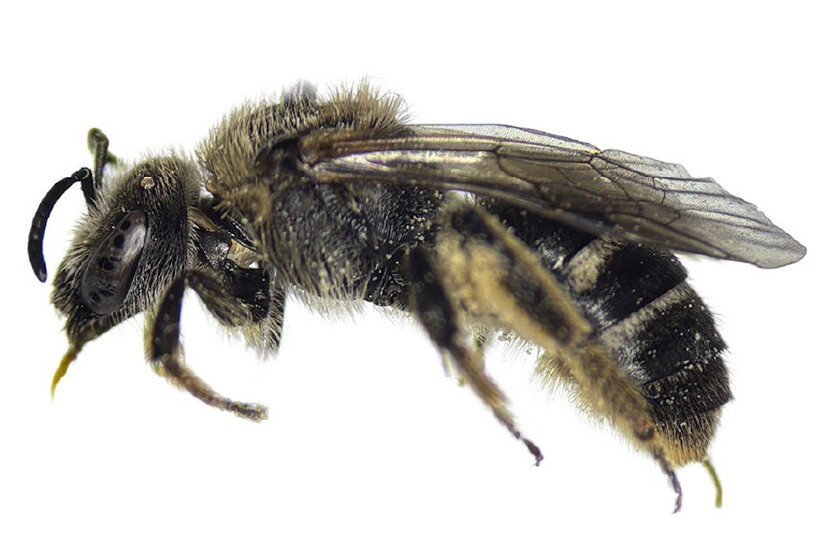
Washington State Department of Agriculture
Murray manages Washington State University’s insect museum, the state’s largest insect collection, with about 3 million specimens, established in 1892. The bees collected and pinned by atlas volunteers will go to the museum, labeled along with their location, timing, and the host plant they were found on.
The atlas’s new finds included four species of leaf-cutting cuckoo bees and two species of sweat bees, all small, solitary insects.
Most of the atlas’s discoveries and rediscoveries came from Central and Eastern Washington.
“There hasn't been a lot of looking for bees in many of those areas,” Salp said. “But also, bees really like hot, dry weather, and you don't get as much of that in Western Washington.”
Salp said many areas of the state have never been surveyed for bees, and the agriculture department is looking for more volunteers to help fill in the gaps.
The Washington Bee Atlas is seeking volunteers to continue to grow the program and document Washington’s native bees and their host plants. “These discoveries are really just the tip of the iceberg,” Wright said. “Washington is a large state, and it is going to take many people and lots of time to really sample the entire state throughout the seasons.
This will establish a baseline for how native bees are doing in our state. If you care about pollinators and pollination, this is an exciting time to join the program, as bees are understudied in
Washington. There are lots of opportunities to discover or rediscover bees.”
Volunteers undergo training through OSU’s Master Melittologist Program.
The program is similar to the Master Gardener Program, but the focus is on native bees. Because most bees cannot be identified to species from photos, volunteers learn to capture, preserve, and pin museum-quality specimens and document their host plants. They receive all the training
and supplies they need to collect and pin the bees. Those who do not want to collect bees but who are interested in learning more about and supporting native bees can visit WSDA’s native bees webpage and the Washington Native Bee Society.



Sunny, with a high of 69 and low of 49 degrees. Sunny for the morning, clear for the afternoon and evening, overcast overnight.