50° and Mist
Image
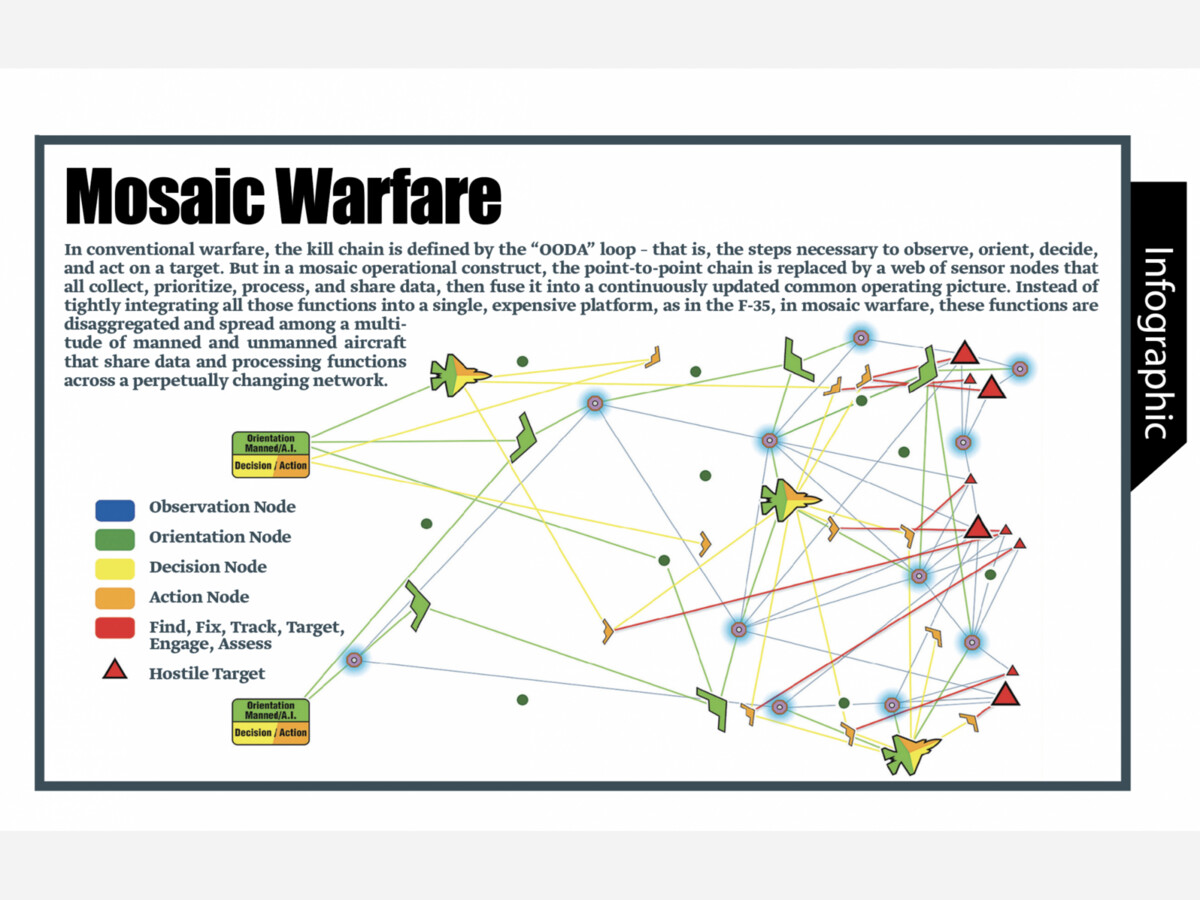



Despite heavy airstrikes, the killing of senior commanders, and repeated attacks on military sites, Iran has not collapsed. The reason lies in its long-developed “Mosaic Defense” strategy.
Built over nearly two decades and adopted by the Islamic Revolutionary Guard Corps, this doctrine decentralizes power across local commanders. Instead of relying on a single chain of command, Iran divides its forces into smaller, semi-independent “cells” that can continue operating even if leadership in Tehran is disrupted or eliminated.
The strategy emerged after Iran studied the U.S. “shock and awe” campaign in Iraq and concluded it could not win a conventional war. Instead, it designed a system meant to survive initial strikes and keep functioning under pressure. Authority is delegated down the ranks, and multiple successors are assigned to key roles, ensuring continuity even when commanders are killed.
This structure supports a broader attrition strategy. Iran assumes it may take the first hit but aims to prolong the conflict, making it costly and difficult for its adversaries to achieve a quick victory. Through dispersed forces, paramilitary units like the Basij, and regional networks, it turns war into a long, fragmented struggle.
On the battlefield, units are expected to act independently if communication with central command is lost. This reduces reliance on a central “war room” and allows operations to continue even under heavy disruption. The approach aligns with asymmetric warfare, emphasizing flexibility, mobility, and endurance over direct confrontation.
The strategy can be seen in areas like the Strait of Hormuz, where Iran uses layered tactics—naval mines, small submarines, coastal missiles, and fast attack boats—to slow and complicate enemy operations rather than seek decisive victories.
However, Mosaic Defense has clear limits. It cannot fully shield infrastructure from sustained airstrikes, and over time, economic strain, sanctions, and human costs take a toll. The system also depends on public support and internal unity; growing unrest or political divisions could weaken coordination.
There is also a risk of miscalculation. Decentralized units with pre-delegated authority may act in ways not intended by central leadership, complicating diplomacy and strategy.
Ultimately, Mosaic Defense helps Iran absorb shocks and continue fighting, preventing rapid collapse. But while it strengthens resilience, it may also prolong conflict without delivering a decisive or stable outcome.


Overcast, with a high of 71 and low of 49 degrees. Mist in the morning, overcast during the afternoon, mist overnight.






This is really well done and should be read by everyone who will vote on the property tax levy lid increase in our upcoming election. I hope every LFP council member has already read it and understands it.
I'm impressed with the analysis but I didn't see any attribution so am curious to know whether this was written by a human or generated by AI.
Both.