40° and Partly Cloudy
Image



Contact: DOH Communications
OLYMPIA – Measles continues to pose a serious public health concern in Washington and across the country. The Washington State Department of Health (DOH) has confirmed 26 measles cases across four counties this year, marking an increase from the three cases reported in a single county January 16.
The 26 measles cases reported during the first two months of 2026 are
already more than double the 12 cases reported statewide in all of
2025. More than half of the measles cases reported in Washington in 2026
are linked to an outbreak with three or more related cases. By
contrast, there were no outbreaks of measles reported in 2025.
Nationally, the United States has now surpassed 1,100 measles cases in 2026. The increase reflects a resurgence of a disease that was declared eliminated in the United States in 2000.
Nearly 80% of reported cases in Washington this year are in children,
including 16 cases among kids ages 5-17 and four cases in children
younger than 5. Confirmed cases have been identified in Snohomish County
(14 cases), Clark County (8 cases), Stevens County (3 cases), and
Kittitas County (1 case). All measles cases have occurred in people who
are unvaccinated (24 cases) or whose vaccine status is unknown (2
cases).
"MMR vaccine saves lives and is our best defense against measles,"
said Dr. Tao Sheng Kwan-Gett, State Health Officer, DOH. "Though measles
was declared eliminated in the United States 26 years ago, we are
seeing more and more cases linked to outbreaks in other states,
particularly in families that are unvaccinated. You just never know when
or where your family might be exposed to measles, so make sure everyone
is up to date on MMR vaccine, one of the best-tested vaccines around."
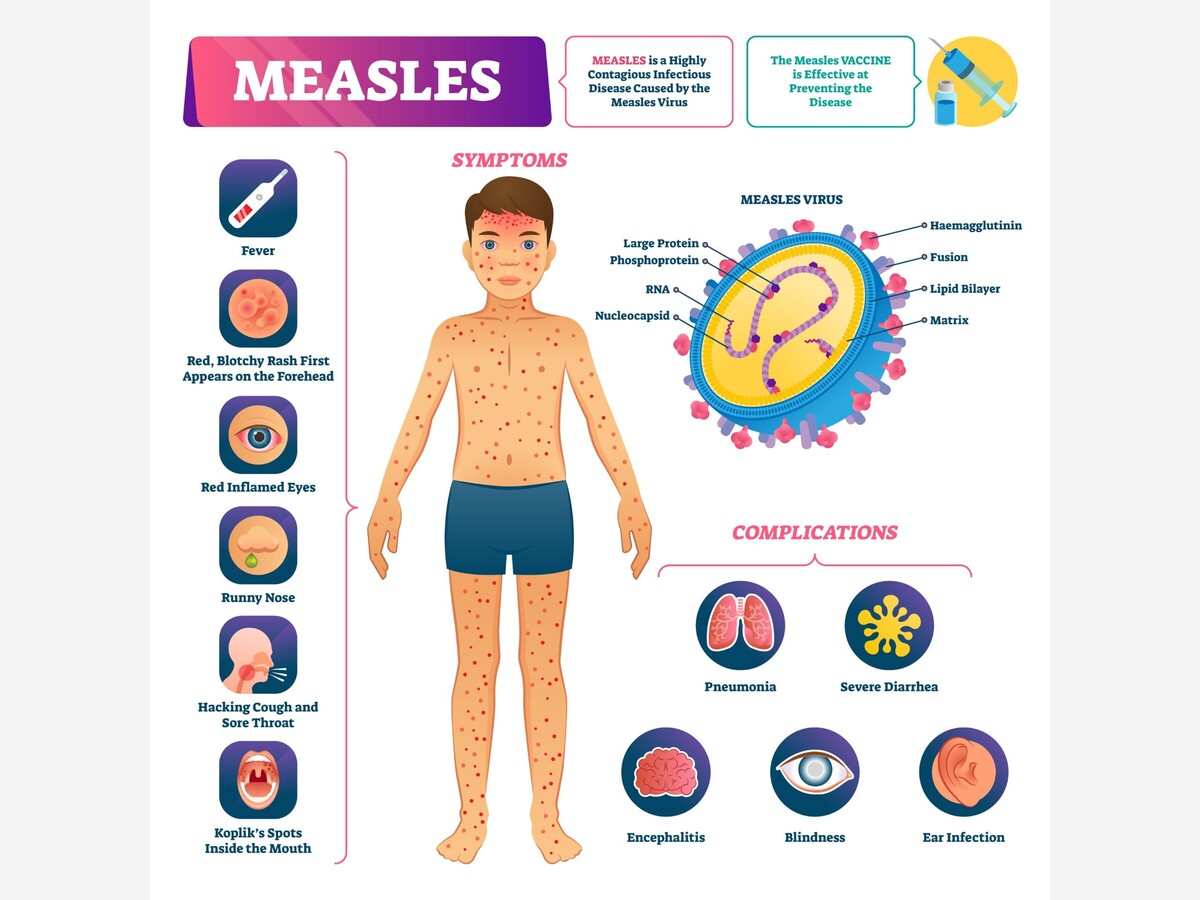
Measles
is highly contagious and spreads through the air when an infected
person coughs, sneezes, breathes, or talks. The virus can stay in the
air for up to two hours, meaning people can get infected even after a
sick person has left the area.
Symptoms typically appear 7-21 days after exposure and include:
Measles can cause life threatening health complications including
pneumonia and brain inflammation, especially for babies and young
children. In 2025 there were three deaths from measles reported in the
United States.
DOH continues to work closely with Tribal partners and local health
jurisdictions to help investigate cases, facilitate laboratory testing,
give MMR vaccines, and conduct community outreach to provide education
on measles prevention and assist specific settings, such as schools, in
preparing to respond to potential measles cases.
This year DOH began conducting whole genome sequencing on
laboratory-confirmed measles cases. Genetic sequencing maps the virus’s
genetic “fingerprint,” which helps doctors and scientists determine
whether cases are connected to each other or if they stem from separate
introductions. Current analysis indicates Washington’s 2026 measles
cases came from multiple introductions from outside the state.
The measles, mumps, and rubella (MMR) vaccine
is safe and highly effective. One dose is 93% effective, and two doses
are 97% effective. Getting the MMR vaccine is safer than getting sick
with measles, and it protects your family and your community. Children
typically get the MMR vaccine at 1 year and again at 4 years of age, but
there is specific guidance
for people living in or traveling to places where there is an active
outbreak, including children under 1 year. Adults who haven’t been
vaccinated can get the MMR vaccine as well. Most people who get measles
are not vaccinated.
Free or low-cost vaccines are available through:
For current case counts, exposure locations, and prevention information, visit DOH’s measles activity webpage.
Our website is your source for a healthy dose of information. Get updates by following us on social media.


Sunny, with a high of 57 and low of 39 degrees. Patchy rain nearby during the morning, clear during the afternoon and evening,


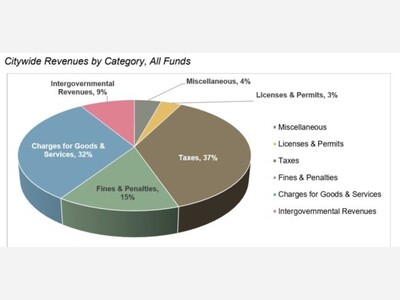

This is really well done and should be read by everyone who will vote on the property tax levy lid increase in our upcoming election. I hope every LFP council member has already read it and understands it.
I'm impressed with the analysis but I didn't see any attribution so am curious to know whether this was written by a human or generated by AI.
Both.