40° and Partly Cloudy
Image
vectoreasy.com



WASHINGTON — Escalating hostilities between the United States and Iran are raising concerns among analysts and former military officials about the vulnerability of U.S. military infrastructure across the Middle East and the potential financial cost of a prolonged conflict.
Several large U.S. installations in the Persian Gulf region — including bases in Bahrain, Kuwait, Qatar, and Saudi Arabia — have reportedly been targeted in recent strikes, according to accounts circulating among military observers and regional media. Those facilities rank among the largest overseas bases operated by the United States and have been built and expanded over decades at a cost of hundreds of billions of dollars.
The installations serve as key hubs for U.S. air, naval, and missile-defense operations throughout the Persian Gulf. Defense analysts say they house sophisticated radar and surveillance systems designed to detect and intercept missile threats across the region.
Some reports claim that advanced radar systems worth hundreds of millions of dollars have been destroyed in recent attacks. One such system, described by analysts as a central component of regional missile defense networks, was reportedly disabled by a single missile strike at one of the most heavily fortified U.S. bases in the region. The loss of such equipment could significantly degrade early-warning capabilities if confirmed.
Pentagon officials have not publicly confirmed the extent of any damage, and independent verification remains limited.
Military experts note that U.S. bases across the Gulf have long been considered potential targets in the event of open conflict with Iran. The network of facilities — constructed over roughly three decades — represents a major share of U.S. military investment in the region.
The financial toll of a sustained conflict could be substantial. Some defense analysts estimate that large-scale military operations against Iran could cost the United States roughly $1 billion per day, including deployment costs, logistics, equipment losses, and operational expenses.
Former defense officials warn that the scale of potential damage to infrastructure and equipment could be unprecedented if attacks on major installations continue.
“The Gulf base network is central to U.S. power projection in the region,” one defense analyst said. “If those installations come under sustained missile attack, the strategic and financial implications would be significant.”
The U.S. Department of Defense has not released detailed assessments of damage or losses, and officials say information emerging from the region remains fluid as the situation develops.



Sunny, with a high of 57 and low of 39 degrees. Patchy rain nearby during the morning, clear during the afternoon and evening,



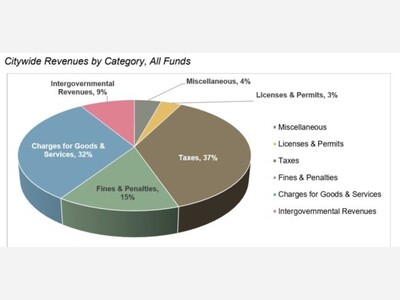

This is really well done and should be read by everyone who will vote on the property tax levy lid increase in our upcoming election. I hope every LFP council member has already read it and understands it.
I'm impressed with the analysis but I didn't see any attribution so am curious to know whether this was written by a human or generated by AI.
Both.