40° and Partly Cloudy
Image
kcra.com



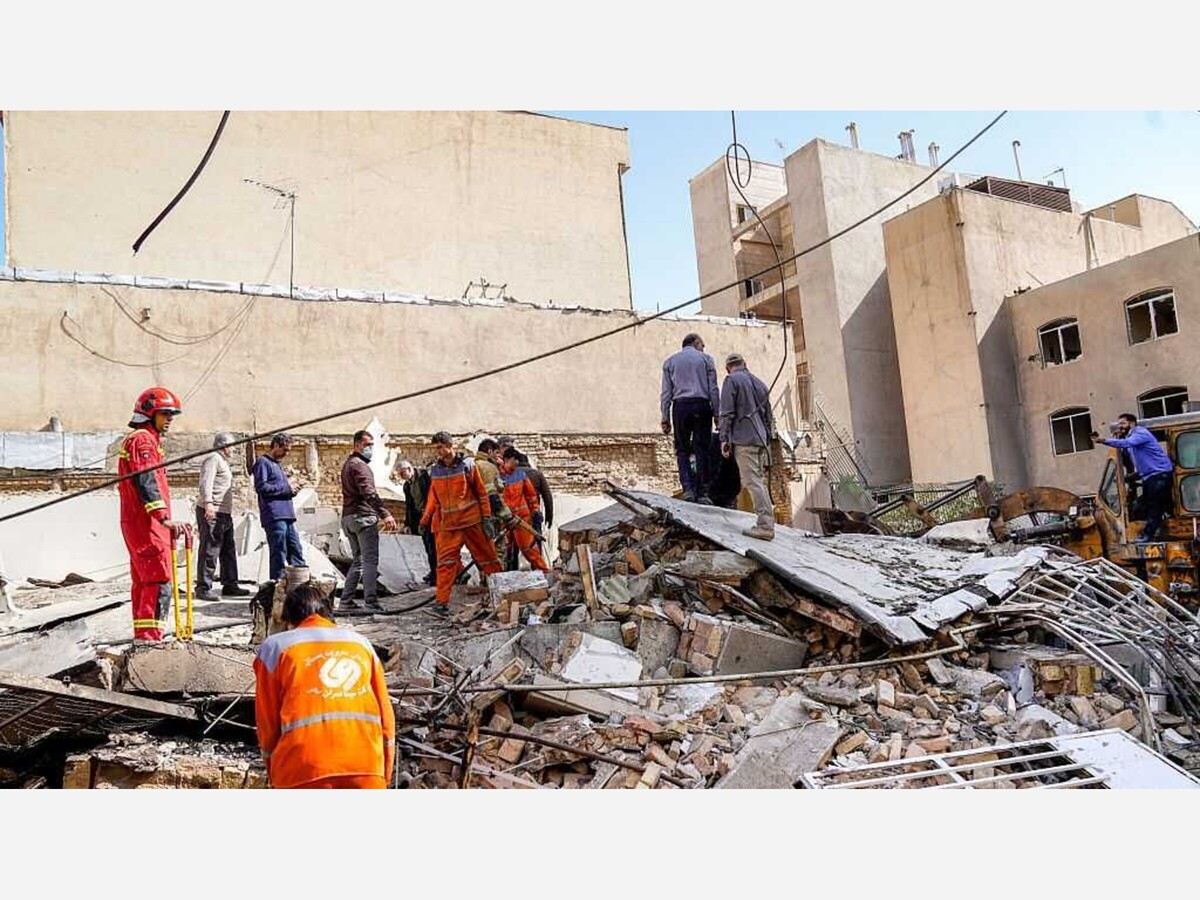
Recent U.S. and Israeli military strikes have targeted Iranian nuclear infrastructure, including entrance buildings at the underground Natanz enrichment plant, as confirmed by the International Atomic Energy Agency (IAEA). The IAEA noted limited new damage, with no significant impact on the main facilities themselves. The sites had already suffered severe damage from a previous U.S. bombing..
But military strikes — even with bunker-busting ordnance — don’t erase nuclear knowledge or necessarily eliminate Iran’s nuclear capabilities completely. Analysts and nonproliferation experts have emphasized that:
Furthermore, targeted attacks or strikes do not destroy the stockpiles of nuclear material that already exist — especially if those materials have been relocated or buried.
Military actions also often yield mixed results. Some U.S. officials argue an air campaign could push Iran to abandon or delay enrichment, while others within the U.S. government doubt the effectiveness of a bombing strategy to fully halt nuclear progress.
There are key reasons why bombing can only set back but not eliminate a nuclear weapons program:
Iran has decades of technical expertise among scientists, engineers, and technicians involved in nuclear science. These people, and the tacit knowledge they hold, can’t be undone by air strikes.
Before the strikes, Iran accumulated significant quantities of highly enriched uranium (HEU) — in some estimates enough for more than a dozen nuclear bombs if weaponized and configured correctly.
The presence of enriched uranium means that even if facilities are damaged, the raw material for a bomb may still exist somewhere — potentially in undisclosed or hardened locations.
Centrifuges and other enrichment infrastructure can be redeployed, hidden, rebuilt, or reconfigured. Even limited enrichment capabilities, if resumed, allow a state to pursue weapons-grade material again over time and with political will.
There is no single undisputed answer, and assessments vary — in large part because much of Iran’s program is opaque and inspectors may not have full access. But the range of credible estimates illustrates the uncertainty:
Some U.S. officials have suggested Iran was very close to being able to produce enough material for a bomb — e.g., about a week’s work from weapon-grade material before a full military intervention.
Independent models that incorporate multiple technical steps — enrichment, conversion to metal, design, and weaponization — generally do not find that a full nuclear breakout can happen overnight. In one analysis, short-term chances (over a few months) remained below 30 percent, rising only after a longer period without interruption.
Having enough enriched uranium is one thing — actually converting that material into a deliverable, militarily operational nuclear weapon is far more complex. Experts emphasize that enrichment is just one of many capabilities (conversion, design, testing, delivery).
IAEA officials have at times acknowledged that tracking of Iran’s near-bomb-grade uranium has been hampered by conflict conditions and reduced access — leaving uncertainties about exactly where that material is and how intact it is.
Taken together, most open assessments — whether from intelligence, nonproliferation institutes, or academic models — suggest that Iran is not currently at the point of having an operational nuclear weapon, but the timeline to a potential bomb — if Tehran chose that path — could range from a few months to a few years without further intervention or diplomatic restraints.
In the words of nuclear policy experts: “Regime change is not a viable nonproliferation strategy,” and “Iran’s nuclear program cannot be bombed away; Iran’s nuclear knowledge cannot be bombed away.”
|
Question |
Assessment |
|
Will Iran deploy a nuclear weapon if it gets one? |
Highly unlikely as a first move; deterrence logic makes use extremely costly. |
|
Chance Iran builds a weapon (technical)? |
Possible over months if constraints are removed, but not certain. |
|
Chance Iran uses a nuclear weapon? |
Very low in most scenarios — use would almost certainly provoke destruction of the regime. |
|
Consequences if Iran used a nuke? |
Catastrophic humanitarian damage, likely severe retaliation, regional arms races, global crisis. |



Sunny, with a high of 57 and low of 39 degrees. Patchy rain nearby during the morning, clear during the afternoon and evening,



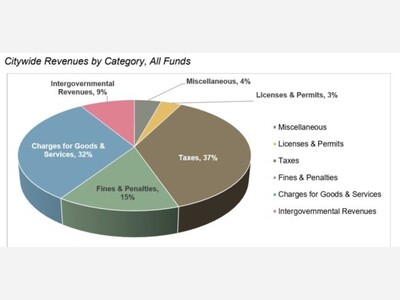

This is really well done and should be read by everyone who will vote on the property tax levy lid increase in our upcoming election. I hope every LFP council member has already read it and understands it.
I'm impressed with the analysis but I didn't see any attribution so am curious to know whether this was written by a human or generated by AI.
Both.