43° and Patchy rain nearby
Image
cityoflfp.gov



Commission considers ways to advance climate goals, reduce barriers to middle housing and prepare for a critical areas ordinance update.
At its meeting, the Lake Forest Park Planning Commission discussed implementing the city’s climate action plan, potential changes to housing regulations, and preparations to update the critical areas ordinance, and approved the agenda and amendments to the September meeting minutes.
The commission heard a presentation from the city’s newly hired climate coordinator about turning Lake Forest Park’s existing climate action plan and comprehensive plan goals into practical projects.
The coordinator outlined a phased approach that emphasizes transportation, buildings and energy, natural systems, climate resilience, waste reduction, and city leadership. The goal is to move beyond adopted policies and establish measurable actions.
The proposed timeline includes three phases:
The coordinator emphasized that the city currently has no dedicated implementation budget for the climate program. Grants, partnerships, and outside funding will therefore be important to advancing projects.
Work already underway includes pursuing grants for a potential community resilience hub with the Lake Forest Park Climate Hub, developing a city climate webpage, and exploring a regional climate partnership with neighboring cities.
The city is also collaborating on a green-economy workforce development job fair scheduled for Oct. 28 at Kenmore City Hall. King County and workforce development representatives are expected to participate.
Commissioners discussed the difference between estimating greenhouse gas emissions from residents’ activities and measuring the pollution residents actually experience in Lake Forest Park.
One commissioner noted the potential value of monitoring pollution exposure along State Route 522, particularly for residents living near the highway. The climate coordinator agreed that better measurement could help evaluate progress but noted that detailed data collection can be expensive.
The discussion also addressed opportunities to incorporate climate objectives into housing policy, land-use decisions, and future building and energy codes.
Commissioners encouraged the coordinator to work with the Planning Commission as it considers middle housing and other development regulations, particularly where energy efficiency and climate goals could complement housing objectives.
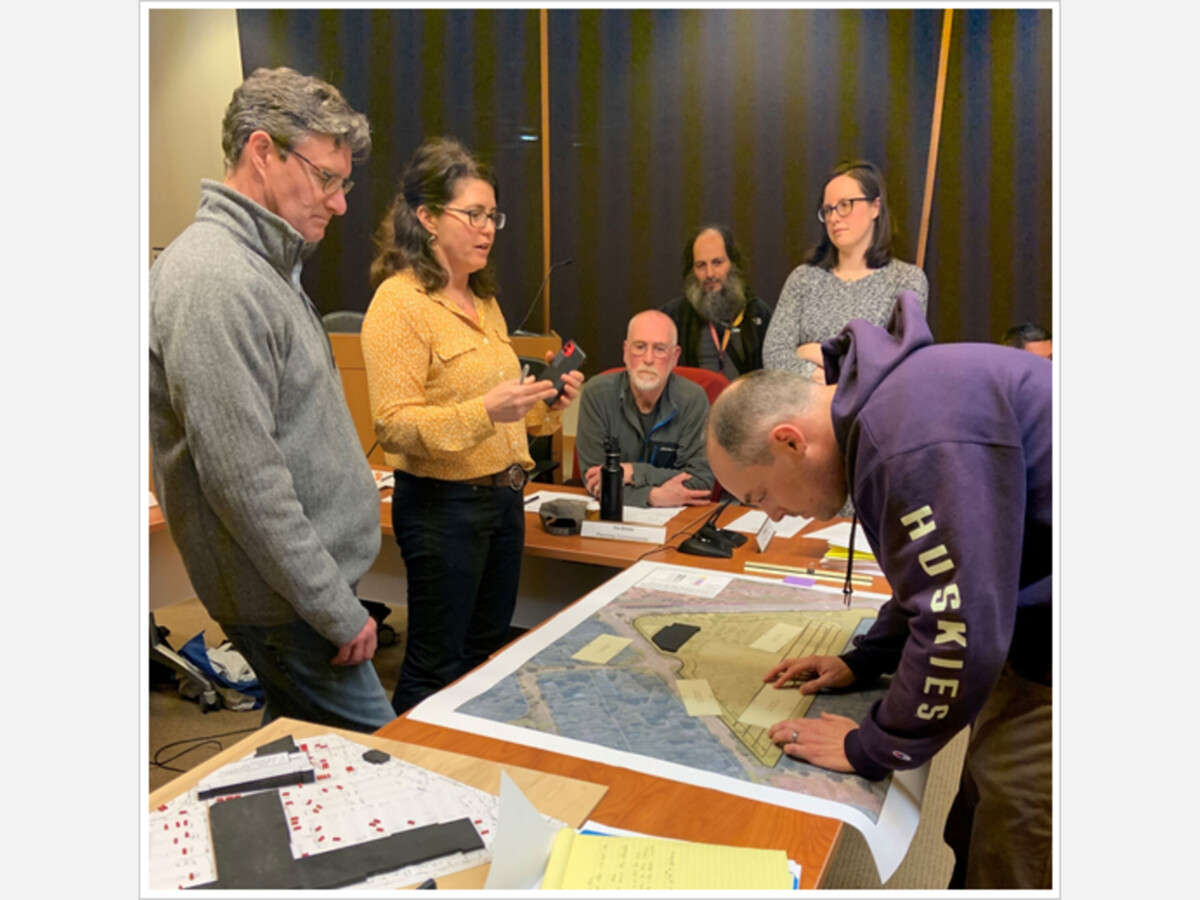
The commission continued discussing how Lake Forest Park could reduce barriers to middle housing and increase housing diversity.
The conversation followed an earlier meeting with local developers and architects who described challenges involved in building housing beyond conventional single-family homes. Commissioners reviewed their feedback and discussed whether changes to city regulations could make smaller housing types more feasible.
Developers had identified several obstacles, including land costs, permitting expenses and delays, critical-area restrictions, infrastructure requirements, and construction costs.
One potential strategy is to allow more dwelling units on a property, spreading land costs across additional homes. Commissioners also discussed whether clearer development rules could reduce uncertainty and the expense of hiring consultants.
Several commissioners expressed interest in cottage housing—small, detached homes arranged in a cluster—as a potentially suitable form of middle housing for Lake Forest Park.
Supporters noted that separate cottages could appeal to people seeking smaller homes without shared walls, including older residents and younger households. Clustered developments could also provide shared outdoor space while maintaining a residential scale.
However, commissioners acknowledged that earlier cottage-housing proposals in the city faced neighborhood opposition, parking concerns, and difficulty interpreting the city’s regulations. One past project reportedly faced substantial financial consequences after development obstacles arose.
The commission discussed reviewing that history before proposing changes, while recognizing that state middle-housing requirements have changed the regulatory environment since some earlier proposals were considered.
Commissioners also examined whether changes to stormwater and impervious-surface regulations could make development easier.
Permeable paving was discussed as one possible tool. Such materials let water pass through the surface, potentially reducing runoff and helping developers meet drainage requirements.
However, participants raised maintenance concerns, particularly in Lake Forest Park, where pollen and tree debris can clog permeable surfaces. Staff also explained that determining appropriate credits under the King County Surface Water Design Manual can require technical analysis and add expense to development projects.
The discussion did not result in a decision to adopt new incentives. Instead, commissioners emphasized the need to understand the technical requirements, potential benefits and unintended consequences before making changes.
The commission agreed to continue examining the developers’ recommendations and the potential for cottage housing.
A three-member subgroup, Jean, Janne, and John, will review the transcript of the earlier developer discussion, identify key recommendations, and report back to the commission at its next meeting.
Separately, Yanni will contact a developer who offered to show commissioners examples of completed housing projects. Commissioners also discussed visiting existing cottage developments and contacting people familiar with earlier cottage-housing proposals to better understand past objections and regulatory challenges.
The commission may invite additional developers or architects to future meetings as it evaluates potential code changes.
The commission did not approve any housing-code amendments during this discussion.
Near the end of the meeting, staff introduced preparations to update the city’s critical areas ordinance, which regulates development in environmentally sensitive areas.
A key issue will be how the city determines stream buffers. Staff said state and federal fish and wildlife agencies are emphasizing a method based on site-potential tree height—the height trees could reach at maturity under favorable conditions—to establish buffer widths.
Commissioners discussed the need to understand the scientific basis for this approach, how it differs from using fixed buffer distances, and how it could apply to Lake Forest Park’s small streams, wooded areas, and lakeside properties.
The commission supported receiving background information before advancing the formal update process. The discussion also highlighted the importance of understanding the Muckleshoot Indian Tribe's expertise and concerns, including its input on trees and stream ecosystems.
The ordinance update is expected to involve further technical discussion and public input. The Council adopted no changes at this meeting.
During a City Council report, commissioners heard updates on several longer-term city issues.
The city is developing its next biennial budget while addressing a structural deficit. The council liaison described difficult choices ahead and encouraged commissioners to share community priorities as officials consider potential cuts.
Other updates included continued planning for the future reconstruction of 185th Street near a culvert replacement, design work for a Beach Drive sewer lift station project, and Sound Transit permitting.
The council liaison also said winter warming-shelter services are expected to continue despite the restructuring of the King County homelessness authority, although the city will need a different contractual arrangement.
Commissioners asked about continued advocacy following the elimination of Metro Route 372. The liaison said transit advocates remain engaged and that a King County Council budget provision calls for Metro to study ridership trends before and after the route’s closure and examine possible mitigation measures.
The city has also begun discussing higher fines for violations recorded by school-zone speed cameras, citing concerns about increasing vehicle speeds in those zones.
The Planning Commission’s next meeting was scheduled for Nov. 10, 2026. Expected discussion topics include continued work on affordable and middle housing and preparation for the critical areas ordinance update.
Overall, the meeting centered on how Lake Forest Park can turn long-term goals into practical policies while balancing housing choices, environmental protection, community character and limited city resources.
Note: The transcript and summary were AI-generated by ChatGPT from this video. Inaccuracies are possible despite human cross-checking. Feel free to point out any inaccuracies by contacting editor@lfptowncrier.com

Patchy rain nearby, with a high of 53 and low of 39 degrees. Overcast in the morning, patchy rain nearby during the afternoon, partly cloudy in the evening, patchy rain nearby overnight.


Please label AI-written posts!!!! This one is likely 100% AI: https://www.pangram.com/history/bae3817e-8442-46b7-a065-8069d59b0ca0
First, we created a transcript from the council meeting video and compared it word for word. Then ChatGPT summarized the transcript of the two-hour meeting so readers didn't have to watch the 2-hour council meeting. We then ran a spell-checker and grammar-checker and saved all the data to an M.2 SSD.