48° and Patchy rain nearby



Image
Polemic satire with a sprinkle of opinion – or the other way around.
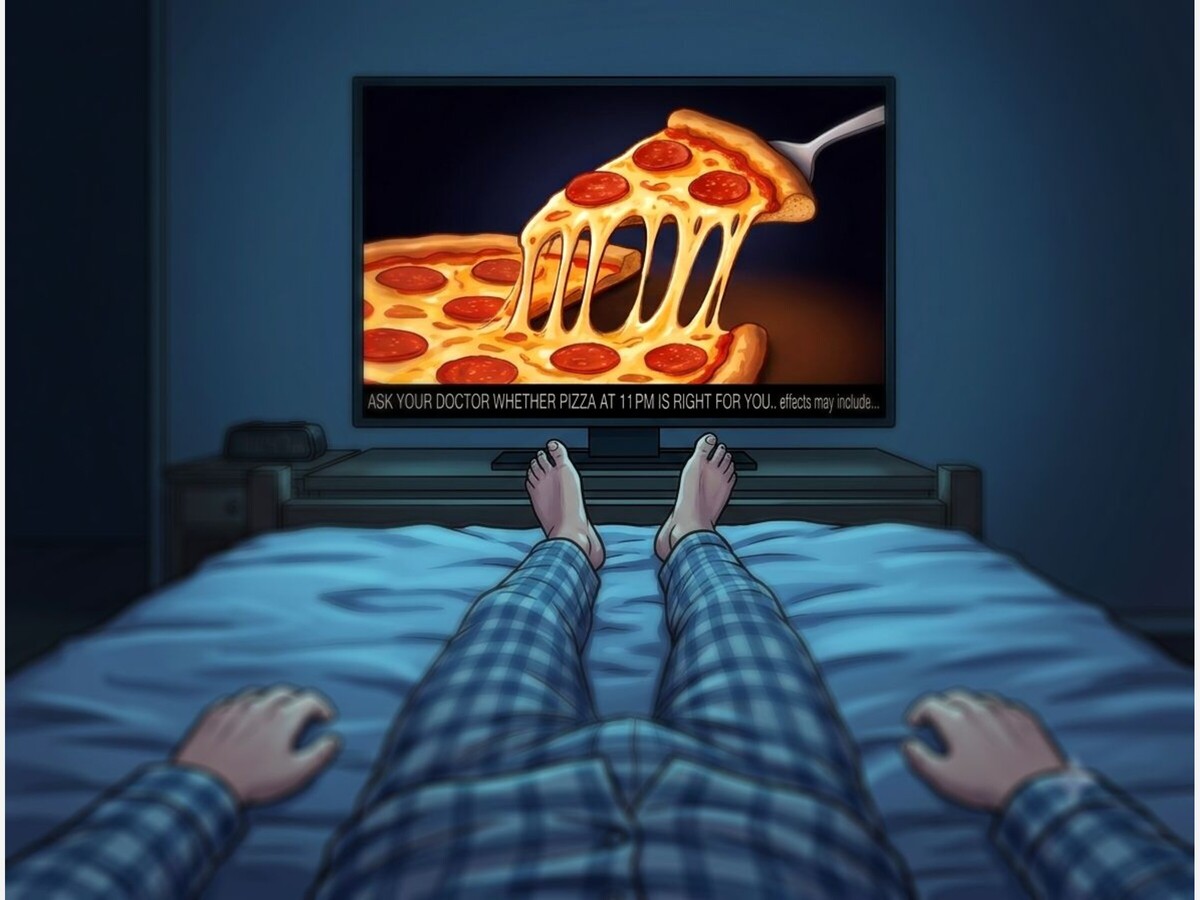
Somewhere in America tonight, a man is watching a pizza commercial at 11:47 p.m. Cheese stretches across the screen in slow motion, catching the light like a Renaissance painting of gluttony. He orders. Forty minutes later, he’s eating a large pepperoni in bed while his gut—running its nightly low-power mode—receives the pizza the way a night-shift security guard receives an unscheduled visitor: technically awake, thoroughly unenthusiastic, and moving at half speed on purpose.
Nobody warned him this would happen. No disclaimer scrolled at the bottom. No soothing baritone listed the risks the way it does for drugs with names like Jardiance or Entresto. And that is the actual scandal. We’ve built a vast regulatory apparatus to warn people about the side effects of the drugs that treat the diseases caused by products we allow to advertise with zero adult supervision.
The asymmetry is glaring. A pharmaceutical company must spend a third of its commercial listing every conceivable horror up to and including death. A pizza company only needs the cheese pull to look convincing. One product is regulated like a loaded weapon. The other is regulated like a lullaby.
So let’s fix it. Let’s give food advertising the pharmaceutical treatment it deserves.
Imagine the new format: sweeping shot of a pizza emerging from the oven, steam rising like it’s auditioning for an adult movie trailer. Warm narrator voice: “Introducing the Meat Lovers Supreme, hot, spicy and seductive, … [you fill in the blanks]” Then comes the disclaimer crawl, read at pharma speed—fast enough that you catch about a third of it:
“Side effects may include elevated LDL cholesterol, type 2 diabetes, metabolic syndrome, sluggish nighttime digestion, decreased libido, and in rare cases, an overwhelming urge to lie very still on the couch until morning. Do not operate heavy machinery, a treadmill, or your own dignity within six hours of consumption. If symptoms of regret persist for more than four days, consult your doctor, your gym, or possibly your tailor.”
And at the end, delivered with Pfizer-level sincerity: “Ask your doctor whether you should take Lipitor with that pizza.”
The beauty is that this isn’t even a radical policy. The legal mechanism already exists. Courts have long allowed compelled factual disclosures in commercial speech—the same doorway cigarette warnings and pharma side-effect lists walked through. Nobody had to ban Marlboro ads. Nobody needs to ban fast-food commercials. Just make the ad tell the truth at a volume proportional to the truth.
Other countries have tried milder versions. Chile, Mexico, and Israel slap black stop-sign warnings on ultra-processed junk. Nobody’s freedom collapsed. The snack aisle didn’t go dark. People just saw a little octagon of shame before grabbing the family-size bag of orange crunch. America, true to form, prefers zero friction and cartoon leprechauns.
What the pharmaceutical comparison really exposes is the closed loop nobody says out loud. The food industry spends billions engineering food to be more craveable than nature intended. Twenty years later, the pharmaceutical industry spends billions selling you the fix for what the first industry sold you. Every cheese pull is a future statin customer. Both industries buy the same prime-time slots. Both report record profits. You are simply the connective tissue between two earnings calls.
So let’s put the two products in the same commercial, where they’ve always belonged. Give the Meat Lovers Supreme its Surgeon General moment. Let the narrator list the consequences with grave professionalism. Let the ad end not with a delivery hotline, but with a suggestion to book a doctor’s appointment.
If nothing else, it would replace the midnight lie—that this pizza has no consequences, and that you are the one human who will simply sleep it off—with something closer to honesty: that every glorious cheese pull comes with a future co-pay.
Author’s note: I despise pharmaceutical advertising just the same as late-night food commercials, but you may have figured that out already. Peace out – or piece out, or whatever the mic drop for an opinion editorial is.
Iko can be reached at iko@uw.edu


Patchy rain nearby, with a high of 54 and low of 43 degrees. Patchy rain nearby in the morning, overcast overnight.