Image
Getty images



American history is often told as a steady march toward greater liberty. In reality, it has moved in cycles—moments when democratic ideals expanded, followed by moments when power was enforced through intimidation, violence, and state authority.
Again and again, the country has faced defining choices about who belongs, whose rights matter, and whether freedom is truly protected.
Consider several turning points (no pun intended), roughly eighty years apart, when armed authority was used to enforce conformity—and when Americans were forced to decide what kind of nation they would be.
In the late 17th century, colonial governments in British America deployed force to enforce religious control. Attendance at approved churches was compulsory. Dissenters were fined, harassed, or excluded. State power and religious authority were intertwined, and conformity was enforced in public life.
Then came the Glorious Revolution. Colonial charters were rewritten, Protestant dissenters gained new legal rights, and the concept of religious liberty began to take root. It was 1690.
Eighty years later, the streets of colonial cities were patrolled by agents of the Crown, tasked with suppressing resistance to King George III and the East India Company. Those who challenged authority risked imprisonment—or worse. The public responded with outrage, demanding self-governance and a political system grounded in citizens' rights.
It was 1773.
Another eighty years passed, and armed enforcers again roamed the streets—this time in the slaveholding South. Abolitionists, journalists, and Black Americans who challenged racial hierarchy faced violence, repression, and terror. Speech was crushed, elections were manipulated, and brutality enforced obedience.
 Stones River National Battlefield, TN. Photo by author.
The nation was driven into civil war to confront an explicitly authoritarian system that had seized control of half the country. It was the late 1850s.
Eighty years after the Civil War, the United States government carried out one of its gravest domestic injustices. In 1942, Japanese immigrants and Japanese American citizens were rounded up and imprisoned in internment camps across the country in the wake of Pearl Harbor.
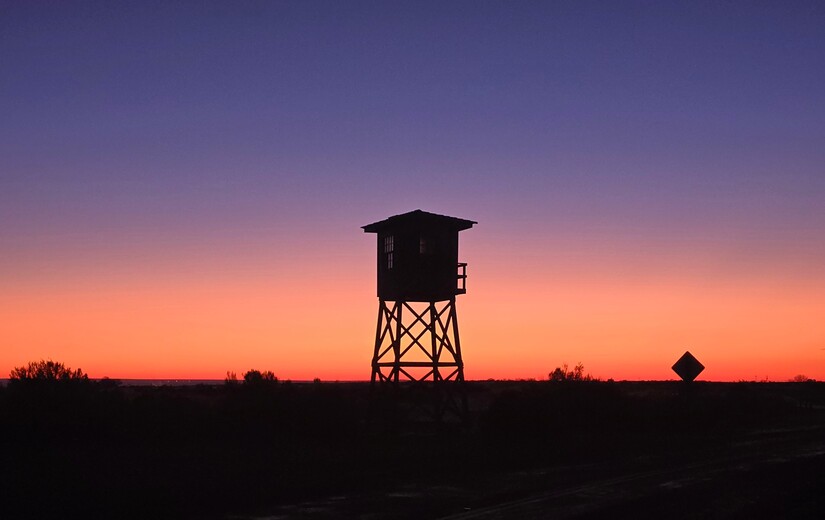 Minidoka Concentration Camp National Historic Site, Jerome, ID. Photo by author
And now, more than eighty years after World War II, the nation once again faces questions about the reach of state power, the treatment of immigrants, the militarization of law enforcement, and the erosion of democratic norms.
Across these moments, Americans have repeatedly been forced to choose.
In the 1690s, the country moved toward religious freedom.
In the 1770s, it rejected monarchy and embraced government by consent of the governed.
In the 1860s, it confronted slavery and preserved democracy against a violent authoritarian rebellion.
In the 1940s, it eventually repudiated internment and fought fascism abroad.
Today, the United States is again at a crossroads.
Many critics argue that Donald Trump and his political movement are pushing the country toward a more authoritarian model—one in which dissent is treated as disloyalty, political opponents are targeted, and state power is wielded aggressively against vulnerable communities.
They point to immigration enforcement tactics, threats against political adversaries, and rhetoric that undermines faith in elections and democratic institutions.
At the same time, they argue that national Democratic leadership has struggled to respond with urgency or unity. Some lawmakers have supported expanded funding for immigration enforcement, and party leaders have been criticized for failing to impose consequences or mount a coordinated challenge.
As a result, ordinary Americans have often stepped into the vacuum—organizing locally, protesting in the streets, and confronting federal actions in real time.
The stakes are not abstract. The question is whether the country will continue its long, uneven expansion of rights and democratic accountability—or slide toward politics of fear, force, and permanent rule.
History suggests that neither outcome is inevitable.
Power rarely relinquishes itself voluntarily. Wealthy interests and media ecosystems can reinforce authoritarian tendencies. Political movements can normalize intimidation and obedience.
But the American tradition also contains something else: resistance, reform, and renewal. From the abolitionist movement to the civil rights era, from labor struggles to anti-war protests, generations have fought to widen the promise of democracy.
A time of choosing has arrived again.
Will the nation recommit itself to equal justice, democratic restraint, and human rights? Or will it embrace a harsher model of governance—one defined by political punishment, state intimidation, and the erosion of freedom?
The answer, as in every previous turning point, will depend not only on leaders, but on citizens—and on what Americans decide they are willing to defend.


Overcast, with a high of 59 and low of 44 degrees. Overcast in the morning,



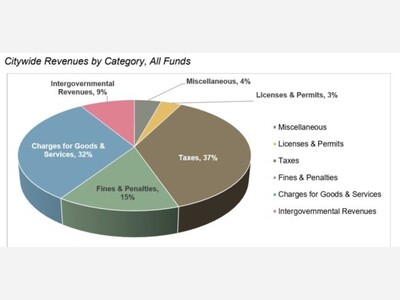

This is really well done and should be read by everyone who will vote on the property tax levy lid increase in our upcoming election. I hope every LFP council member has already read it and understands it.
I'm impressed with the analysis but I didn't see any attribution so am curious to know whether this was written by a human or generated by AI.
Both.