Image
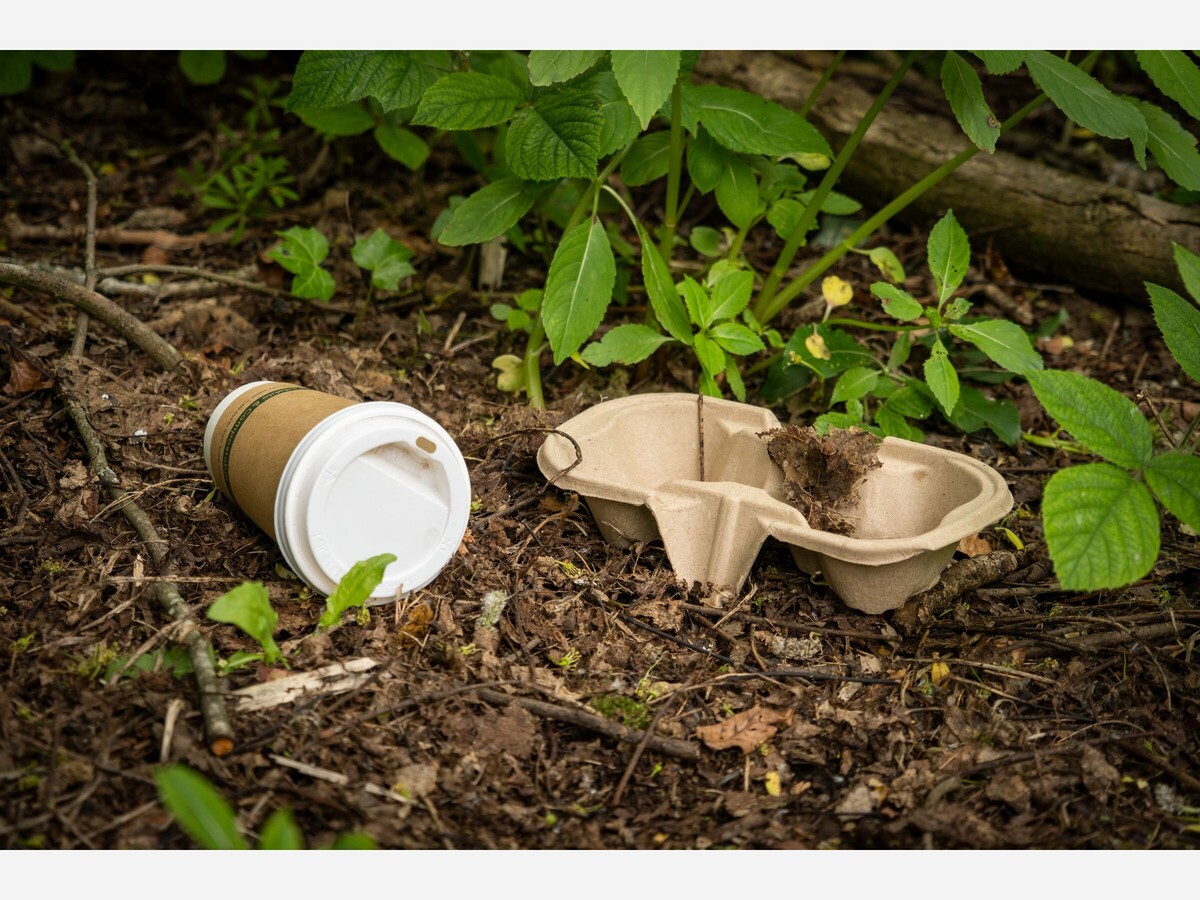
(Photo credit: Wikimedia commons)



By Carolyn Cohen
Master Gardener Foundation of King County
As a master gardener, compost enthusiast, and someone who has worked in the recycling and solid waste industry for about 10 years, I’d like to provide some insights to understand compostable packaging complexity.
The promise of compostable to-go containers, utensils, and other products stems from the desire to shift away from petroleum-based plastic products, avoid plastic litter in the environment, and reduce food waste and methane generation in landfills. While these potential benefits sound terrific, now’s a great time to get curious about the impacts of this emerging technology.
Before we dig into the compost pile, we must fundamentally question whether swapping one disposable for another is a better solution. In most cases, using reusable, durable food-ware is the best practice across health, environmental, and long-term financial impacts. Think beyond single-use products for events and daily habits. Remember to carry your own mug, water bottle, utensils, straws, bags, and reusable containers for to-go meals or leftovers.
Compost, in its most glorious form, is a pile of leaves, sticks, flowers, branches, food scraps, grass clippings, and billions of microorganisms enjoying a hot, steamy transformative ecosystem. At the end of this vibrant process we can joyfully dig our hands and shovels into nutrient rich soil amendment that can be applied to gardens and landscapes. Composting is a simple, timeless process. Materials unable to decompose in this environment simply don’t belong.
Across Washington State, commercial composters handle nearly 900,000 tons of organic material every year to compost into soil. At this scale, material moves fast and there’s very little time to sort out questionable food packaging that may or may not break down. Composters work hard to remove trash, known as contamination, using hands or filter screens, but small bits of plastic can sometimes make it into the end product. Some products are “certified compostable” and carry a certification logo demonstrating their ability to break down in commercial compost settings.
Even with best intentions, businesses can mistakenly purchase a misleading product claiming to be compostable and customers often toss items into the wrong waste bin. This uncertainty is a reason why many compost facilities in Washington simply reject compostable packaging.
For gardeners cultivating backyard compost piles it’s much easier to control the materials getting tossed into the kitchen compost bin. Because of their small size, backyard compost piles don’t reach the temperatures needed to break down meat, dairy, and most compostable packaging. At this time only one compostable packaging certification claims to guarantee products will decompose in home compost: TÜV AUSTRIA. For now, products with this certification are uncommon.
To address the compostable-complexity, cities, counties, composters, and legislators in Washington State have put their heads together to develop laws that help create consistency and confidence in compostable products. As of January 2024, the compostable product labeling law requires compostable packaging to be green, brown, or beige, labeled “compostable,” meet compostability standards (e.g. ASTM D6400), and carry a third-party certification logo. The law also prohibits non-compostable products from carrying these markers and confusing labels. The word “biodegradable” is an example of a prohibited term that’s meaningless when it comes to a product’s ability to compost into soil.
Even with more labeling clarity, it’s important to view compostables as an emerging innovation that still needs to prove itself. In lifecycle analysis studies, such as those done by Oregon’s Department of Environmental Quality, products are examined for their environmental impact from production to waste. While bio-based products are made from renewable agricultural feedstocks, their production causes nutrient and pesticide run-off, dedicating land to singular crops, and still relies on fossil fuels for production. Although more research is needed, at this time compostables are not a clear winner compared to other materials. Over time we may see more environmental benefits along with improvements to production efficiency and sustainable materials. These studies help remind us to look beyond the “downstream” waste of a product and towards the “upstream” impacts of how things are made, transported, and used.
Despite the complexity surrounding compostables, there are a few simple steps to do better for the planet and our communities:
About the author: Carolyn Cohen became a certified Master Gardener in January 2025 and has long enjoyed growing vegetables, cultivating native plant gardens in Western Washington, and trying different compost methods in her backyard. Her work experience includes surveying plants as an ecological technician, conducting education for recycling for local cities in Washington, and working for the Department of Ecology on recycling and waste reduction topics.



Overcast, with a high of 74 and low of 51 degrees. Overcast for the morning, clear for the afternoon and evening, partly cloudy overnight.