Image
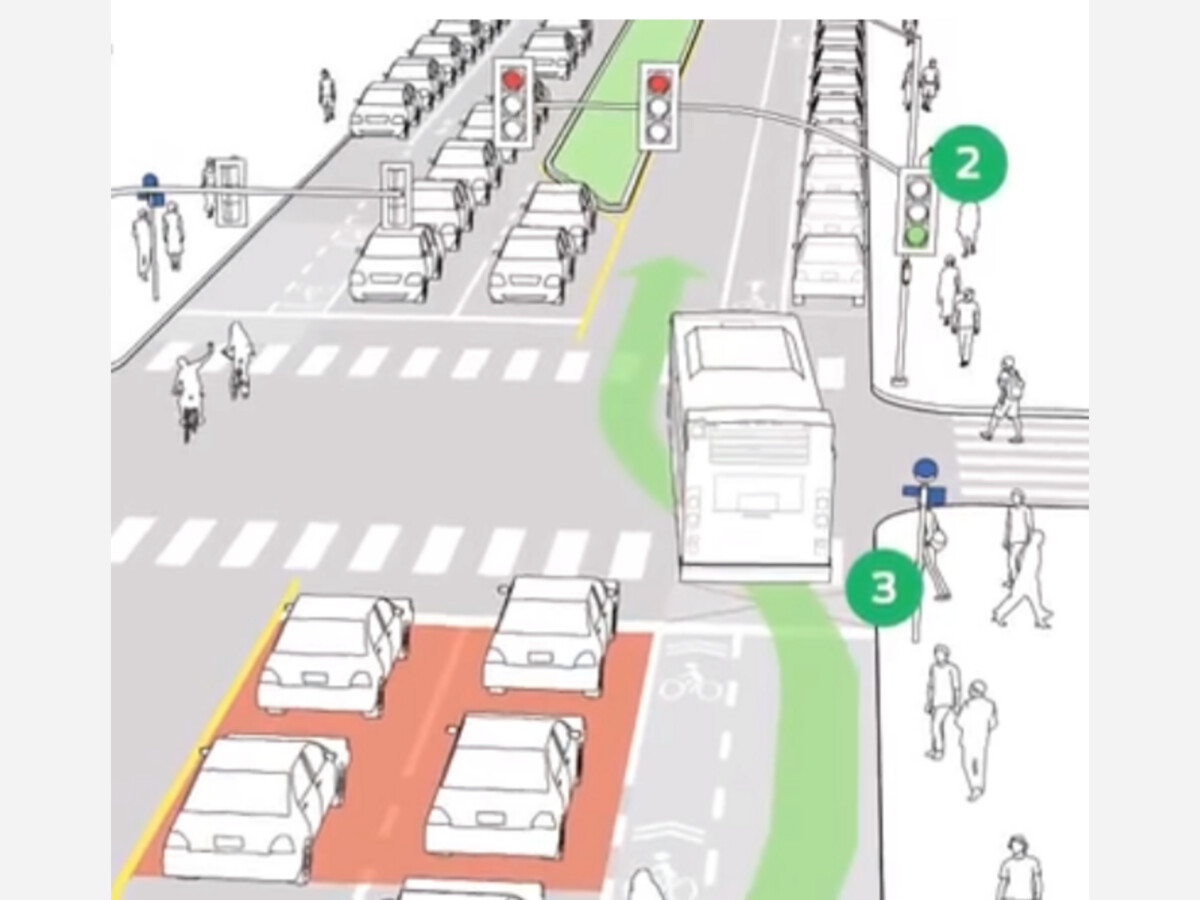
Local group contends bus jump lanes would be a better solution



Op-Ed by LFP City Councilperson and local business owner, Paula Goode.
Lake Forest Park is a city built under trees—a rare canopy of Douglas fir, cedar, and big leaf maples that protects its creeks and neighborhoods. Yet Sound Transit’s SR-522/Stride BT-306 design shows that this living canopy is the single largest casualty of the project. Remember, there is already a BAT lane heading towards town and rail stations - we are talking about a project for a Northbound Lane only as a basis for this ST3 project!
A Clear-Cut Hidden in Plain Sight
According to Sound Transit’s own 90-percent design drawings, roughly 394 trees over six inches in diameter will be removed within Lake Forest Park alone. This represents 66 percent of all trees removed along the entire SR-522 corridor and 80 percent of its landmark trees (those greater than 24 inches in diameter). More than five acres of canopy will disappear—adding over 118,000 gallons of stormwater runoff annually, erasing 185 tons of stored carbon, and reducing air-pollutant filtration by 350 pounds a year. The i-Tree model places the environmental replacement value of those losses at about $1.2 million.
The Five Giants
Among the condemned are century-old trees that have anchored the corridor since before incorporation: a 45.9-inch Black Locust (BRS-316), a 41.6-inch Big Leaf Maple (BRS-278), a 39.7-inch Black Cottonwood (BRS-315), a 35.7-inch Douglas Fir (BRS-304), and a 28-inch Western Red Cedar (BRS-252). Using i-Tree MyTree regional averages, each of these giants provides measurable annual services:
|
Species |
DBH (in) |
CO₂ Sequestered |
Stormwater Intercepted |
Air Pollutants Removed |
|
(lb/yr) |
(gal/yr) |
(lb/yr) |
||
|
Black Locust |
45.9 |
680 |
12,000 |
1.6 |
|
Big Leaf Maple |
41.6 |
640 |
10,500 |
1.4 |
|
Black |
39.7 |
610 |
9,700 |
1.3 |
|
Douglas Fir |
35.7 |
550 |
8,200 |
1.1 |
|
Western Red |
28.0 |
390 |
6,400 |
0.9 |
(The above data is from https://mytree.itreetools.org)
Together, just these five trees contribute each year in quantifiable ecological
benefits—carbon storage, cooling, and filtration—benefits that compound across
hundreds of similar trees slated for removal. There is also no available space in Lake Forest Park to ‘re-plant’ new trees of these amounts – new trees would be planted elsewhere around the County as an ‘exchange’.
A Smarter Alternative Exists
CORE’s independent white paper, based on five years of Google traffic data, found that the east-side bus lane Sound Transit intends to build between NE 153rd and NE 165th Streets would save almost no time at all. CORE could not reproduce the 5- to 14-minute congestion delays cited by Sound Transit; actual data showed average northbound delays of only 3- to 8 minutes. The study demonstrated that by using signalized intersections and short queue-jump lanes—while allowing for sidewalks if desired—transit-speed improvements would be nearly identical to the current project’s full-lane build-out. This study has not been refuted by Sound Transit, either.
The alternative design would spare Lake Forest Park from clear-cutting hundreds of mature trees, save an estimated $83 million (based on 2023 costs which are now obsolete and will indeed he much higher when re-estimated) in right-of-way and construction costs, and preserve the very canopy that defines the city’s identity and mitigates its environmental risk. Apparently, dedicated bus lanes actually don't reduce commute times anyway.
The Real Test of Climate Action
Transit expansion and climate action are not opposing goals, but neither should be used to justify irreversible ecological harm. If public agencies and climate advocates cannot defend the preservation of 100-year-old maples and firs in the name of a few seconds of travel-time savings, we have lost sight of what environmental leadership truly means.
The trees of Lake Forest Park are not obstacles to progress—they are the living
infrastructure of climate resilience. They cool our streets, protect our salmon streams, and absorb the carbon our cars produce. Once they are gone, we cannot replant a century.
A Question for Climate Leaders and Candidates
The facts are not in dispute: hundreds of mature trees—many of them over a century old—will be felled for a one-way bus lane that duplicates an existing southbound BAT lane and produces only marginal travel-time savings. (Not to mention the exorbitant cost financially of this one-way project – to an agency already greatly over budget)
These are not partisan questions—they are tests of integrity. To claim environmental concern while supporting one of the single most damaging deforestation projects in our region’s history is a contradiction that demands explanation.
Environmental leadership is not measured by slogans or campaign platforms; it is measured by the courage to defend living systems when they are threatened. The people of Lake Forest Park deserve leaders—and organizations—who will stand for the forest that stands for us.
Call to Action
The community can still make a difference. Residents, local organizations, and climate advocates are urged to contact City and State leaders, including the Lake Forest Park City Council, Sound Transit Board, and the Washington State Department of Ecology. Request an immediate pause on tree removals, demand a transparent reevaluation of alternatives, and insist that environmental priorities be matched by environmental actions. Remember that Sound Transit is now in the re-evaluation stage of many of these projects, your voice is important and can make a difference! Lake Forest Park’s forested heritage—and its future resilience—depend on the choices we make now.


Overcast, with a high of 74 and low of 51 degrees. Overcast for the morning, clear for the afternoon and evening, partly cloudy overnight.