

Image
On September 18th, 2025, a Budget Award Announcement was posted to the City website, stating "Lake Forest Park earns award for excellence in budgeting" and "Recognition highlights commitment to sound financial management," issued by the Government Finance Officers Association.
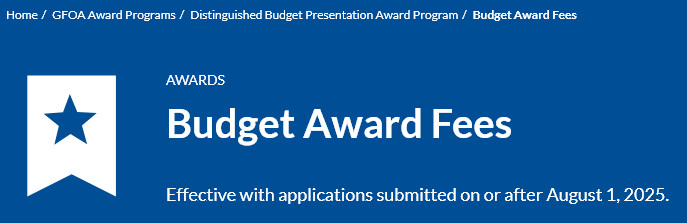
Through a FOIA request, the LFP Town Crier obtained budgetary data showing the city paid GFOA $2,280 over the past five years as "Budget Award Fees" (attached below).
Often called “pay-to-play awards” or “vanity awards.” It’s a common practice across many industries — from government and finance to education, healthcare, and business — where organizations pay fees, memberships, or sponsorships to the very entities that grant them awards or recognition.
Here’s how it generally works — and why it’s controversial:
Awarding Organizations
Many professional associations, trade groups, or magazines run award programs that recognize “excellence” in a given field (e.g., Best City Budget Award, Top Hospital Award, Best Law Firm in America).
On paper, these awards appear to be independent and merit-based.
Financial Relationship
To be considered, applicants often must pay entry or review fees, purchase memberships, or attend conferences hosted by the awarding organization.
Winners are typically encouraged — or required — to buy plaques, advertisements, or licensing rights to use the award logo in marketing.
Result
While some awards are legitimate, many essentially reward participation or payment, not objective merit.
The award issuer benefits financially, while the recipient gains prestige and credibility they can advertise to customers, voters, or stakeholders.
Conflict of Interest: If payment influences recognition, the award no longer reflects actual quality or achievement.
Public Misperception: People often assume awards come from rigorous evaluation, when in fact they may be marketing tools.
Accountability Issues: In public institutions (like cities or universities), taxpayer funds may be used to obtain such recognition, raising ethical and transparency concerns.
Inflated Value: Organizations sometimes showcase these awards as evidence of excellence to justify budgets, rate hikes, or policy decisions.


Overcast, with a high of 74 and low of 51 degrees. Overcast for the morning, clear for the afternoon and evening, partly cloudy overnight.