Image
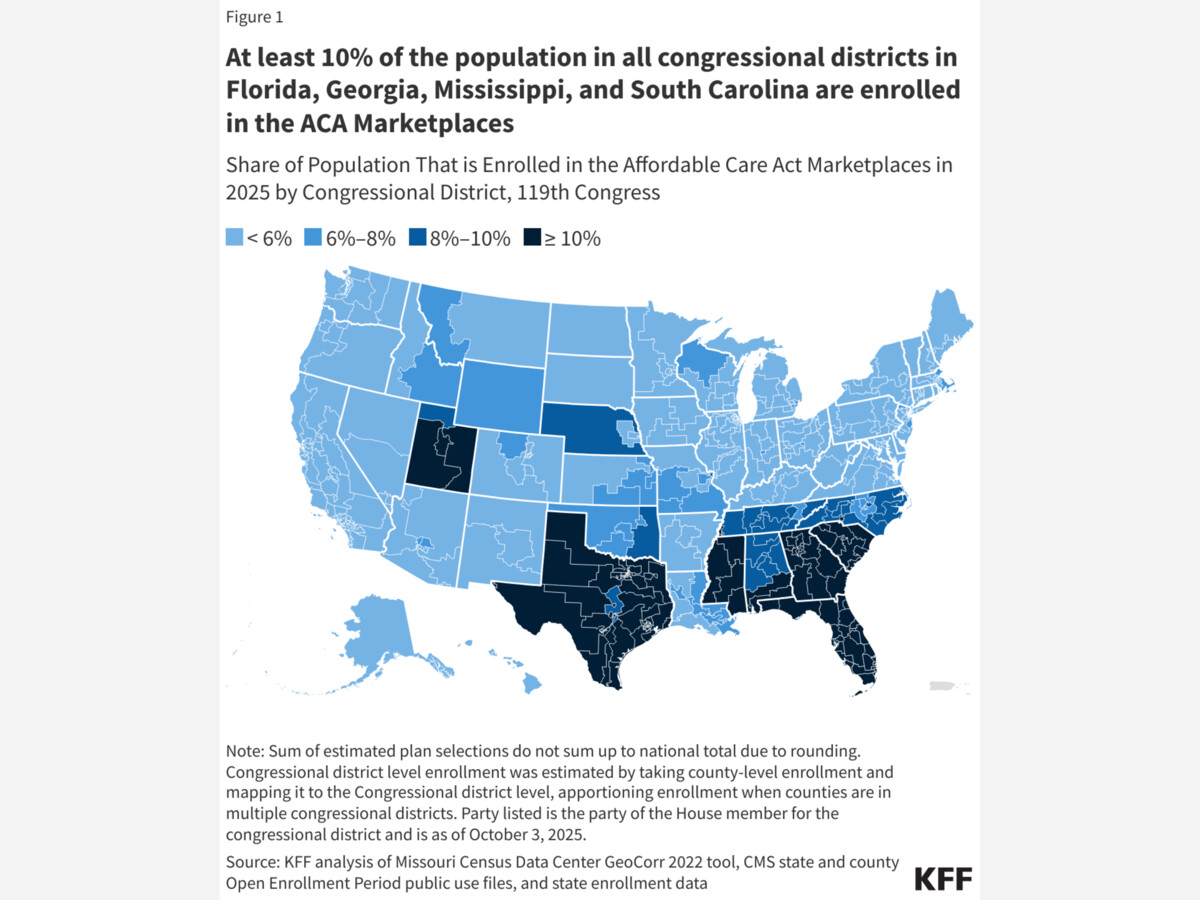



Republican efforts to roll back parts of the Affordable Care Act (ACA) could end up harming many of their own voters, according to new data from the health policy organization KFF.
A recent KFF analysis found that 57% of ACA marketplace enrollees live in congressional districts represented by Republicans—a figure much higher than the phrase “more than half” might suggest. The data shows that large portions of the Republican electorate rely on health coverage established under a law their elected officials continue to criticize.
The reliance on ACA plans is especially pronounced in the South. In Florida, Georgia, Mississippi, and South Carolina, at least 10% of residents in every congressional district are enrolled in ACA marketplace plans. All four states voted for former President Donald Trump in the last election. Florida alone has 28 House districts, all of which meet or exceed that threshold.
Texas and Utah show similar trends: all but three of their combined congressional districts have ACA enrollment rates above 10%. Meanwhile, no state carried by Democratic nominee Kamala Harris has a district where more than 10% of residents are enrolled in the ACA marketplace.
The dynamic reflects deeper policy divides. Many Republican-led states in the South have declined to expand Medicaid under the ACA, which has pushed millions of residents to rely on marketplace plans instead. Even some conservative lawmakers, such as Georgia’s Rep. Marjorie Taylor Greene, have voiced support for maintaining ACA subsidies amid growing local dependence on them.
This creates a political paradox: Republican policies targeting the ACA would disproportionately affect their own constituents, while Democrats continue to defend subsidies that primarily benefit residents of red states. Similar patterns have emerged in other areas of federal policy—from farm aid to rural broadband and education funding—where blue states contribute more in taxes that support programs serving red states.
For now, Democrats in Congress are pushing to preserve or expand ACA subsidies, even as many of the beneficiaries continue to vote Republican. The debate highlights an enduring irony in American politics: the programs most under fire from conservatives often sustain the communities most loyal to them.



Overcast, with a high of 74 and low of 51 degrees. Overcast for the morning, clear for the afternoon and evening, partly cloudy overnight.