55° and Overcast

A Reminder for Lake Forest Park: What’s Coming on SR 522


Letter to the Editor
By Paula Goode
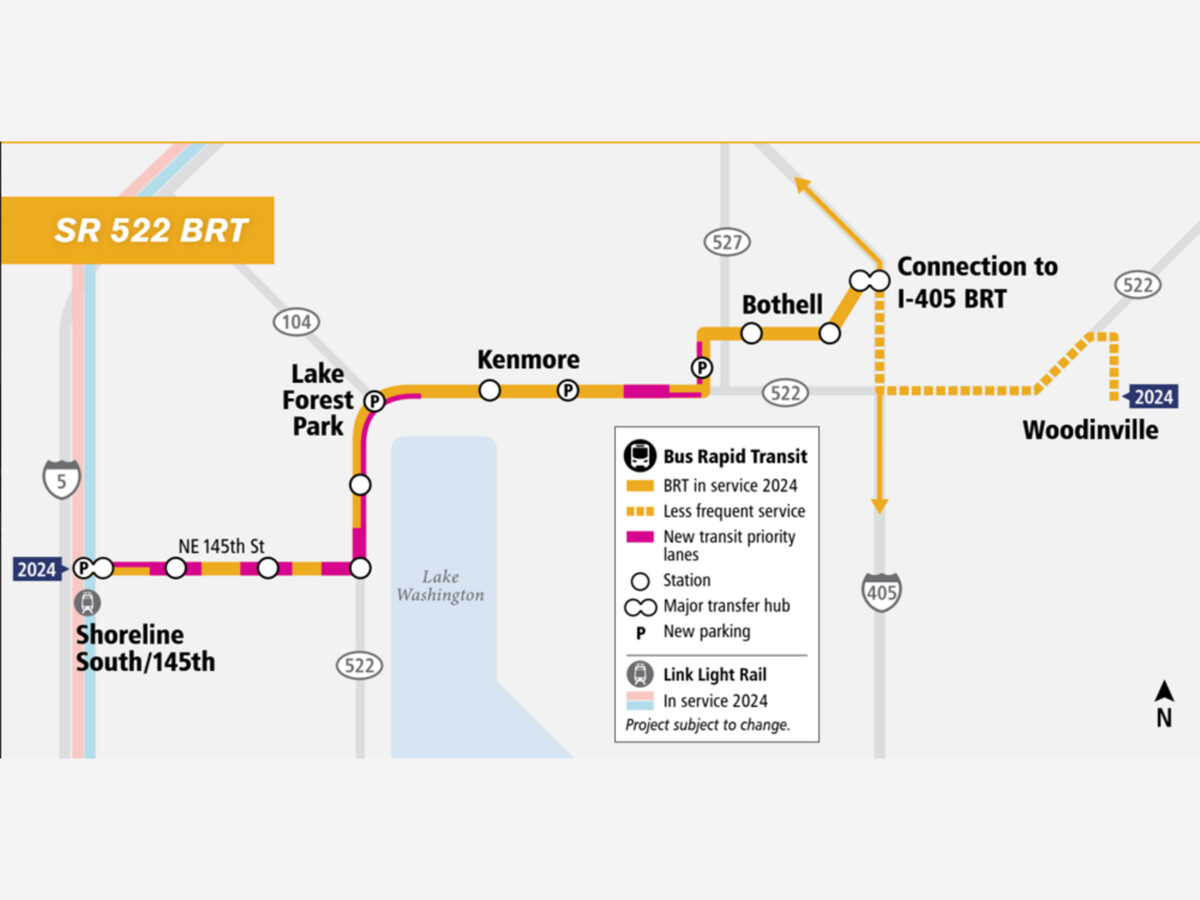
As construction of the SR 522 Bus Rapid Transit project moves closer, it feels like things have gotten quiet. But the reality is—this project has not changed, and the impacts to Lake Forest Park are still very real.
This is simply a reminder of what our community should be prepared for.
Construction is expected to last several years. During that time, we will likely see lane reductions on Bothell Way, detours through neighborhood streets, sidewalk disruptions, heavy truck traffic, and sustained noise. With other projects underway—including the SR 104 roundabout and possibly the Waterfront Park—traffic conditions could become significantly more challenging. Many drivers will be rerouted through residential streets, whether we plan for it or not.
There are also open questions that remain unanswered. Construction staging locations will be determined by the contractor, not the City, and there is no ‘Staging’ document in the 100% Plans. Town Center is a logical location that could affect parking, access, and local businesses during construction.
When the project is complete, the changes will be permanent. Nearly 400 mature trees, along with surrounding smaller trees and shrubs, will be removed. A long retaining wall—up to 16 feet or higher in places—will run through part of the corridor. Traffic patterns will change, including fewer left turns and more congestion at key intersections, such as 165th.
We’ve also heard that noise will remain “about the same.” But for many residents, existing noise levels are already high. “No change” doesn’t necessarily mean improvement—it means we continue living with those conditions. Remember, the Study was performed with all the vegetation in place – hard surfaces amplify existing noise levels, which are already high.
At the same time, Sound Transit is facing a projected $34.5 billion funding shortfall and is actively reconsidering major parts of its system. That raises a fair question: if projects across the region are being reevaluated due to cost, why wasn’t a lower-impact option more seriously considered here?
A local study commissioned by CORE suggested that targeted bus queue jumps could provide similar transit benefits in Lake Forest Park—without widening the roadway, removing hundreds of trees, or building large retaining walls. That option was not pursued.
The expected time savings through Lake Forest Park is modest—generally around one to two minutes during peak travel times.
This is not about opposing transit. It is about understanding the tradeoffs.
As construction approaches, it’s reasonable for residents to ask:
- How will neighborhood streets be protected from cut-through traffic?
- What is the plan for construction staging and impacts to Town Center?
- How will business impacts and potential revenue loss be addressed?
- What, if anything, can still be done to reduce long-term impacts?
Lake Forest Park is a small part of a large regional system, but the impacts here are very local, large, and permanent.
Staying informed and asking thoughtful questions are among the most important things we can do as a community.