55° and Light rain



Image
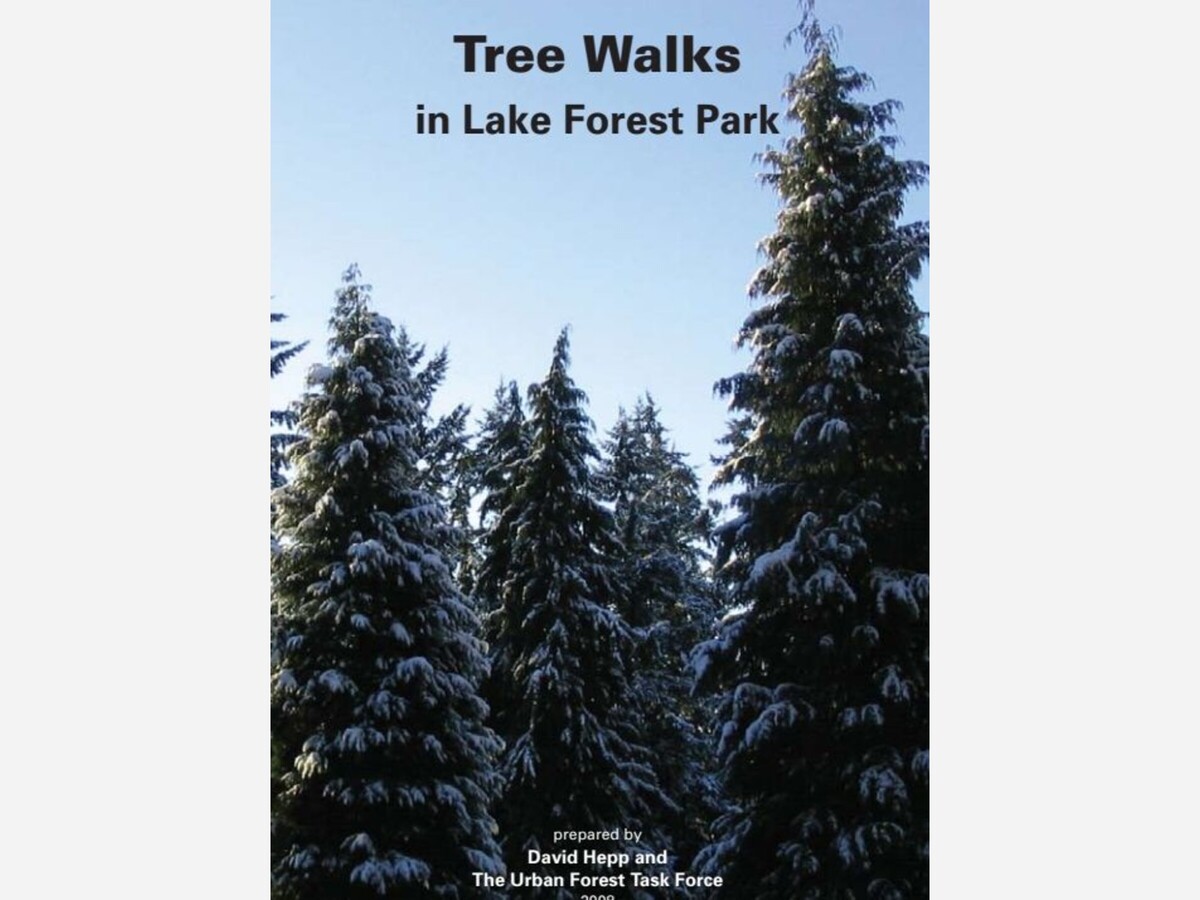
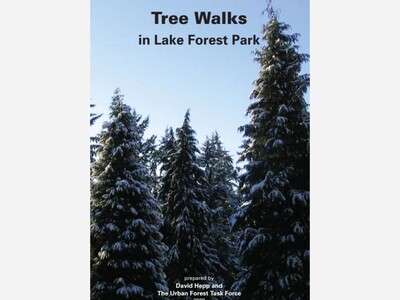
The meeting video was converted to text and then summarized using ChatGPT. A link to this post has been sent to a Tree Board member for review. The Tree Board's Tree Walk Guide is attached to this article.
The Lake Forest Park Tree Board discussed the upcoming tree giveaway, Sound Transit’s tree-removal permitting process, proposed changes to tree permit fees, updates to tree-related educational materials, and future outreach projects. The most substantive discussion focused on whether the city's tree permit fees adequately reflect staff review time and whether to waive fees for dead or invasive trees.
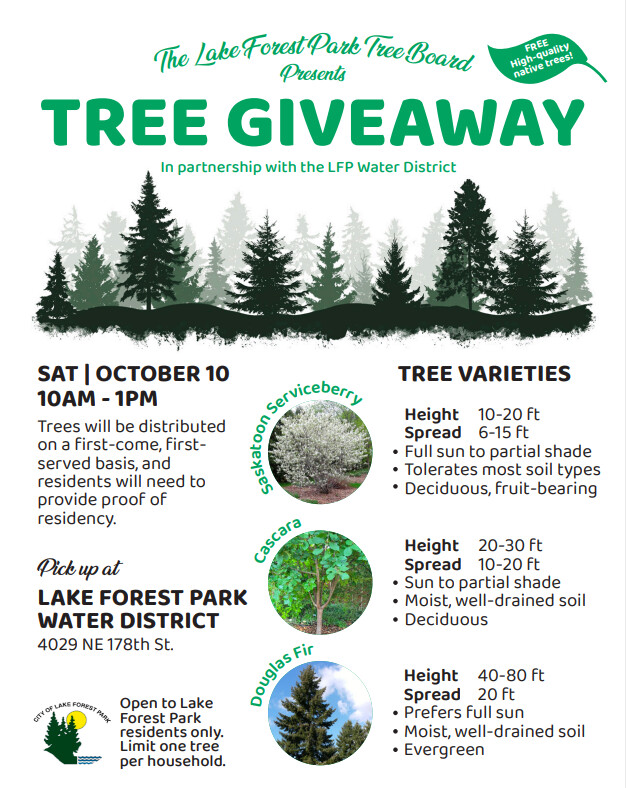
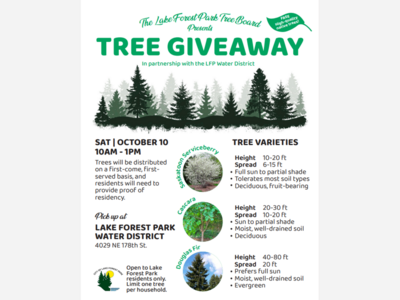
The board finalized arrangements for an upcoming tree giveaway scheduled for Saturday, from 10 a.m. to 1 p.m.
Plans included:
Members also discussed marking a city map with approximate planting locations. This would help the board understand how the giveaway benefits different parts of the community without collecting residents' exact addresses.
The board discussed whether to distribute watering bags immediately or save them for later, when the trees are larger.
The board discussed a potential sponsorship from Republic Services to fund a revised and reprinted version of the city's tree walk guide.
The existing guide remains popular at community events, but supplies are nearly exhausted. Members recommended updating the content before printing and consulting the Stewardship Foundation about its possible participation.
The board also discussed correcting printing problems with the existing Lake Forest Park urban forest brochure and potentially refreshing its design.
Several possible articles were discussed:
The board also planned to participate in an October 25 community event concerning salmon protection and the role of trees.
The board reviewed the city's existing tree-related fees and identified several concerns.
Standard tree permit
Flat fee, regardless of the number of trees listed on a permit
Right-of-way corridor tree permit
Per tree, plus staff review costs
Reasonable-use exception
For certain applications involving exceptional trees or development constraints, plus staff costs
The board raised these issues:
Direction agreed upon: The urban forest planner was asked to develop proposed fees for major and minor permits and options for waiving fees for qualifying dead or invasive trees. The proposals should be specific enough for the Tree Board to make recommendations at its next meeting, scheduled for November 5, ahead of the City Council's anticipated November 12 budget adoption.
The board did not adopt any final fee changes at this meeting.
The board reviewed two draft tree-code help documents, one focused on residential applications and another on development applications.
Members supported making the documents more accessible and useful by:
The board agreed that the documents could be useful at community outreach events. The board will print about 10 copies of the more general residential guide for the outreach supply box, while members continue sending edits to the staff lead.
The broader proposed updates to the city's general tree list and tree code remained in progress, awaiting staff capacity to advance them toward City Council consideration.
Members discussed improving the visibility of Tree Board information on the city's website, which some found difficult to navigate.
The board also previewed ideas for a more recognizable Tree Board visual identity. The board deferred further discussion to the next meeting, including consideration of the website's technical limitations.
|
Responsible party |
Follow-up |
|---|---|
|
Urban forest planner |
Develop proposed major/minor permit fees and possible waivers for dead or invasive trees. |
|
City staff |
Continue providing updates on Sound Transit's tree and critical-area permit review. |
|
Tree Board volunteers |
Complete preparations for the tree giveaway, including species identification, eligibility checks and distribution logistics. |
|
Designated board member |
Follow up with Republic Services regarding sponsorship of a revised tree walk guide. |
|
Article volunteers |
Develop articles on climate-related changes to the urban forest and Christmas tree environmental impacts. |
|
Urban forest planner and board members |
Refine the homeowner and development tree-code guidance, including dead-tree and emergency-removal language. |
|
Tree Board |
Continue discussion of visual identity, website accessibility, outreach and tree permit fees at the next meeting. |
|
Board leadership |
Review member terms and anticipated vacancies for the beginning of 2027. |
The meeting focused on practical implementation rather than adopting new policy. The board prepared for a community tree giveaway, continued monitoring Sound Transit's proposed tree removals, and began developing more differentiated tree permit fees.
The most consequential next step is the proposed permit-fee revision. The board wants fees to better reflect the staff work required for different applications while considering relief for qualifying dead or invasive trees. The board expected recommendations before the City Council's November budget decision.


Patchy rain nearby, with a high of 57 and low of 49 degrees. Don't forget your umbrella! Patchy rain nearby during the morning, overcast overnight.