Image
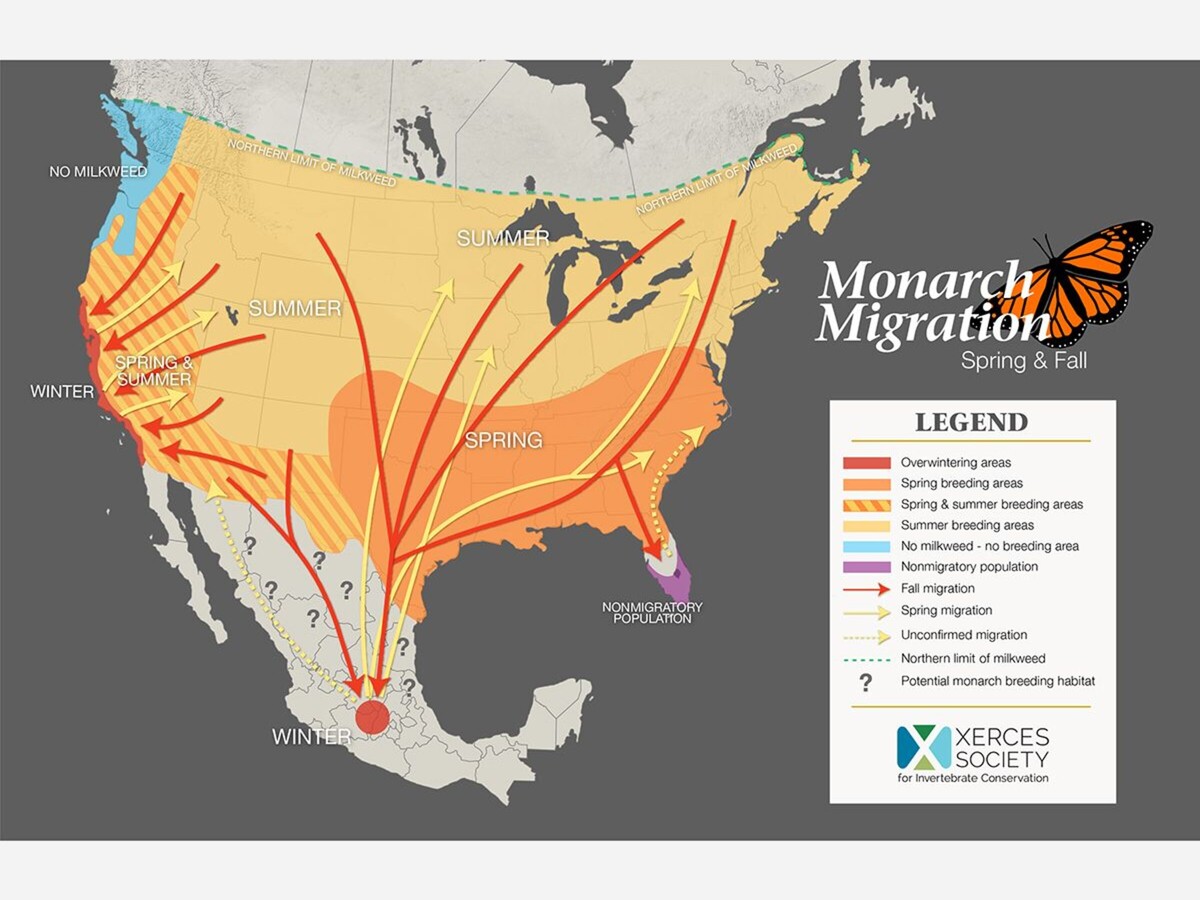



This fall, monarch butterflies migrating south from the Pacific Northwest carry tiny digital tracking devices, giving scientists and the public an unprecedented opportunity to follow their journeys in near real time.
Follow the migration: Search your mobile app store for Project Monarch to find the free tracking app.
About 200 monarchs across Oregon and Idaho are part of the project, led by David James, an associate professor of entomology at Washington State University. The effort aims to answer longstanding questions about where the butterflies travel, how far they fly, and where they stop along the way.
The free Project Monarch mobile app lets you follow the butterflies. Unlike traditional paper tags, which provide useful information only when someone finds and reports a tagged butterfly, the new electronic devices can transmit location data as the insects move.
For decades, researchers have relied on small paper tags to study monarch migration. Recovering those tags has proved difficult. From 2012 through 2025, the nonprofit Wings Rising tagged more than 11,000 monarchs in Idaho but recovered only 12 tags, according to James.
The new solar-powered BlūMorpho trackers weigh approximately 60 milligrams and use a tiny solar panel to power their electronics. Researchers attach them to the butterflies using adhesive.
At about $200 per tracker, the devices are expensive for large-scale research. To help pay for the equipment, organizers created an “Adopt a Monarch” fundraising program that lets donors contribute to the research and name a butterfly. The program attracted 200 donations.
Early tracking results have already provided new information about the butterflies’ movements. One monarch released in Portland traveled more than 125 miles within four days. Another, named Portlandia, crossed into California about 10 days after its release.
Researchers hope the growing data collection will reveal how migration differs across the region. Oregon monarchs generally travel south toward Southern California, but Idaho’s monarch population is less well understood. Tracking could help determine whether some Idaho butterflies travel to Mexico or follow a different route.
The tracking system is designed to involve people beyond the scientific community. Wildlife receivers and many smartphones with Bluetooth and location services can detect the devices. Through Project Monarch, users can scan for nearby tagged butterflies, helping upload location data to the project’s database.
Citizen scientists have also played an important role in getting the project off the ground.
In Keizer, Oregon, resident Meg Green discovered a female monarch laying eggs on milkweed in her garden. After contacting a local monarch community, she worked with citizen scientist Ida Galash, founder of the Portland Monarchs Facebook group, to raise some of the caterpillars. The resulting butterflies became candidates for the digital tracking project.
Researchers emphasize the importance of raising and tracking butterflies from their local populations rather than moving insects from other areas, since behavior and migration can vary by location.
The information collected could eventually help conservationists identify important resting places and feeding areas along migration routes, allowing habitat restoration efforts to be directed where they may have the greatest benefit.
Monarch populations in North America have declined over the past two decades. The U.S. Fish and Wildlife Service has proposed listing the monarch butterfly as threatened under the Endangered Species Act, but as of October 2026, it has not issued a final listing decision.
Habitat loss, insecticide exposure, and climate change threaten monarchs. Adult butterflies depend on nectar-producing flowers for energy, while monarch caterpillars rely exclusively on milkweed plants for food.
Although researchers can fit only a small fraction of monarchs with tracking devices, the public can support their survival by planting milkweed and nectar-rich flowers and protecting habitat.
The new tracking effort offers researchers a more detailed view of a migration that has fascinated scientists and the public for generations. As the butterflies continue south this fall, the data may help clarify where they go—and what they need to survive along the way.
Sources: Oregon Public Broadcasting’s reporting on the tracking project and U.S. Fish and Wildlife Service monarch conservation information.


Overcast, with a high of 53 and low of 38 degrees. Overcast for the morning, cloudy overnight.






This is really well done and should be read by everyone who will vote on the property tax levy lid increase in our upcoming election. I hope every LFP council member has already read it and understands it.
I'm impressed with the analysis but I didn't see any attribution so am curious to know whether this was written by a human or generated by AI.
Both.