Image
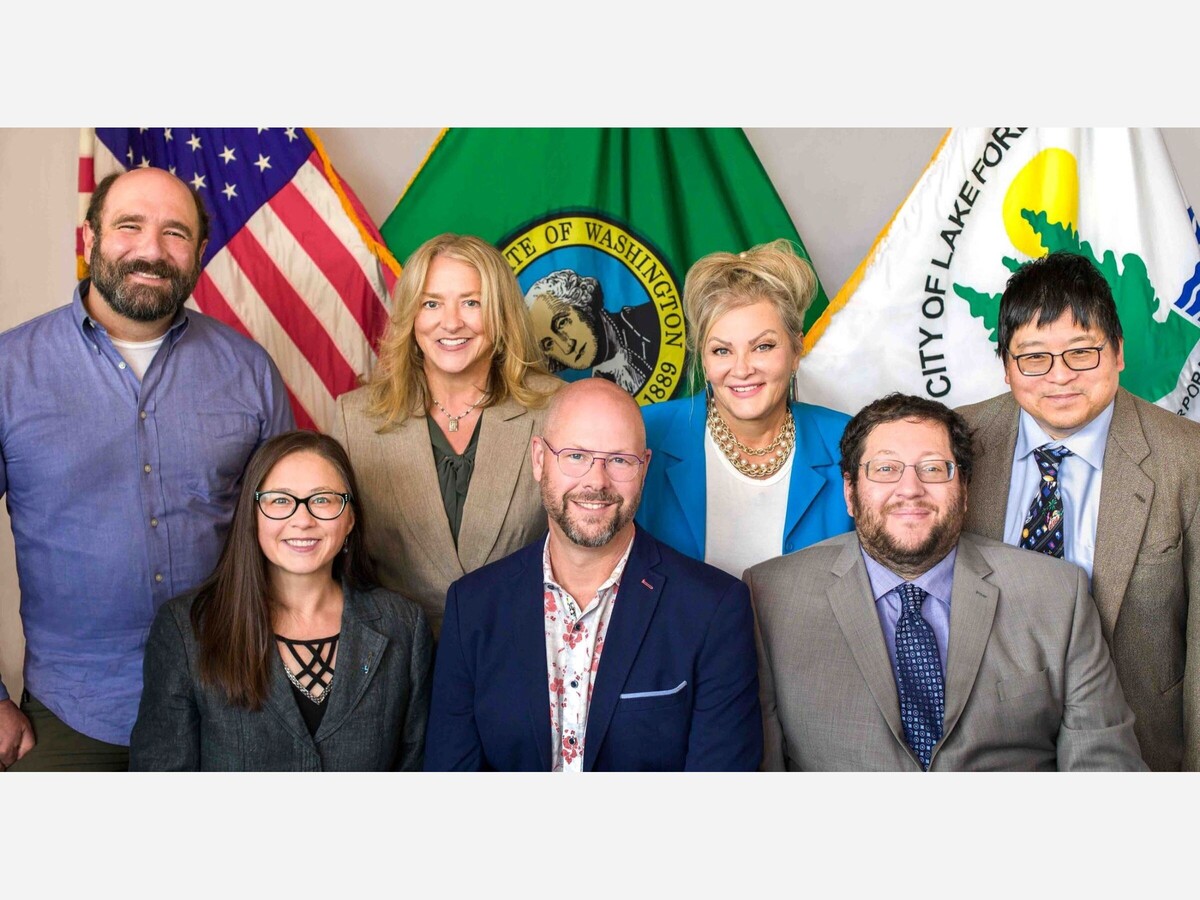
LFP city council. cityoflfp.gov



Source: The transcript supplied for the October 19, 2026, Lake Forest Park City Council Committee of the Whole meeting. Automated transcription contains some garbled names and figures, so exact financial numbers and quotations should be checked against the meeting recording and budget documents. After translation, ChatGPT summarized the city council meeting.
The meeting focused on four major subjects: expanding neighborhood businesses, a proposed ban on sales of new fur products, maintaining pedestrian access during construction, and the city's 2027–2028 biennial budget.
The central theme was how Lake Forest Park can improve neighborhood livability and public safety while responding to financial constraints and ensuring residents have a meaningful role in policy decisions.
1. Neighborhood businesses and “cozy retail”
Council members supported continuing to explore small neighborhood businesses, including cafes, shops, and other businesses in residential areas. They emphasized early community outreach, careful consideration of parking and noise, and developing rules that would prevent unwanted commercial impacts.
2. Proposed ban on sales of new fur products
Council members expressed support for advancing consideration of a narrowly defined ban on sales of new fur products. The proposal would exclude used and vintage items, leather, shearling, and certain other products. The discussion was preliminary; the Council still needs to develop and review legislation.
3. Pedestrian access during construction
Council members supported further research into improving pedestrian and bicycle safety at construction sites. Ideas included keeping sidewalks open whenever possible, providing safer detours, clarifying construction-sign rules, and consulting with city staff and relevant agencies about legal requirements and costs.
4. 2027–2028 budget
Council members continued discussing the city's structural deficit and possible increases to utility taxes on sewer and surface-water services. They also discussed deferring unfunded staffing and planning priorities, potentially funding a smaller strategic-planning effort, and obtaining better financial projections before making final decisions.
00:00–00:46
The council discussed two related ideas:
Presenters used examples from Seattle and other communities to illustrate how businesses can start in garages, driveways or small storefronts, then grow or return to residential use.
Potential benefits identified
Concerns raised
One council member advocated a two-step process: first explore the idea and engage residents, then develop regulations if the community and council wish to proceed.
Outcome: Council members showed sufficient support to continue studying both concepts. The next steps include developing a community outreach plan, coordinating with city administration, and determining the Planning Commission's role. The discussion acknowledged that substantive work would likely extend into 2027, given existing workloads.
The Council did not adopt any zoning changes at this meeting.
00:46–00:54
Council members considered a community-requested proposal to prohibit sales of certain new fur products in Lake Forest Park.
The presentation described the proposal as a targeted measure to address concerns about animal welfare, trapping, and the environmental and disease risks associated with fur farming.
The proposed scope was deliberately narrow:
The presentation identified Ross as the only local retailer likely to encounter the restriction. The presenter said the retailer could manage the restriction by directing affected products to stores in jurisdictions where they are permitted for sale.
Council members supported advancing the proposal while recognizing the need to review the legislative language, enforcement, and administrative implications.
Outcome: The council indicated interest in moving the proposal forward for further review. The transcript does not show the council adopting final legislation.
00:54–01:10
Council members discussed whether the city's codes should be strengthened to better protect pedestrians and bicyclists when construction affects sidewalks, shoulders, and roadways.
The presentation highlighted two examples:
The presenter identified two existing Lake Forest Park code provisions on construction-related pedestrian circulation plans and signs that obstruct sidewalks.
Potential changes discussed
Council members generally supported further investigation but raised practical concerns about construction costs, constrained rights-of-way, state highway requirements, and the need to give contractors flexibility when circumstances make safe access difficult.
Outcome: The council supported additional research and consultation with city staff and relevant agencies, including review of legal obligations, construction practices and the cost implications of potential code changes. No code amendments were adopted.
01:10–01:58
The final and longest discussion addressed the city's financial outlook, unfunded priorities and potential utility-tax adjustments.
Council members discussed three unfunded priorities identified in the mayor's proposed budget: a public records specialist, a council strategic plan, and another staffing or performance-related item.
Members generally favored revisiting these needs during the mid-biennium budget adjustment rather than imposing immediate funding requirements.
The public records specialist received particular attention. Council members and staff described the growing workload from legally required public records requests and its impact on records management and other city responsibilities. Members discussed collecting workload and response-time information to help justify future staffing decisions.
Members also discussed allocating approximately $10,000 toward a facilitated council strategic-planning effort. This would be a more limited alternative to a full strategic-planning process, aiming to document council priorities and help the city pursue grants and longer-term opportunities.
Council members reviewed scenarios involving increases to the city's utility taxes on sewer and surface-water services.
The discussion distinguished between the underlying utility charges, which support restricted utility funds, and utility taxes, which provide revenue for the city's general fund.
For sewer, the presentation used a 10% tax scenario already reflected in the budget and examined options from 11% through 16%. Each additional percentage point was estimated to generate roughly $44,000 annually, although the precise totals depend on the applicable revenue base.
For surface water, the additional annual revenue per percentage point was estimated at roughly half the sewer amount.
Council members discussed several considerations:
During the meeting, the county clarified that it had not yet decided its 2028 sewer-rate increase. As a result, the city needed to revise the longer-term estimates.
Council members requested updated projections, including a six-year financial model showing how different tax scenarios would affect the city's structural deficit.
The discussion described a substantial ongoing structural deficit. Members referenced a forecast showing an ending fund balance slightly above $3 million in the 2027–2028 biennium, followed by a projected deficit of approximately $1.7 million in the subsequent biennium, assuming no levy and the forecast's other assumptions.
Council members also discussed a recently enacted state law, HB 2442, that may provide an additional local sales-tax revenue option. Staff and the city attorney were expected to clarify how the city could legally use the revenue and when it could begin collecting it.
The meeting also raised vehicle replacement and possible police e-bike purchases, but it did not resolve those questions.
Outcome: Budget deliberations remained open. Staff was asked to refine the financial projections and provide additional information ahead of the next discussion. The transcript indicates that the council was working toward a November budget decision, with November 12 and a potential November 19 special meeting mentioned in the discussion.

Sunny, with a high of 61 and low of 44 degrees. Mist in the morning, sunny for the afternoon, clear during the evening, mist overnight.



This is really well done and should be read by everyone who will vote on the property tax levy lid increase in our upcoming election. I hope every LFP council member has already read it and understands it.
I'm impressed with the analysis but I didn't see any attribution so am curious to know whether this was written by a human or generated by AI.
Both.